
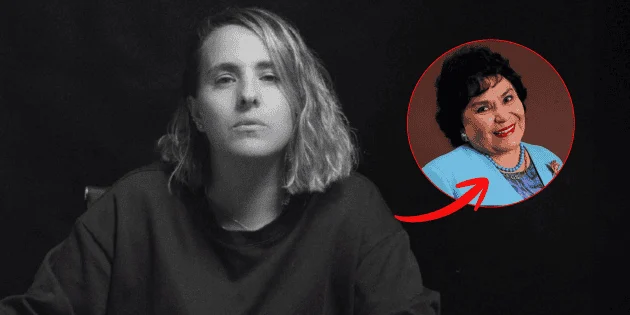
The recent broadcast of an interview within the podcast Penitencia, led by prominent activist Saskia Niño de Rivera, has ignited a fierce national debate, drawing widespread attention and significant scrutiny. The episode featured an inmate, identified only as "Beto," whose vivid and disturbing account of past criminal activities and violent episodes included grave allegations against the late, beloved Mexican actress Carmen Salinas. Beto’s testimony, which linked Salinas to a purported minor trafficking network and alleged participation in satanic rituals, immediately went viral, causing profound shock and outrage across social media and traditional media platforms. The controversy escalated rapidly, prompting a strong rebuke from the actress’s family and forcing Niño de Rivera to publicly address the contentious claims and the underlying purpose of her project.
The Genesis of the Controversy: "Beto’s" Startling Revelations
Saskia Niño de Rivera, a well-known advocate for human rights and prison reform in Mexico, launched Penitencia as an initiative aimed at providing a platform for individuals within the penal system to share their life stories. The podcast’s stated objective is to delve into the complex origins of violence in Mexican society, offering a raw, unfiltered look at the trajectories that lead individuals to incarceration. Through these testimonies, Niño de Rivera seeks to foster a deeper understanding of systemic issues such as poverty, lack of educational opportunities, familial dysfunction, and exposure to crime from an early age, which often precede criminal behavior. The project has garnered considerable attention for its unique approach and its potential to shed light on overlooked aspects of the justice system and social inequalities.
However, the episode featuring "Beto" diverged sharply from the podcast’s usual trajectory, catapulting it into an unforeseen maelstrom of public opinion. During his extensive interview, Beto recounted a harrowing personal history marked by crime and violence. The most sensational aspects of his narrative were the uncorroborated assertions involving Carmen Salinas. He alleged that he had witnessed the revered actress’s involvement in a network dedicated to the trafficking of minors and had been present during what he described as satanic practices, which he claimed Salinas also participated in. These allegations, presented without any independent verification, struck a particularly sensitive chord with the Mexican public, given Salinas’s iconic status.
Carmen Salinas, who passed away in December 2021 at the age of 82, was a veritable institution in Mexican entertainment. Her career spanned over seven decades, encompassing roles as an actress in film, television, and theater, a comedian, a producer, and even a brief stint as a federal deputy. Known for her jovial personality, philanthropic efforts, and accessibility, she was often affectionately referred to as "Carmelita" by her fans. Her public image was largely one of warmth, resilience, and a profound connection to the common people of Mexico. The sudden posthumous accusations, therefore, represented a stark and disturbing contrast to the legacy she had cultivated, igniting a powerful sense of disbelief and indignation among her admirers and the wider public.
Immediate Fallout and Family’s Outcry
The digital landscape quickly became a battleground for opinions following the episode’s release. Social media platforms were inundated with reactions, ranging from shock and condemnation of the allegations to debates about the ethics of airing such unverified claims. The controversy reached a critical mass when members of Carmen Salinas’s family publicly voiced their profound distress and anger. Through various media appearances and statements, family representatives expressed their deep offense at the internal’s declarations, emphasizing the irreparable damage these unproven accusations could inflict upon Salinas’s memory and reputation. They vehemently denied any possibility of the actress’s involvement in such heinous acts, portraying the claims as baseless and malicious fabrications. The family indicated their intent to explore all possible legal avenues to defend Salinas’s honor, including potential lawsuits for moral damage and defamation, underscoring the severity with which they perceived the allegations.
The legal implications of such claims, particularly against a deceased public figure, are complex in Mexico. While direct criminal defamation against a deceased person is generally not applicable, family members can pursue civil actions to protect the memory and honor of their loved one, seeking redress for emotional distress and reputational harm. This aspect added another layer of gravity to the unfolding scandal, transforming it from a mere media sensation into a serious discussion about legal responsibility and ethical journalistic practices within the burgeoning podcast industry.
Saskia Niño de Rivera’s Measured Response and Editorial Decisions
In the days following the initial uproar, and after reportedly editing the controversial episode to censor the names of celebrities and politicians mentioned by Beto, Saskia Niño de Rivera issued a comprehensive statement addressing the escalating debate. Her response was a careful attempt to re-center the narrative on the original intent of Penitencia. She firmly requested that the project not be conflated with "show business" or "gossip" journalism, asserting that such associations fundamentally misrepresent the podcast’s core mission.
"The conversation is currently focusing on trying to decipher the names that I censored," Niño de Rivera stated. "I want to take this moment to recall something fundamental: ‘Penitencia’ is not an entertainment podcast, it is not a show business podcast, it is not a gossip podcast. ‘Penitencia’ is an educational, academic project for deep analysis of the origin of violence in our country."
She elaborated that Beto’s narrative, like many others featured on the podcast, serves as a poignant illustration of the harsh realities faced by countless children and adolescents growing up in environments riddled with violence. Many of these young individuals, she pointed out, receive little to no support, making them vulnerable to recruitment into criminal enterprises. Niño de Rivera stressed the importance of understanding the socio-economic and psychological contexts in which these individuals mature. She argued that comprehending how experiences marked by abandonment, neglect, or abuse can profoundly influence subsequent behaviors is crucial for addressing the root causes of crime rather than merely reacting to its symptoms.
The activist underscored that the primary objective of Penitencia is to generate public awareness about the critical need to strengthen educational systems and enhance the protection of minors. She highlighted that children remain acutely vulnerable when their fundamental rights are not fully guaranteed, making them susceptible to cycles of violence and crime. This perspective aligns with a broader discourse in Mexico concerning the significant challenges within the juvenile justice system and the pervasive issues affecting child welfare. According to data from various human rights organizations and government reports, thousands of Mexican children live in conditions of extreme poverty, lack access to education, and are exposed to organized crime, making them prime targets for recruitment into illicit activities.
Ethical Dilemmas and Journalistic Responsibility
The controversy surrounding "Beto’s" testimony has brought to the forefront critical questions about ethical reporting, the responsibilities of content creators, and the delicate balance between freedom of expression and the potential for harm. While Niño de Rivera maintains that the podcast’s content is based on the unedited testimonies of Persons Deprived of Liberty (PPLs) and their personal versions of events, the inclusion of unverified, highly damaging allegations against a deceased public figure raises significant ethical red flags.
"Yes, in some testimonies proper names appear because they are part of someone’s narrative who, for example, tells their own story," Niño de Rivera explained. "But the purpose has never been to point fingers at third parties or to turn a testimony into a spectacle. The focus is not a name; the focus in this case is Beto’s story."
This statement highlights the inherent tension in such projects: while providing a voice to marginalized individuals is a laudable goal, the platform also carries the responsibility to mitigate harm, particularly when allegations of grave crimes are made against identifiable individuals who cannot defend themselves. Mainstream journalistic ethics typically require rigorous verification of facts, especially when such serious accusations are made. The podcast format, often perceived as less formal than traditional news media, nonetheless operates within a public sphere where information can rapidly disseminate and cause irreversible damage.
Critics argue that even if the intent is purely academic or educational, the effect of airing such claims without corroboration can be devastating. The swift removal or censoring of names post-broadcast suggests an acknowledgment of the potential for legal repercussions or reputational damage, indicating that the initial decision to air the names might have been an oversight in judgment or a miscalculation of public reaction. This incident serves as a stark reminder of the evolving landscape of media and the responsibilities that come with new forms of content creation, especially when dealing with sensitive and potentially defamatory information.
Broader Societal Impact and Unresolved Questions
The "Penitencia" scandal transcends the immediate concerns of a podcast episode; it touches upon deeper societal issues within Mexico. It underscores the challenges of the Mexican penal system, which often struggles with overcrowding, corruption, and a lack of effective rehabilitation programs. Giving a voice to inmates, as Niño de Rivera aims to do, can be a powerful tool for understanding the systemic failures that contribute to crime. However, the incident also reveals the vulnerabilities inherent in this approach, particularly when testimonies contain unverified claims against public figures.
Furthermore, the public’s intense reaction reflects the complex relationship Mexicans have with their celebrities, who often embody national aspirations and cultural values. The defense of Carmen Salinas’s memory is not merely about protecting an individual’s reputation but also about preserving a cultural icon’s legacy. This collective emotional response highlights the enduring power of celebrity in shaping public discourse and the profound impact of allegations that challenge widely held perceptions.
As the discussion continues, the family of Carmen Salinas remains steadfast in their demand for respect for her memory, reiterating their deep discontent with the internal’s unsubstantiated allegations. While Saskia Niño de Rivera continues to defend the academic and educational integrity of Penitencia, the controversy has undeniably shifted public attention from the podcast’s intended focus on the roots of violence to the sensational aspects of a specific testimony. The incident serves as a critical case study in the intersection of activism, media, justice, and ethics, leaving open questions about the future trajectory of "Penitencia" and the broader responsibilities of content creators in an increasingly interconnected and rapidly evolving media landscape. The debate highlights the ongoing challenge of balancing the desire to expose societal ills and give voice to the marginalized with the imperative to uphold truth, prevent harm, and respect the dignity of all individuals, living or deceased.

0 Comments