
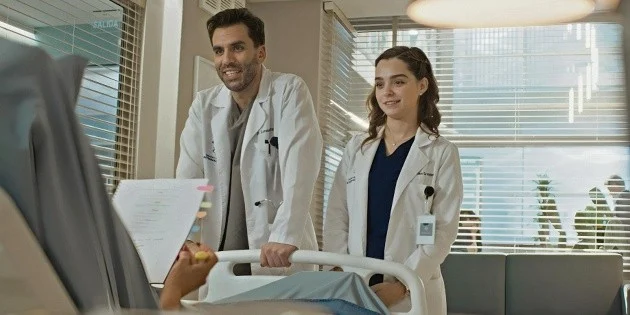
The highly anticipated Mexican series "Doc," an adaptation of the acclaimed Italian production "Doc – Nelle tue mani," is set to premiere globally on Netflix on March 4th. This new entry into the medical drama genre promises a profound departure from traditional hospital narratives, shifting the focus from spectacular procedures and clinical heroics to a more intimate exploration of memory, identity, and the fragile human element at the core of medicine. Backed by Sony Pictures Television, the series aims to humanize the often-stoic world of healthcare professionals, positioning medicine not merely as a science of protocols and prescriptions, but as an deeply human endeavor intertwined with personal histories, vulnerabilities, and the universal quest for redemption.
A Deep Dive into the Premise: The Fractured Life of Andrés Ferrara
At the heart of "Doc" lies the compelling story of Dr. Andrés Ferrara, portrayed by the distinguished actor Juan Pablo Medina. Ferrara is introduced as a brilliant and seemingly infallible head of internal medicine, a man whose professional life is defined by unwavering competence and authority. However, his meticulously constructed world is shattered by a brutal assassination attempt. While he miraculously survives the physical assault, the bullet inflicts a far more insidious wound: it erases twelve years of his memory.
This dramatic amnesia plunges Ferrara into an existential crisis. Upon awakening, he finds himself a stranger in his own life. The decisions he made, the relationships he forged, the very identity he inhabited over more than a decade – all are gone. He no longer recognizes his family, his colleagues, or the formidable position he held within the hospital. This involuntary reset forces him to embark on a painstaking journey of self-reconstruction, compelling him to rediscover who he is, both as a person and as a physician, from the ground up. This narrative arc provides the series with its central tension and its profound thematic depth, challenging viewers to consider the essence of self beyond accumulated experiences and social roles.
From Italian Success to Mexican Reinterpretation: The Genesis of "Doc"
The journey of "Doc" to Mexican screens began with the resounding success of its Italian predecessor, "Doc – Nelle tue mani" (Doc – In Your Hands). The original series, which first aired in Italy in 2020 on Rai 1, quickly became a cultural phenomenon, captivating audiences with its unique blend of medical realism and emotional depth. Based loosely on the true story of Dr. Pierdante Piccioni, an Italian doctor who suffered memory loss after a car accident, the show garnered critical acclaim for its nuanced portrayal of the medical profession and its exploration of the protagonist’s arduous path to recovery and rediscovery. Its success led to multiple seasons and garnered significant international attention, paving the way for adaptations in various countries, including Germany and now Mexico.
The decision by Sony Pictures Television to adapt "Doc" for the Latin American market, specifically through a Mexican lens, reflects a broader trend in global television production: the localization of successful formats to resonate with diverse cultural contexts. This strategy leverages proven storytelling frameworks while injecting local talent, cultural nuances, and production values to create a fresh, relatable experience for regional audiences. For the Mexican adaptation, the challenge and opportunity lay in maintaining the compelling core narrative while infusing it with elements that speak directly to the Mexican experience, particularly concerning the perception and reality of its healthcare system and social dynamics.
Beyond the Scalpel: The Human Face of Medicine
A cornerstone of the Mexican "Doc" series, as articulated by cast members Montserrat Marañón and Giuseppe Gamba in an interview with EL INFORMADOR, is its deliberate refusal to sensationalize medicine or glorify the hospital as a mere stage for clinical heroics. Instead, the production sought to delve into the quotidian realities and emotional landscapes of doctors, aiming for a portrayal that prioritizes empathy and authenticity over dramatic spectacle.
Giuseppe Gamba, who undertook extensive research for his role, shared insights into his preparation: "The first thing I wanted to do was understand the normality of doctors: how they interact day-to-day, how they speak, the weight they give to a patient, the weight they give to a romantic or sexual relationship, how much they know each other outside the hospital." This meticulous approach to understanding the lived experience of medical professionals led him to observe universal human patterns, noting, "When humans come together, we always generate similar societies."
This focus on the everyday humanity of doctors profoundly influenced the series’ tone. Gamba clarified that the show doesn’t necessarily "romanticize the profession," but rather "tells the story of doctors who seek to shed their professional facade to reconnect with the human aspect of medicine; doctors who treat people instead of pathologies." This perspective is crucial, as it challenges the often-impersonal perception of healthcare, emphasizing the individual narratives and emotional stakes involved in every patient interaction.
Montserrat Marañón’s Journey: Breaking Down Preconceptions
For actress Montserrat Marañón, joining the cast of "Doc" involved a significant personal shift. Known for her roles in more intimate projects like "Tótem," Marañón openly admitted to having a "hippie" disposition and an affinity for alternative medicine. Her prior experiences with the conventional medical system had not always been characterized by closeness or empathy, often leading to feelings of "certain arrogance or a sense of superpower" from healthcare providers.
Confronting a story centered on allopathic doctors initially generated anxiety for Marañón. She felt compelled to "find empathy, to understand how they see patients, how they approach a clinical analysis." The quality of the script ultimately served as her bridge to this understanding. "It is so well written and so moving that it manages to connect you from that place," she affirmed. Marañón highlighted that beyond mastering technical medical jargon – "saying ‘defibrillator’ and making it sound natural" – the true challenge lay in "sustaining vulnerability." Her personal journey of understanding mirrors the series’ broader aim: to break down barriers and foster a more empathetic view of both patients and practitioners within the medical ecosystem.
The Collective Ripple Effect: Vulnerability as a Catalyst for Change
Dr. Ferrara’s memory loss acts as a powerful collective detonator within the hospital community. His profound vulnerability, far from being a weakness, becomes a catalyst for introspection and transformation among his colleagues. Gamba eloquently described this ripple effect: "It’s like when you have an accident in your family and everyone starts to understand that life is not infinite." This shared realization prompts a collective reevaluation of priorities and aspirations. "Then everyone starts looking to be their best version. ‘Doc’ talks about second chances, about learning the lesson, about getting your act together and accessing a better version of yourself."
This thematic exploration extends beyond Ferrara’s personal journey, encompassing the entire ensemble cast. The series showcases how the fragility of a respected leader can inspire others to confront their own professional and personal shortcomings, fostering an environment where growth and self-improvement become collective goals. The hospital, therefore, transforms from a sterile environment of scientific procedures into a crucible of human emotion and moral reckoning, where each character is forced to examine their choices and motivations.
An Aspirational Horizon for Mexican Medical Dramas
In a country where hospital experiences are often associated with bureaucratic hurdles, interminable queues, and emotional exhaustion, "Doc" consciously steers clear of becoming a journalistic exposé on the healthcare system. Gamba emphasized this distinction: "It is not a documentary about how surgery works. We are concentrating on the human side. We are also celebrating doctors."
During his preparation, Gamba visited hospitals and spoke with numerous specialists. A particular phrase resonated deeply with him and shaped his approach to character development: "A doctor told me that to be a good doctor, you have to put on armor. But to be an excellent doctor, you have to take it off and be the best human being you can be." This powerful image – the professional armor that protects but also creates distance – became a key insight for understanding the emotional arcs of the characters. It speaks to the delicate balance between professional detachment, necessary for objective medical practice, and the profound empathy required for holistic patient care. The series posits that true healing often begins when this ‘armor’ is shed, allowing genuine human connection to emerge.
For Gamba, "Doc" offers more than just entertainment; it proposes an "aspirational horizon" for Mexican storytelling, particularly within the medical genre. "It gives us something to aspire to. It reminds us that everything matters, that nothing is superficial, that the way we relate to each other is important." This vision suggests that the series, while not overtly critical, implicitly advocates for a more compassionate and person-centered approach to healthcare, both from the perspective of practitioners and the institutions they represent.
The Craft of Storytelling: Navigating Different Formats
The transition to a serialized format presented its own set of challenges and learning opportunities for the actors. Montserrat Marañón, accustomed to the more deliberate pace of film production (as seen in "Tótem"), acknowledged the radical shift in rhythm for "Doc." "We do 14 scenes in a day. The clock has to be much more precise. There isn’t as much time to experiment; here we go fast." However, she reframed this not as a hierarchical difference between formats but as an integral part of the acting profession. "Each project implies its own challenge. Learning these different ways of working is also part of the craft."
Giuseppe Gamba described his character-building process as profoundly "mystical." "I see everything as mystical," he stated without irony. His primary concern was to be "dignified enough to tell that person’s story," ensuring he avoided any preconceived judgments. In constructing his character, Lorenzo, Gamba focused on dignity intertwined with contradiction: "Building a person and then putting the secrets on top. Seeing who he teaches what part of himself and to whom he doesn’t, until he can no longer control what he shows and simply his light comes out." This nuanced approach to character development underscores the series’ commitment to psychological realism and the complex inner lives of its protagonists.
Broader Impact and Implications for Mexican Television
The arrival of "Doc" on Netflix represents a significant moment for Mexican television production and its global reach. In recent years, Netflix has heavily invested in local content creation across Latin America, recognizing the immense talent pool and the growing global appetite for diverse, authentic stories. This strategy not only provides platforms for regional artists but also fosters a rich exchange of cultural narratives. "Doc," with its high production values and compelling narrative, stands to further elevate the profile of Mexican dramas on the international stage.
Historically, medical dramas have been a staple of television globally, evolving from procedural focus (e.g., ER) to character-driven narratives (e.g., Grey’s Anatomy, The Good Doctor). "Doc" positions itself within this lineage but distinguishes itself by emphasizing an internal, psychological journey over external clinical spectacle. This approach resonates with contemporary audience demands for deeper character development and emotionally resonant storytelling, moving beyond mere case-of-the-week formats.
The series’ exploration of identity, memory, and second chances also holds broader cultural implications. In a society that often grapples with collective memory and historical narratives, a story about an individual’s struggle to reconstruct his past and identity can resonate on multiple levels. It prompts viewers to reflect on the societal structures that shape individual lives and the personal resilience required to navigate unforeseen challenges.
The ensemble cast, which also includes talents such as Gabriela de la Garza, Stephanie Cayo, Iván Sánchez, and Erick Chapa, further strengthens the series’ appeal. Their collective performances are poised to bring to life a nuanced world where medical emergencies intersect with deeply personal struggles, creating a tapestry of human experience that is both universal and uniquely Mexican.
The Enduring Question: Who Are We Without Our Past?
Ultimately, "Doc" transcends the confines of a typical medical drama to pose a profound philosophical question that extends far beyond the hospital corridors. The central inquiry is not merely what a hospital would do with a chief physician who has lost his memory. It delves into a far more intimate and uncomfortable territory: "If today we lost 12 years of our lives, would we recognize ourselves in what we built?"
This question serves as the series’ emotional and intellectual fulcrum, inviting viewers to engage in a deep introspection about their own identities, choices, and legacies. It challenges the notion that our identities are solely defined by our accumulated experiences and achievements, suggesting instead that who we are is an ongoing construction, constantly shaped by our present decisions and our capacity for adaptation and reinvention. By displacing the metaphorical scalpel from the operating theater to the very core of human identity, "Doc" promises a compelling and thought-provoking viewing experience that is both medically intriguing and profoundly human. As it launches on Netflix, "Doc" is set to not only entertain but also to ignite conversations about empathy, resilience, and the enduring quest for self-discovery in the face of life’s most unexpected turns.

0 Comments