
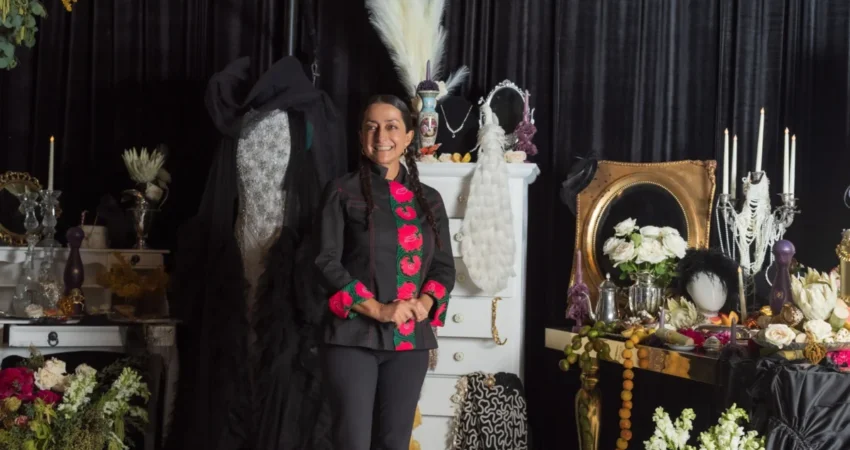
In the heart of Santa Fe, Mexico City’s high-altitude business district, a quiet revolution is taking place within the walls of Cascabel. Led by Chef Lula Martín del Campo, the restaurant serves as more than a culinary destination; it has become a bastion for the preservation of Mexico’s ancestral agricultural systems. While the aesthetic of the establishment—from its artisanal pottery to its curated furniture—suggests a ceremonial approach to dining, Martín del Campo maintains that the ultimate objective is the "ennoblement of the everyday." At Cascabel, the focus is not on the chef as a celebrity, but on the "holy trinity" of Mexican identity: corn, beans, and chili.
The culinary philosophy championed by Martín del Campo represents a growing movement among Mexican chefs to move beyond "high-end" gastronomy and return to the roots of the milpa. The milpa is an ancient polyculture system that has sustained Mesoamerican civilizations for millennia. In this symbiotic environment, corn, beans, squash, and chilies are grown together. The beans provide nitrogen to the soil, the corn provides a structure for the beans to climb, the squash covers the ground to retain moisture and prevent weeds, and the chilies act as natural pest deterrents. For Martín del Campo, these are not merely ingredients; they are the fundamental pillars of Mexican culture and food security.
The Architecture of the Milpa and the Threat of Monoculture
To understand the urgency behind Martín del Campo’s work, one must look at the current state of Mexican agriculture. Mexico is the center of origin for maize, boasting 64 distinct races and thousands of varieties adapted to diverse microclimates. However, this genetic diversity is under unprecedented threat. The rise of industrial monoculture and the introduction of genetically modified (GMO) seeds have pressured smallholder farmers to abandon traditional landrace varieties in favor of high-yield, uniform crops designed for global commodity markets.
.jpg)
"They are seeing corn as a commodity, but for us, it is identity; it is culture," Martín del Campo explains. This distinction is critical. Commodities are interchangeable and priced by global markets, whereas identity-linked crops carry specific nutritional, ceremonial, and culinary values that cannot be replicated by industrial hybrids. The chef notes that for years, the culinary industry demanded "perfection"—chilies of the exact same weight and color, often referred to as "Pantone-perfect" produce. This demand for uniformity inadvertently fueled the decline of biodiversity, as farmers prioritized aesthetic consistency over genetic resilience.
The shift toward sustainable gastronomy requires a fundamental re-education of both the chef and the consumer. Martín del Campo admits to a personal evolution in her approach, moving away from the pursuit of uniformity toward an appreciation for the "imperfect" beauty of organic, heirloom produce. This "clean food" movement is built on three pillars: environmental stewardship, social responsibility, and fair trade.
Amarillo Maíz: Bridging the Rural-Urban Divide
Recognizing that the survival of endemic seeds depends on market demand, Martín del Campo recently launched "Amarillo Maíz," a specialized retail space adjacent to Cascabel. Described as the "little brother" of the restaurant, Amarillo Maíz functions as a bridge between rural producers and urban consumers. The shop displays a vast array of beans and corn, many of which are on the brink of extinction simply because they are no longer requested by modern kitchens.
The economic reality for small-scale farmers in central Mexico is often precarious. Without a reliable marketplace, many are forced to transition to more profitable monocultures or abandon farming altogether. By incorporating these rare varieties into the menu at Cascabel—such as her signature huazontles with mole or mushroom pozole—Martín del Campo creates a consistent demand that allows farmers to maintain their traditional practices.

The pedagogical aspect of Amarillo Maíz is rooted in a quote by the late culinary historian Yuri de Gortari Krauss: "You only love what you know." By introducing city dwellers to the textures and flavors of heirloom Blue Cream beans or Cónico corn, the project aims to foster a cultural connection that transcends mere consumption.
Socio-Economic Implications: The Case of San Mateo Ozolco
The impact of revitalizing the milpa extends far beyond the kitchen; it has profound implications for migration and rural development. Martín del Campo highlights the community of San Mateo Ozolco, located near Calpan in the state of Puebla. Like many rural Mexican towns, San Mateo Ozolco experienced a massive exodus of its youth to the United States in search of the "American Dream."
However, a reverse migration trend has begun to emerge. As economic opportunities in the U.S. fluctuate and the social costs of migration become clearer, many individuals are returning to their ancestral lands. In San Mateo Ozolco, the return to the milpa has become a path to "full freedom." When the land is worked with modern ecological knowledge and supported by fair-trade partnerships with chefs like Martín del Campo, it can provide a dignified living.
The transition from survival-based farming to value-added agriculture allows these communities to remain intact. Rather than being a last resort, the milpa becomes a source of pride and economic sovereignty. This shift is essential for the "gastronomic justice" that Martín del Campo advocates—a system where the wealth generated by Mexico’s global culinary reputation actually reaches the hands of those who till the soil.

Supporting Data: The Biological and Economic Stakes
The importance of preserving landrace corn and beans is backed by significant scientific data. According to the National Commission for the Knowledge and Use of Biodiversity (CONABIO), Mexico’s native corn varieties possess traits—such as resistance to drought, frost, and specific pests—that are vital for climate change adaptation. As global weather patterns become more volatile, the genetic "library" held by smallholder farmers in Mexico may hold the key to global food security.
Furthermore, the nutritional profile of heirloom varieties is often superior to industrial counterparts. Native beans are higher in protein and antioxidants, while nixtamalized landrace corn provides essential calcium and niacin. Despite these benefits, the Food and Agriculture Organization (FAO) notes that the world has lost 75% of its plant genetic diversity since the early 20th century. In Mexico, the loss of a single corn variety is not just a biological loss; it is the loss of a specific culinary tradition, a unique flavor profile, and a piece of history.
The economic data also underscores the necessity of Martín del Campo’s model. Smallholder farmers (those with less than five hectares) produce approximately 60% of the food consumed in Mexico, yet they represent the most economically vulnerable segment of the population. Connecting these farmers directly to high-end culinary markets eliminates predatory intermediaries and ensures that a higher percentage of the final price stays in the rural community.
Chronology of a Culinary Movement
The evolution of Martín del Campo’s career mirrors a broader shift in the Mexican culinary landscape over the last two decades:

- Early 2000s: The "Modern Mexican" movement begins to gain international traction, often focusing on French techniques applied to Mexican ingredients.
- 2010: Mexican Traditional Cuisine is inscribed on the UNESCO Representative List of the Intangible Cultural Heritage of Humanity. This sparked a renewed national interest in ancestral techniques.
- 2015-2018: Chefs like Lula Martín del Campo begin to pivot toward "sustainable gastronomy," moving away from imported luxury goods and toward local, seasonal, and endemic products.
- 2019: Opening of Cascabel in Santa Fe, establishing a high-profile platform for milpa-based cuisine in a corporate environment.
- 2023-Present: The launch of Amarillo Maíz and increased advocacy for "clean food" in response to the global debates over GMO corn and glyphosate use in Mexico.
Analysis of Broader Impacts and Future Outlook
The work being done at Cascabel and Amarillo Maíz is part of a larger geopolitical and cultural struggle. The Mexican government’s recent efforts to phase out GMO corn for human consumption have sparked trade disputes under the USMCA (United States-Mexico-Canada Agreement). In this context, chefs have moved from the kitchen to the front lines of policy debate.
By proving that a restaurant can be both commercially successful and ethically grounded in biodiversity, Martín del Campo provides a template for the future of the industry. The "younger generation of diners," as she notes, is increasingly conscious of the origin of their food. They are looking for transparency, soil health, and social equity.
Ultimately, the message from Cascabel is one of hope and responsibility. The preservation of Mexico’s culinary heritage is not an act of nostalgia; it is a forward-looking strategy for environmental resilience and social justice. As Martín del Campo concludes, eating well is not a luxury—it is an act of justice toward those who create the products that she transforms into art. The survival of the milpa depends on the choices made at the table today, ensuring that the corn, beans, and chilies that defined Mexico’s past will continue to sustain its future.

0 Comments