
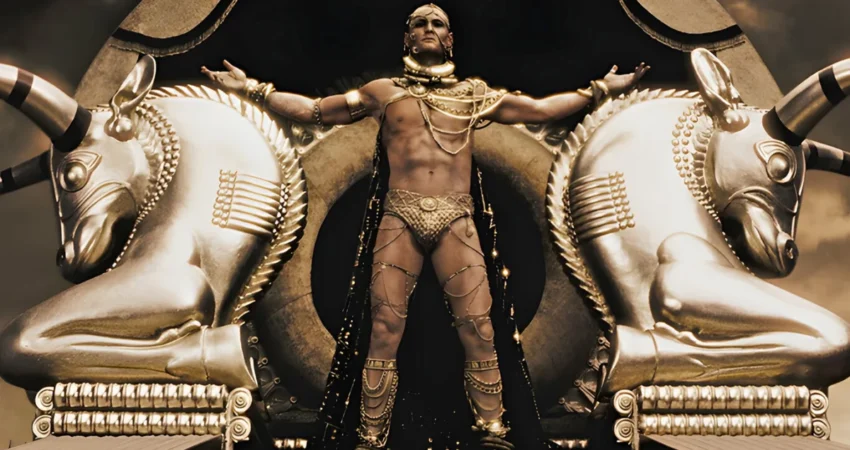
The cinematic landscape of the mid-2000s was irrevocably altered by the release of 300, a highly stylized adaptation of Frank Miller’s graphic novel that brought the Battle of Thermopylae to life with a revolutionary visual language. Directed by Zack Snyder, the film became a cultural phenomenon, grossing hundreds of millions of dollars and establishing a signature aesthetic that would define a decade of action cinema. However, as the film prepares to depart from Netflix on September 5, 2024, the legacy of both the movie and its creator has become a subject of intense debate among cinephiles, critics, and social media commentators. While the film remains a landmark in digital filmmaking, Snyder’s recent projects have polarized audiences, making the re-evaluation of his breakout hit a timely exercise for streaming subscribers.
The Technical Innovation and Box Office Triumph of 2007
When 300 debuted in March 2007, it was viewed as a significant gamble for Warner Bros. Pictures. With a production budget of approximately $65 million, the film utilized a "digital backlot" technique, filming almost entirely on soundstages with blue and green screens to replicate the high-contrast, desaturated aesthetic of Frank Miller’s source material. This method allowed Snyder to manipulate every frame, utilizing "crushed blacks" and a specific color palette to evoke the feel of a living comic book rather than a historical documentary.

The gamble paid off exponentially. On its opening weekend in the United States, 300 shattered records for a March release, earning $70.9 million. By the end of its theatrical run, the film had amassed over $456 million worldwide. Beyond the financial success, the film achieved a rare level of cultural saturation. The line "This is Sparta!", delivered with guttural intensity by Gerard Butler as King Leonidas, became an immediate staple of internet meme culture and remains one of the most recognizable quotes in 21st-century cinema. On review aggregators like Rotten Tomatoes, the film initially garnered a strong audience approval rating of 86%, signaling a deep resonance with the public that transcended traditional critical skepticism.
Chronology of Zack Snyders Directorial Evolution
The success of 300 catapulted Zack Snyder into the upper echelon of Hollywood directors, granting him the creative capital to tackle increasingly ambitious and complex projects. His career trajectory following the Spartans’ stand at Thermopylae illustrates a director committed to a specific, uncompromising vision.
In 2009, Snyder released Watchmen, an adaptation of Alan Moore’s seminal graphic novel. While it did not match the box office heights of 300, it further cemented his reputation as a filmmaker capable of translating "unfilmable" literary works into visual spectacles. This was followed by the original, albeit divisive, Sucker Punch in 2011, which pushed his stylistic tropes—heavy use of slow-motion, stylized violence, and CGI-heavy environments—to their limits.

The most significant shift in Snyder’s career occurred in 2013 with Man of Steel. Produced alongside Christopher Nolan, the film served as the foundation for the DC Extended Universe (DCEU). Snyder’s deconstructionist approach to Superman, followed by Batman v Superman: Dawn of Justice (2016), sparked a schism in the fan base. While many praised the operatic scale and visual grandeur, others criticized what they perceived as a fundamental misunderstanding of the characters’ hopeful mythologies. This tension culminated in the 2021 release of Zack Snyder’s Justice League, a four-hour "Snyder Cut" that was only realized after a multi-year grassroots campaign by fans, highlighting the unique and often volatile relationship between the director and his audience.
From Stylistic Pioneer to Polarizing Figure
In recent years, the conversation surrounding Zack Snyder has shifted from his technical prowess to his narrative efficacy. Following his departure from the DCEU, Snyder moved to Netflix, where he produced Army of the Dead (2021) and the two-part space epic Rebel Moon (2023–2024). These projects, while drawing significant viewership numbers, faced harsh critical reception. Rebel Moon, in particular, was criticized for its reliance on derivative plot structures and an perceived over-reliance on the slow-motion techniques that once felt fresh in 300.
The criticism of Snyder often extends beyond the films themselves. Industry analysts point to a "Snyder fatigue" caused by the director’s consistent prioritisation of "the cool factor" over cohesive storytelling. Furthermore, the behavior of a segment of his online following—often described as a "toxic fandom"—has created a defensive atmosphere around his work. Every release becomes a battleground for discourse, where objective analysis is frequently drowned out by extreme partisan ship. Despite this, Snyder remains one of the few contemporary directors with a "blank check" status in the streaming world, capable of commanding nine-figure budgets for original intellectual properties.

Supporting Data and Historical Context
To understand the impact of 300, one must look at the historical and literary context it sought to portray. The film is a fictionalized retelling of the Battle of Thermopylae in 480 BC, where King Leonidas led 300 Spartans and several thousand Greek allies against the massive invading Persian army of Xerxes I. While the film was criticized by some historians for its inaccuracies—ranging from the depiction of Persian soldiers as monstrous entities to the Spartans’ lack of proper armor—Snyder and Miller maintained that the story was told from the perspective of a Spartan soldier (Dilios) using hyperbole to inspire his comrades.
From a data perspective, 300 represents a peak in the "R-rated epic" genre. Its success paved the way for other stylized action films and television series, such as Starz’s Spartacus, which adopted the "blood and sand" aesthetic almost entirely. The film’s influence is also visible in the gaming industry, with titles like God of War and Assassin’s Creed Odyssey drawing visual inspiration from Snyder’s depiction of ancient warfare.
Broader Impact and Industry Implications
The departure of 300 from Netflix on September 5 highlights the shifting nature of streaming rights and the temporary nature of digital libraries. As Netflix focuses more heavily on its original content and rotating licensed titles, classic hits from the 2000s are frequently shuffled between platforms. For viewers, this move represents the end of an era on the platform where Snyder’s most influential work was easily accessible alongside his newest endeavors.

The implications of Snyder’s career arc also reflect broader trends in Hollywood. The transition from 300’s lean, effective storytelling to the sprawling, often fragmented narratives of his recent work suggests a challenge faced by many "visionary" directors: the lack of a strong editorial counter-voice. In 2007, Snyder was a director proving his worth; in 2024, he is a brand. The polarized reception of his current work suggests that while style can launch a career, narrative depth is required to sustain critical longevity in an era where audiences are increasingly weary of "spectacle for spectacle’s sake."
Final Availability and Where to Watch
For those looking to revisit the film that defined Zack Snyder’s career, the window of opportunity on Netflix is closing rapidly. Subscribers have until the end of the day on September 4 to stream the movie. Following its removal from the Netflix catalog on September 5, 300 is expected to remain available on Max (formerly HBO Max), the streaming home for Warner Bros. Discovery content.
As the film transitions between platforms, it serves as a reminder of a specific moment in cinema history—a time when the marriage of comic book aesthetics and historical legend created a new type of blockbuster. Whether viewed as a masterpiece of visual design or a precursor to the stylistic excesses of modern action cinema, 300 remains a pivotal work that demands attention from anyone interested in the evolution of the 21st-century film industry. Its departure from Netflix marks a significant moment for the service’s film library, urging fans to witness the "glory of Sparta" one last time before it migrates to its next digital home.

0 Comments