
 Julia Prastini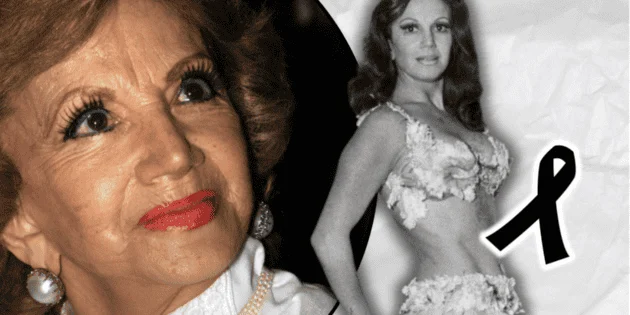
Mexico City, Mexico – On Wednesday, relatives of the esteemed actress Ana Luisa Peluffo announced her peaceful passing at the age of 96, marking the end of an era for Mexican cinema and the global artistic community. Peluffo, a quintessential figure of the Golden Age of Mexican Cinema, died in the serene surroundings of her ranch in Jalisco, accompanied by her cherished loved ones. The news, confirmed by her family, underscored a life lived with grace and profound impact on the cultural landscape of Mexico and beyond. Her family released a heartfelt statement, "The family of actress Ana Luisa Peluffo informs that she passed away peacefully at her ranch in Jalisco, accompanied by her loved ones. During her final years, she lived with serenity, surrounded by care and close to her son. The funeral services were held intimately and privately, in accordance with her wishes." This private farewell reflected her personal values, contrasting with a public career that spanned over seven decades and left an indelible mark on millions.
The announcement further conveyed the family’s deep gratitude for the affection Peluffo received throughout her extensive career. "Her memory will remain alive in those who knew her and valued her presence and her artistic legacy," the statement affirmed. This sentiment resonated deeply within the entertainment industry, as Mexican cinema bids farewell to one of its most enduring legends and one of the most prolific artists in its history. Her passing not only signifies the loss of an individual but also serves as a poignant reminder of the dwindling number of living luminaries from a golden era that shaped national identity and artistic expression.
Ana Luisa de Jesús Quintana Paz Peluffo was born on October 9, 1929, in Querétaro, Mexico. From an early age, it became evident that she possessed a unique blend of talent and striking beauty, attributes that would prove instrumental in forging an extraordinary career across cinema, theater, and television. Her artistic journey began in the late 1940s, culminating in a staggering filmography comprising more than 200 productions. This immense body of work solidifies her status as one of the most dedicated and versatile performers of her generation, traversing various genres and collaborating with an array of legendary directors and actors.
Peluffo’s initial foray into the performing arts was not confined to Mexican borders. Her international debut came with the American production "Tarzan and the Mermaids" (1948), a significant stepping stone that saw her filming in the exotic locales of Acapulco. This early exposure to Hollywood-style production provided her with valuable experience and a glimpse into the global film industry, preparing her for the illustrious career that lay ahead. Upon her return to Mexico, she made her domestic debut in "La Venenosa" (The Poisonous Woman, 1949), a film that officially launched her career in her home country. The 1950s proved to be a pivotal decade for Peluffo, as she rapidly consolidated her fame, becoming a recognizable and sought-after presence on the silver screen during a period of unprecedented artistic flourishing for Mexican cinema.
The Golden Age of Mexican Cinema, spanning roughly from the 1930s to the late 1950s, was a period characterized by prolific output, artistic innovation, and the creation of iconic stars whose influence extended across Latin America and beyond. Ana Luisa Peluffo emerged as a prominent figure within this vibrant landscape, contributing significantly to its cultural tapestry. Her career was not without its moments of controversy, which, paradoxically, cemented her status as a trailblazer. One such moment came with her role as Silvia in the film "La fuerza del deseo" (The Power of Desire, 1955), directed by Miguel M. Delgado. In this film, Peluffo performed what is widely regarded as the first full frontal nude scene in Mexican cinema.
This act was revolutionary for its time, eliciting a torrent of criticism and public debate in a conservative society. The implications of such a scene, particularly one involving a prominent female actress, were profound. The media scrutinized her, and public opinion was sharply divided. Yet, Peluffo herself approached the scene with a different perspective, viewing it not as mere exhibitionism but as a legitimate expression of artistic freedom and narrative necessity. She was considered a transgressive figure of the era, challenging societal norms and pushing the boundaries of what was acceptable on screen. Her courage in taking on such a role undeniably paved the way for future generations of actresses, opening discussions about body image, censorship, and the role of art in reflecting and challenging social conventions. This moment was not just a personal career milestone but a significant event in the broader history of Mexican culture, underscoring her willingness to take risks for artistic integrity.
Throughout her expansive career, Ana Luisa Peluffo had the distinct privilege of sharing the screen with some of the most revered figures of the Golden Age of Mexican Cinema. Her collaborators included legendary actors such as Germán Valdés, famously known as "Tin Tan," whose comedic genius captivated audiences; Manuel Valdés, another prominent member of the esteemed Valdés family known for his versatile performances; the iconic Pedro Infante, a national hero celebrated for his acting and singing prowess; and the legendary María Félix, "La Doña," whose formidable screen presence and captivating persona defined an era. Working alongside these titans not only honed Peluffo’s craft but also solidified her place within this elite pantheon of Mexican cinematic history. Each collaboration added depth and dimension to her filmography, showcasing her ability to hold her own amidst giants.
Her talent was not exclusively recognized within Mexico. In 1977, Peluffo starred in "Flores de Papel" (Paper Flowers), a film that garnered international acclaim and was presented at the prestigious 28th Berlin International Film Festival. This appearance at one of the world’s leading film festivals reaffirmed her presence in international cinematographic circuits, demonstrating the universal appeal of her performances and the quality of the productions she was involved in. Such recognition on a global stage further cemented her reputation as an actress of significant caliber, capable of transcending national boundaries with her artistry.
As the landscape of entertainment evolved, so too did Ana Luisa Peluffo’s career. Demonstrating remarkable adaptability and an enduring passion for acting, she successfully transitioned into the burgeoning world of Mexican television. Her presence in major telenovelas allowed her to reach new generations of viewers who might not have been familiar with her extensive cinematic work. Notable television appearances include "Lazos de amor" (Ties of Love, 1995), "El privilegio de amar" (The Privilege to Love, 1998), and "Contra viento y marea" (Against Wind and Tide, 2005). These roles showcased her versatility and ability to remain relevant across different mediums, proving that her star power was not confined to the silver screen but could shine brightly in the intimate setting of television. Her later career on television ensured that her legacy would continue to inspire and entertain for decades, bridging the gap between the classic and contemporary eras of Mexican entertainment.
Ana Luisa Peluffo’s passing marks a significant moment for Mexican culture. Her more than seven decades in the entertainment industry, characterized by a prolific output of over 200 films and television programs, paint the picture of an artist truly dedicated to her craft. She was not merely an actress but a cultural phenomenon, whose career mirrored the transformations and triumphs of Mexican cinema itself. From her groundbreaking role in "La fuerza del deseo" which challenged societal norms and sparked national conversations about art and morality, to her collaborations with the most revered figures of the Golden Age, Peluffo consistently demonstrated courage, talent, and an unwavering commitment to her artistic vision. Her ability to remain active and celebrated across different eras and platforms — from international film sets to the intimate screens of Mexican telenovelas — speaks volumes about her enduring appeal and adaptability.
The implications of her departure extend beyond the immediate grief of her family and colleagues. Her passing serves as a potent reminder of the fading generation of artists who built the foundation of Mexican cinema. As these titans leave us, so too do direct links to a pivotal period of national artistic identity. Cultural institutions and film historians will undoubtedly continue to analyze and celebrate her contributions, ensuring that her extensive filmography and pioneering spirit remain accessible to future generations. Her legacy is one of boldness, resilience, and an unyielding dedication to art, making an immeasurable contribution to the cultural heritage of Mexico. Tributes from various sectors of the artistic community, though not specifically cited in the family’s announcement, are expected to pour in, honoring a woman who truly embodied the spirit of Mexican show business. Her life’s work stands as a testament to the power of art to provoke, to entertain, and to transcend time. With her death, Mexican cinema loses one of its most venerable and representative figures, whose indelible footprint will forever be etched in the annals of the nation’s cultural history.
(Information sourced from SUN and EFE, supplemented with historical context and general knowledge of Mexican cinema.)




 Eva Lovia
 Julia Chirkova
 Nila Kartika Wati
 Lina Irawan
 Jia Lissa