
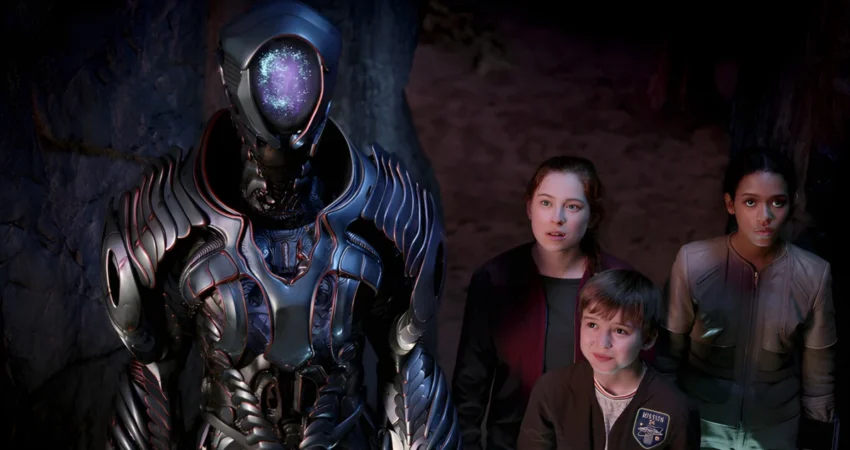
The 2018 reimagining of Lost in Space represents a significant milestone in the landscape of modern streaming television, serving as a high-budget, sophisticated reboot of the 1965 series created by Irwin Allen. Produced by Legendary Television, Synthesis Entertainment, Clickety-Clack Productions, and Applebox Entertainment, the series was designed to transition the franchise from its "campy" origins into a grounded, emotionally resonant epic that balances hard science fiction with family-centric drama. Over the course of three seasons and 28 episodes, the production established itself as a technical powerhouse, garnering critical acclaim for its visual effects and its ability to modernize a narrative that has been a staple of American pop culture for over half a century.
The Narrative Core and Premise of the Reboot
Set in the year 2044, the series follows the Robinson family after an extinction-level event known as the "Christmas Star" makes Earth increasingly uninhabitable. The Robinsons—comprising aerospace engineer Maureen, former Navy SEAL John, and their three children, Judy, Penny, and Will—are selected for the 24th mission of the Resolute, a massive interstellar spacecraft tasked with transporting colonists to the Alpha Centauri star system. The mission is disrupted when an alien robot attacks the Resolute, forcing the colonists to evacuate in smaller "Jupiter" craft.
The Robinson family crashes on an Earth-like but treacherous planet, where they must navigate alien ecosystems while repairing their vessel. The narrative pivot of the series occurs when the youngest child, Will Robinson, encounters a damaged alien robot. Unlike the programmed machine of the 1960s series, this version of the Robot is a sentient, complex being with a mysterious origin. Their bond becomes the emotional and thematic anchor of the show, exploring the ethics of artificial intelligence, the nature of friendship, and the responsibilities of discovery.
Chronology of the Lost in Space Franchise
To understand the 2018 series’ impact, it is necessary to examine the franchise’s historical trajectory. The concept originally drew inspiration from the 1812 novel The Swiss Family Robinson by Johann David Wyss and the Gold Key Comic Space Family Robinson.
- The Original Series (1965–1968): Created by Irwin Allen, the original show aired on CBS. While it began as a serious survivalist drama, it eventually shifted toward a whimsical, "monster-of-the-week" format characterized by the flamboyant performance of Jonathan Harris as Dr. Zachary Smith.
- The 1998 Feature Film: Directed by Stephen Hopkins, this big-screen adaptation attempted a darker tone but met with mixed critical reception, despite its commercial success. It was noted for its early use of extensive CGI, though many felt it lost the "heart" of the original family dynamic.
- The 2018 Netflix Reboot: Showrunners Matt Sazama and Burk Sharpless sought to return to the survivalist roots of the concept. By utilizing modern streaming budgets—estimated to be several million dollars per episode—they created a cinematic experience that prioritized realism and character growth.
Technical Production and Visual Achievements
One of the most defining characteristics of the Netflix production is its commitment to high-fidelity visual storytelling. The series was filmed primarily in British Columbia, Canada, and Iceland, using rugged, natural landscapes to ground the alien environments in reality. This was supplemented by world-class digital effects that earned the show multiple Primetime Emmy Award nominations for Outstanding Special Visual Effects in 2018, 2020, and 2022.
The design of the Robot, created by Image Engine and Spectral Motion, moved away from the "clunky" aesthetic of 1960s sci-fi. The new Robot featured a shifting, multi-limbed physiology and a face composed of a shifting LED nebula, which changed color to reflect its emotional state or directives. This design allowed for a non-verbal performance that relied on physical acting and lighting, a move praised by critics for adding depth to the character’s interaction with Will Robinson.
Furthermore, the series utilized 4K resolution and High Dynamic Range (HDR) to enhance the contrast between the sterile, high-tech interiors of the Jupiter spacecraft and the vibrant, often dangerous colors of the alien worlds. The sound design also played a crucial role, with Christopher Lennertz providing a score that paid homage to John Williams’ original 1960s themes while introducing modern, orchestral motifs.

Character Dynamics and Modernized Archetypes
The 2018 iteration of Lost in Space distinguished itself by subverting traditional gender roles and character tropes found in earlier versions of the story.
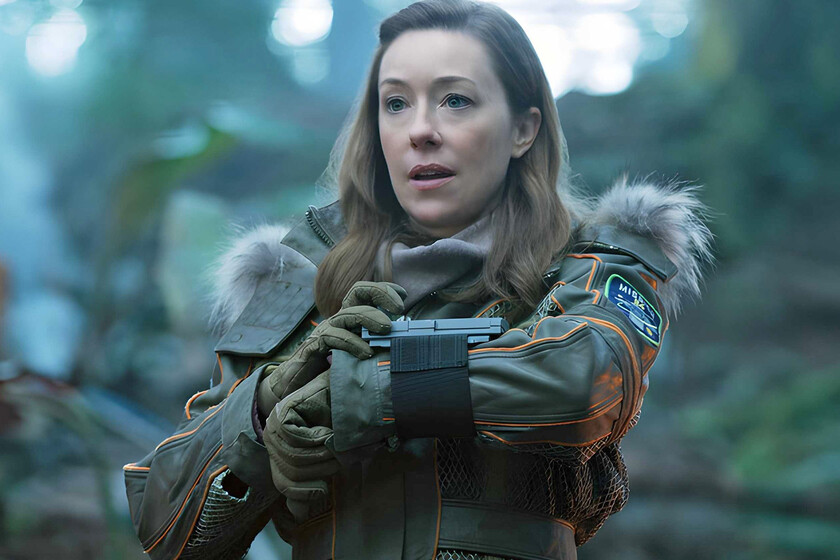
- Maureen Robinson (Molly Parker): In this version, Maureen is the primary scientific lead and the tactical mind of the family. Her character is defined by her brilliance and her sometimes morally ambiguous decisions made in the name of protecting her children.
- John Robinson (Toby Stephens): Rather than being the undisputed leader, John is a father attempting to reconnect with a family he left behind for military service. His arc focuses on domestic reconciliation and the transition from a soldier to a cooperative partner.
- Dr. Smith (Parker Posey): Perhaps the most radical departure was the casting of Parker Posey as June Harris, a criminal who usurps the identity of "Dr. Smith." Unlike the comedic villainy of the 1960s, Posey’s Smith is a sociopathic master of manipulation, driven by a primal need for self-preservation.
- The Children: Judy (Taylor Russell) is portrayed as a highly skilled medical doctor; Penny (Mina Sundwall) provides the narrative voice and emotional wit; and Will (Maxwell Jenkins) represents the moral compass of the series.
Critical Reception and Industry Data
Upon its release, the series was met with generally positive reviews, maintaining an average approval rating of 84% on Rotten Tomatoes across its three seasons. Critics highlighted the show’s "sense of wonder" and its appeal as a rare "all-ages" science fiction epic that did not sacrifice complexity for accessibility.
According to data from Nielsen and Netflix’s internal metrics, the first season was a significant hit, attracting over 6.3 million viewers within its first three days of release in the United States alone. This success justified the high production costs and allowed the showrunners to plan a definitive three-season arc, a rarity in an era where many streaming series face abrupt cancellation. The decision to conclude the series with Season 3 was described by showrunner Zack Estrin as a creative choice to ensure a satisfying, "planned" ending for the Robinson family’s journey.
Comparative Analysis with Contemporary Sci-Fi
In the broader context of the "Streaming Wars," Lost in Space occupied a unique niche. While series like The Expanse focused on political realism and "hard" sci-fi, and Star Trek: Discovery leaned into serialized military conflict, Lost in Space prioritized the "adventure" subgenre. It functioned as a bridge between the family-friendly tone of Star Wars and the survivalist tension of The Martian.
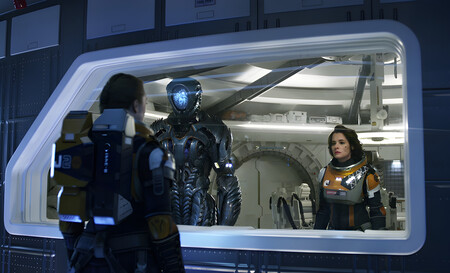
The show’s emphasis on problem-solving through science and engineering—often referred to as "competence porn"—was a hallmark of its writing. Episodes frequently revolved around the characters using physics, chemistry, and biology to escape life-threatening situations, fostering a narrative environment where intelligence was as valued as physical bravery.
Broader Impact and Implications for Streaming Content
The legacy of the Lost in Space reboot lies in its proof of concept for the "prestige family drama." It demonstrated that there was a global audience for high-budget science fiction that avoided excessive violence or mature themes in favor of tension and emotional stakes.
The series also contributed to the trend of "limited-run" mentalities in streaming, where a show is designed with a clear beginning, middle, and end. By completing the story of the Robinsons reaching Alpha Centauri, Netflix provided a "evergreen" library title that continues to see high engagement from new subscribers.
Furthermore, the production’s success in visual effects helped solidify the Vancouver film industry as a hub for high-end sci-fi production, influencing the technical pipelines of subsequent series like Foundation and Halo. As the industry moves forward, Lost in Space remains a benchmark for how to successfully modernize a legacy IP by respecting its origins while fearlessly innovating for a contemporary audience. For viewers and scholars of the genre, the series stands as a testament to the enduring power of the "strangers in a strange land" motif, proving that the story of a family lost among the stars is as relevant in the 21st century as it was during the Space Race of the 1960s.

0 Comments