
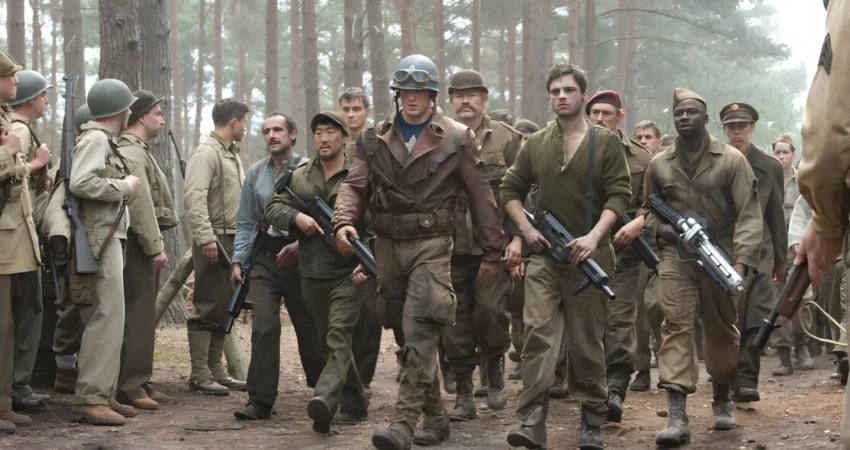
The release of Captain America: The First Avenger in July 2011 marked a definitive turning point for Marvel Studios, transitioning the Marvel Cinematic Universe (MCU) from a series of experimental solo ventures into a cohesive, interconnected narrative tapestry. Directed by Joe Johnston, the film served as the final solo character introduction before the landmark 2012 ensemble, The Avengers. While it was the fifth film released in the franchise’s production order, it occupies the chronological starting point of the MCU’s primary timeline, establishing the foundational lore, moral philosophy, and scientific origins that have governed over thirty subsequent films and television series. As the studio prepares for the monumental release of Avengers: Doomsday, Captain America: The First Avenger has been officially identified as one of the fifteen essential viewing experiences required to fully grasp the complexities of the upcoming Multiverse Saga climax.
The Genesis of the Star-Spangled Avenger
The production of Captain America: The First Avenger was a significant gamble for Marvel Studios. Unlike Iron Man, which benefited from a contemporary setting and a high-tech aesthetic, Captain America was a period piece set during the height of World War II. The creative team faced the challenge of making a character often viewed as a propagandistic relic of the 1940s resonate with a cynical, modern global audience. Actor Chris Evans was famously hesitant to accept the role, declining the offer three times due to concerns over the multi-picture commitment and the potential loss of privacy. It was ultimately the intervention of Robert Downey Jr., who had already found massive success as Tony Stark, that convinced Evans to join the franchise.
The film introduces Steve Rogers, a frail but exceptionally brave young man from Brooklyn who is repeatedly rejected for military service due to various health issues. His unwavering desire to serve his country and "stop bullies" attracts the attention of Dr. Abraham Erskine, a German defector who has developed the Super Soldier Serum. Through a combination of chemical enhancement and "Vita-Rays," Rogers is transformed into the peak of human physical potential. This transformation was achieved through groundbreaking visual effects by Lola VFX, which utilized a "digital shrinking" process to place Evans’ head and performance onto the body of a smaller actor, ensuring the audience felt the weight of Rogers’ physical journey.
Narrative Foundation and the Introduction of the Tesseract
Beyond its character study, Captain America: The First Avenger established the primary MacGuffin of the MCU’s first decade: the Tesseract. In the film’s opening sequence, the villainous Johann Schmidt, also known as the Red Skull, uncovers the Tesseract in a church in Tønsberg, Norway. Schmidt, the leader of Hydra—the Nazi deep-science division—seeks to harness the cube’s "power of the gods" to fuel advanced weaponry.
Audiences would later learn in 2012’s The Avengers and 2019’s Captain Marvel that the Tesseract was merely a vessel for the Space Stone, one of the six Infinity Stones. By placing this cosmic artifact in a 1940s setting, Marvel Studios successfully linked the grounded history of the human world with the expansive, celestial mythology of the wider universe. The film also introduced Howard Stark, the father of Tony Stark, creating a generational link that would define the friction and eventual brotherhood between Steve Rogers and Iron Man for years to come.
Chronological Significance and the 15-Film Watchlist
In the lead-up to Avengers: Doomsday, Marvel Studios has curated a list of fifteen films that serve as the essential roadmap for the next phase of the franchise. While the list includes modern multiverse-heavy entries like Spider-Man: No Way Home and Doctor Strange in the Multiverse of Madness, the inclusion of Captain America: The First Avenger underscores the importance of returning to the franchise’s roots.
Chronologically, the film sits at the very beginning, predating the events of Captain Marvel (set in the 1990s) and Iron Man (set in 2008). Understanding the origins of the Super Soldier program is vital, as the serum’s legacy continues to drive plots in projects such as The Falcon and the Winter Soldier and the upcoming Captain America: Brave New World. Furthermore, with the announcement that Robert Downey Jr. will return to the MCU as Victor Von Doom, and rumors swirling regarding the return of Chris Evans in a multiverse capacity, the ideological clash between the "First Avenger" and the forces of tyranny remains the emotional heart of the series.

Critical and Commercial Performance Data
Upon its release, Captain America: The First Avenger was a commercial success, grossing approximately $370.6 million at the worldwide box office. While this figure was modest compared to the billion-dollar heights the franchise would later reach, it was a solid performance for a period-piece superhero film. Critically, the film maintains an approval rating of 80% on Rotten Tomatoes, with critics praising Joe Johnston’s direction for capturing the pulpy, adventurous spirit of 1940s cinema while maintaining the stakes necessary for a modern blockbuster.
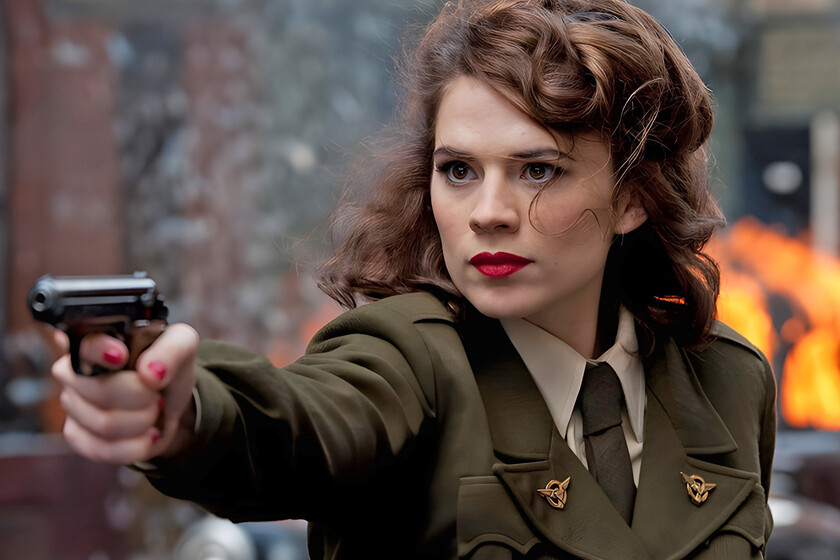
The film’s budget was estimated at $140 million, a significant investment at the time. The production design, which blended historical accuracy with "dieselpunk" technology, received high marks for creating a unique visual identity within the MCU. The film also served as a launchpad for several key characters, most notably Bucky Barnes (Sebastian Stan) and Peggy Carter (Hayley Atwell). Atwell’s performance was so well-received that it led to the spin-off series Agent Carter and multiple reappearances across the MCU, including a multiverse variant in the second Doctor Strange film.
The Impact of Hydra and the Legacy of Steve Rogers
One of the film’s most enduring contributions to the MCU is the introduction of Hydra. The organization’s mantra—"Cut off one head, two more shall take its place"—became a recurring threat that fundamentally altered the landscape of the franchise. The revelation in 2014’s Captain America: The Winter Soldier that Hydra had been growing like a parasite within S.H.I.E.L.D. since the end of World War II was only made impactful because of the groundwork laid in the 2011 film.
Steve Rogers’ sacrifice at the end of the movie—crashing Schmidt’s Valkyrie wing into the Arctic to prevent a global catastrophe—established the character as the moral compass of the Avengers. His seventy-year "nap" in the ice allowed him to bridge the gap between the Greatest Generation and the modern era, providing a unique perspective on freedom, security, and duty. As the MCU enters the "Doomsday" era, where the very fabric of reality is at stake, the purity of Rogers’ original mission serves as a necessary contrast to the moral ambiguities of the Multiverse.
Broader Implications for Avengers: Doomsday
The inclusion of Captain America: The First Avenger in the essential viewing list for Avengers: Doomsday suggests that the upcoming film will deal heavily with the concept of legacy. With the Multiverse Saga exploring different versions of familiar heroes, the original Steve Rogers represents the "Prime" timeline’s standard for heroism.
Industry analysts suggest that Avengers: Doomsday will likely draw parallels between the rise of Hydra and the multiversal threat posed by Doctor Doom. Just as Steve Rogers stood against a dictator who sought to use cosmic power to reshape the world in his image, the new iteration of the Avengers will face a similar ideological struggle. The return to the 1940s origins may also hint at time-travel elements or multiversal "anchor points" that tie back to the era of the First Avenger.
Furthermore, the relationship between Steve Rogers and the Stark family remains a pivotal narrative thread. Howard Stark’s involvement in Project Rebirth and his recovery of the Tesseract from the ocean floor set the stage for the modern MCU. If Avengers: Doomsday features a variant of Victor Von Doom played by Robert Downey Jr., the psychological impact on characters who knew Tony Stark—and the historical weight of the Stark name—will be immense.
Conclusion and Streaming Availability
As the countdown to Avengers: Doomsday begins, with approximately sixteen weeks remaining before the marketing campaign reaches its peak, Captain America: The First Avenger stands as a testament to the longevity of well-crafted character storytelling. It is more than just an origin story; it is a historical document within the fiction of the MCU that explains why the world needs heroes.

The film remains a staple of the Disney+ library, where it is available for streaming in 4K Ultra HD with IMAX Enhanced formatting. For fans looking to complete the fifteen-film "requirement" set by Marvel Studios, revisiting the journey of the "kid from Brooklyn" is the logical starting point. By understanding where the journey began in the trenches of World War II, audiences will be better prepared for the multiversal war that threatens to end everything. Captain America: The First Avenger continues to hold its rank as a foundational pillar of the most successful film franchise in history, proving that a hero is defined not by the strength of his muscles, but by the size of his heart.

0 Comments