
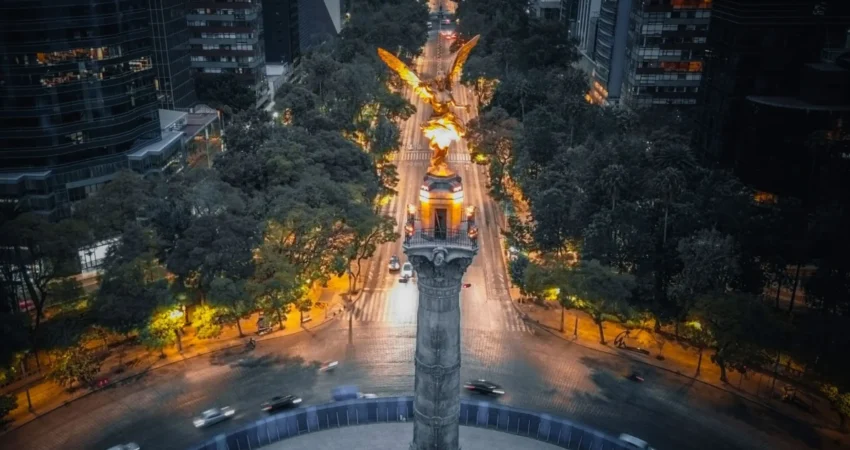
Mexico City has long served as a focal point for Latin American cultural discourse, and the schedule for September 2026 reinforces this status through a dense convergence of artistic premieres, culinary innovations, and historical commemorations. As the nation enters its "Mes de la Patria" (National Month), the capital’s cultural infrastructure—ranging from established museums like the Tamayo to independent galleries in the San Miguel Chapultepec and Roma districts—is set to debut projects that challenge traditional narratives while celebrating regional identity. This month is particularly significant due to the overlap of GAMA Week, an initiative by the Associated Galleries of Mexico, and FotoSeptiembre, a biennial photography festival organized by the Centro de la Imagen. These events collectively drive a projected increase in cultural tourism, as the city continues to position itself as a global destination for high-end gastronomy and contemporary art.

The Evolution of the CDMX Gallery Landscape During GAMA Week
The first half of September 2026 is dominated by GAMA Week, a strategic effort to consolidate the city’s commercial art market and foster public engagement with contemporary practices. Among the most anticipated openings is "APNEA" by Spanish artist Candela Capitán at Galería LABOR. Capitán, a choreographer and dancer, utilizes the gallery space to simulate a "near-future spa," where the concept of rest is pushed to physical extremes. The installation features a hydraulic circuit connecting water reservoirs and purification systems to a central bathtub, functioning as both a machine and an organism. Curatorial analysis suggests that Capitán’s work reflects a growing trend in the CDMX art scene: the integration of performance and bio-technology to explore the limits of the human body.
%25204.36.22%25E2%2580%25AFp.m..png)
In the San Miguel Chapultepec neighborhood, Alejandra Topete Gallery presents "Natura Animalis" by Tatiana Parcero. Part of the FotoSeptiembre circuit, this exhibition features 15 works that bridge the gap between human physiology and the natural world. Parcero, a prominent figure in Mexican photography, uses the body as a map to explore ecological fragility and the dynamics of environmental exploitation. Similarly, Patricia Conde Galería offers a significant retrospective titled "Hipervínculos: Alejandro Cartagena 2005-2026." Cartagena, often associated with the "Generation of Doubt," has spent two decades documenting urban structures and border dynamics. His inclusion of artificial intelligence in recent works marks a shift in documentary photography from simple record-keeping to the construction of complex, speculative narratives.
%2C%25201955%2520Pub%2520en%2520Soho%2C%2520Londres%2520(Inglaterra)%2C%25201955%2520%2520%2520%2520%2520%2520%2520%2520%2520%2520%2520%2520%2520%2520%2520%2520%2520%2520%2520copia.jpg)
The Roma and Polanco districts also see a surge in activity. Proyectos Monclova presents a dual exhibition featuring Uruguayan artist Guillermo García Cruz and the late Mexican abstractionist Manuel Felguérez. García Cruz’s work, "Imágenes interrumpidas," dialogues with the digital "glitch" aesthetic, while the Felguérez showcase, "Evocaciones escultóricas," provides a rare look at the artist’s late-period sculptures in iron and bronze. These exhibitions highlight the city’s ability to maintain a dialogue between mid-century modernism and contemporary digital culture.

Public Art and Institutional Milestones
Beyond the private gallery circuit, public spaces in Mexico City are hosting large-scale installations aimed at democratizing access to high art. The First Section of the Bosque de Chapultepec, specifically the gates facing the National Museum of Anthropology, will host a major outdoor retrospective of Willy Ronis. Curated by Matthieu Rivallin, the exhibition comprises 60 photographs from one of the most influential figures of 20th-century French humanism. By placing these images in a high-traffic public park, the city reinforces its commitment to using urban spaces as galleries, allowing residents to engage with the poetic documentation of everyday life.
.jpg)
Institutional strength is further showcased at the Museo Tamayo with the exhibition "Tamayo, Nieto, Toledo: The Paris Years." This show traces the development of three Oaxacan masters—Rufino Tamayo, Rodolfo Nieto, and Francisco Toledo—during their respective tenures in Europe. The exhibition analyzes how these artists integrated pre-Hispanic aesthetics with the European avant-garde, ultimately shaping the trajectory of modern Mexican art. Analysts suggest that such institutional retrospectives are vital for maintaining the historical context of the current contemporary art boom in the city.

Gastronomic Shifts: From Fusion to Contextual Cuisine
The culinary landscape of Mexico City in September 2026 is characterized by a departure from generic fusion in favor of "contextual" cuisine—dishes that respond specifically to local history, architecture, and sound. A prime example is Alterna, a new fine-dining concept in the Condesa neighborhood led by Chef Cosimo Branca. Unlike traditional restaurants that adhere to a specific geographic cuisine, Alterna focuses on global techniques applied to local products, emphasizing the intersection of design, music, and architecture.
.jpg)
In the Roma Norte district, Chef Mariana Villegas debuts a contemporary Mexican menu at Lina. Her approach involves reinterpreting Northern Mexican recipes, such as Wagyu arrachera paired with "sangre de toro" beans from Morelos. This movement towards elevating regional ingredients through rigorous technique is also evident in the opening of TORI in Polanco. Occupying a landmark building designed by Michel Rojkind and renovated by Esrawe Studio, TORI represents a new phase for Japanese cuisine in Mexico. Led by Chef Marcelo Hisaki, the restaurant avoids the "fusion" label, opting instead for a precise application of Japanese codes to fresh, local ingredients.

The city’s bar scene is also evolving, with "listening bars" becoming a dominant trend. Shhh Roma, an extension of 99 Records, introduces a specialized environment dedicated to high-fidelity sound. The space includes a "jazz kissa" and a "hi-fi bar," where the music is treated as the primary offering rather than background noise. This mirrors the success of FO+MA, which recently ranked 13th on the list of North America’s 50 Best Bars. These venues signify a broader cultural shift where consumption is increasingly linked to specialized sensory experiences.

National Celebrations and the Tradition of the Chile en Nogada
September is synonymous with the Chile en Nogada, a dish that serves as a culinary symbol of Mexican independence. This year, the Claustro de Sor Juana offers a specialized masterclass on September 12, led by Chef Daniel Jiménez. The course provides a technical deep dive into both the traditional recipe and vegetarian alternatives, reflecting a modern adaptation of historical gastronomy.

For those seeking traditional celebrations with a contemporary twist, Siembra Taquería in Polanco is resuming its "Taco Tuesdays" with guest chefs like Mauricio Vega. These events act as a bridge between the street-food culture that defines the city and the elite culinary techniques taught in professional kitchens.

Cultural Getaways and Regional Expansion
The cultural activity of September 2026 extends beyond the capital’s borders, reflecting the decentralization of Mexico’s luxury and art markets. In Valle de Bravo, the resort El Santuario is hosting a "Cena Mexicana" on September 15, combining folk ballet and mariachi with a high-end buffet. This type of event caters to a demographic looking for traditional patriotic celebrations within a controlled, luxury environment.

Further south, the city of Mérida continues its rise as a secondary cultural hub with the full operation of Kahal Hotel. Located on the Paseo de Montejo, this boutique hotel is housed in a restored colonial mansion, blending historical mampostería walls with contemporary tzalam wood interiors. Similarly, in Oaxaca, the restaurant Entre Sombras at Casa Santo Origen has gained international attention following its Michelin Key recognition. The restaurant’s focus on Mediterranean techniques applied to Oaxacan ingredients (such as fish from the coast and organic vegetables from the Central Valleys) exemplifies the sophisticated regionalism currently driving Mexican tourism.

Social Responsibility and Speculative Impact
September also features events that link the art world to social causes. "Maderas del Mismo Cedro" is a charity auction involving 50 artists, with proceeds designated for relief efforts in Lebanon. Hosted at the Centro Libanés, the event underscores the historical and cultural ties between Mexico and the Lebanese diaspora. This intersection of art and philanthropy suggests that the CDMX art market is increasingly conscious of its global footprint and social responsibilities.

As Mexico City concludes its September 2026 calendar, the broader implications for the city’s economy and international standing are clear. The synergy between GAMA Week, FotoSeptiembre, and a world-class gastronomic sector has created a robust cultural ecosystem. By integrating historical retrospectives with avant-garde performances and socially conscious events, the capital has successfully navigated the complexities of its "Mes de la Patria," offering a vision of Mexico that is as rooted in tradition as it is focused on the future. The sustained investment in cultural infrastructure and the diversification of culinary offerings ensure that the city remains a primary destination for the global creative class.

0 Comments