
 Eva Lovia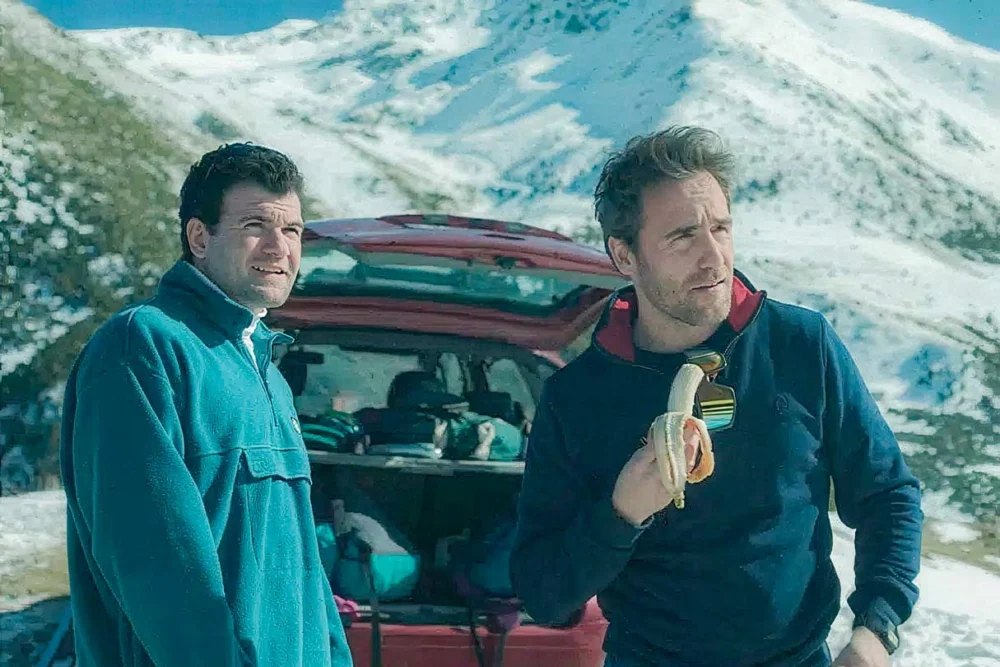
Pep Ambrós, a rising figure in Spanish cinema, recently sat down to discuss his latest and highly successful film, ‘Balandrau,’ a powerful dramatization of a real-life tragedy that struck the Catalan Pyrenees. The film, which has garnered significant critical attention and a strong audience response, delves into the harrowing events of a sudden, devastating storm that claimed the lives of five hikers on the seemingly benign Balandrau mountain. Ambrós, who portrays one of the mountaineers, shared his insights into the film’s creation, its thematic depth, and the profound impact it has had on audiences.
The Tragedy of Balandrau: A Historical Perspective
The events depicted in ‘Balandrau’ are rooted in a tragic incident that occurred in December 2000, a date etched into the collective memory of Catalonia. Balandrau, a mountain typically considered accessible, even a casual hike or bike ride for seasoned outdoors enthusiasts, became the site of an unforeseen disaster. A group of five friends, described as passionate lovers of the outdoors and life itself, embarked on what they believed would be a pleasant excursion on a beautiful December day. However, their outing was abruptly and catastrophically interrupted by a sudden and violent "torb," a fierce mountain storm, which descended with terrifying speed and ferocity. The unexpected meteorological phenomenon trapped the hikers, leading to a prolonged and desperate search and rescue operation.
This incident sent shockwaves through Catalonia, a region with a deep connection to its mountainous landscapes. The story resonated not only due to the loss of life but also because of the immense courage and dedication displayed by the rescue teams – firefighters and volunteers – who risked their own lives in perilous conditions to find the missing individuals. The film ‘Balandrau’ aims to serve as a poignant tribute to both the victims and their rescuers, honoring their bravery and the profound human spirit that emerged in the face of adversity.
Ambrós’s Career Trajectory and Personal Reflections
Ambrós, a native of Sabadell, brings a wealth of experience from his extensive work in both theatre and audiovisual productions. He describes his career thus far as a "long-distance race," characterized by consistent work and diverse collaborations rather than a single breakout "blockbuster" role. At 38, he acknowledges that his current life is significantly shaped by the recent arrival of his child, a personal milestone that has undoubtedly brought new perspectives to both his professional and personal endeavors.
"I’ve always felt like an ant in this profession," Ambrós commented, reflecting on his journey. "I’ve been fortunate to work with many different people across various fields. I’ve dedicated a significant amount of time to theatre and audiovisual work in Barcelona, and also extensively in Madrid, particularly in recent years. While I haven’t had a role that has been a massive hit, I’ve also never been without work. My career is built on perseverance, and I’ve been working for many years. Things arrive in their own time, and for now, I cannot complain."
This grounded perspective is evident in his approach to his craft. He emphasizes that art, in his view, should be therapeutic, prompting introspection and fostering change. "Art must be therapeutic; it must challenge us and modify us in some way," he stated. "It’s terrible what we are experiencing politically and socially, what we witness on the news daily. Suddenly, escaping into a cinema is a balm."
‘Balandrau’: A Cinematic Tribute and Artistic Challenge

Ambrós’s portrayal of Peo, the husband of Anna Moliner’s character, is central to the film’s emotional core. He delved into the background of his character, noting that Peo was an avid mountain enthusiast, skilled in climbing and skiing, and exceptionally fit for even more demanding excursions. The film underscores the sheer power of the storm by highlighting that Peo was tragically the first to succumb to its fury, a testament to the overwhelming force of nature.
The production of ‘Balandrau’ was a significant undertaking, particularly concerning the depiction of the intense storm. Ambrós revealed that the film was made with a surprisingly modest budget, a fact that makes the on-screen spectacle even more remarkable. "It’s important to note that this film does not have the budget that its on-screen presentation might suggest," he explained. "A very significant and intelligent gamble was made, particularly by Fernando Trullols, the director. The storm sequences were achieved with 90% special effects and only 10% visual effects. High-quality visual effects are incredibly expensive, and the budget simply wasn’t there. Therefore, we were fortunate to be able to achieve this on a soundstage with extensive special effects."
The filming process for these scenes was arduous. "It was truly tough to shoot, very complex because the snow was created using microfibers that were everywhere: in the air, on the ground, smoke, foam, fans… it was madness," Ambrós recounted. "It was complicated logistically, and it was very hard for us: we were choking, struggling to breathe, the microfibers got into our eyes… but the result on camera is impressive and incredibly convincing." In contrast, the scenes involving the firefighters and rescue teams were filmed on location amidst real snow, providing a stark and beautiful backdrop to the human drama.
Direction and Audience Reception: A Collaborative Success
The direction of Fernando Trullols, who makes his feature film debut with ‘Balandrau,’ was a crucial element in the film’s success. Ambrós, having worked with Trullols previously, expressed his confidence in the director’s capabilities. "I’ve worked with Fer before; we’ve known each other for a long time, and I believe he’s the perfect choice to direct this film," Ambrós stated. "He has extensive experience working with directors like Cesc Gay and J.A. Bayona, allowing him to observe firsthand how such productions are managed, especially his work with Jota."
Trullols’s background in action-heavy films, combined with a sensitive approach, was precisely what ‘Balandrau’ required. "This film demanded a great deal of action, and it needed someone who understood the genre and possessed the ability and intellect to film action effectively. Simultaneously, it required immense sensitivity and respect, and Fer possesses this perfect combination of the sensitivity needed at times and the driving force of action when required. I believe it was a great decision to have him direct it."
The film’s reception has been a source of immense satisfaction for the cast and crew. Initially released with 81 copies across Spain, ‘Balandrau’ has seen its distribution expand significantly due to popular demand. "Without a doubt. In Catalonia, I would have bet my life that it would be received well, as it’s a story I was convinced people would want to see in cinemas," Ambrós shared. "I had immense faith in it. It’s true that, nationally, as the story isn’t as widely known, the film had less initial presence in theaters. I believe the most wonderful gift is not only that in Catalan cinemas we’ve been moved to theaters with larger capacities but, above all, that on a national level, the reaction has been to significantly increase the number of copies. The reward is incredible on an acting level, but it’s particularly beautiful that the public is embracing it so enthusiastically in cinemas."
The Healing Power of Fiction and the Future of Theatre
Ambrós reiterated his belief in the therapeutic role of art, particularly in challenging times. "I always say that art must be therapeutic; it must challenge us and modify us in some way," he emphasized. "This doesn’t diminish the value of pure entertainment cinema, as it also has its purpose and is very necessary in these terrible, crazy times we live in."
He sees ‘Balandrau’ as an example of how fiction can help society process and come to terms with tragedy. "In a society so individualistic, where people look at everything on their phones, suddenly going to the cinema and watching this film collectively, a film that speaks precisely of the strength of community, is a gift," he observed. "I believe we are sorely lacking this, but we have released this film and found that the public wants to hear stories that heal us. It’s wonderful."

This sense of shared experience, Ambrós believes, is even more potent in theatre. He passionately defended the enduring vitality of live performance, countering any notion of its demise. "I think theatre is even more so. A few days ago, I was discussing this with a friend. Years ago, there were voices saying theatre was dead, and I would say that theatre is more alive than ever right now," he asserted. "Have you seen that video that went viral of Brad Pitt and Tom Cruise fighting? It was an AI-generated video, and I fell for it, I started looking for the film it belonged to. I dread that this will happen, because it distorts an artistic endeavor that involves not only acting but all artistic and technical departments. I believe we will reach a point where, if we don’t stop this, the only way people will see actors work will be in theatre."
He continued, "As I said, it’s more alive than ever as a space that has always been what it is: a space for community and entertainment, but also for reflection, and I believe reflection is something we desperately need as a society right now. We need to pause and listen, because lately, no one listens, and that’s a very serious problem."
Television Work and Future Projects
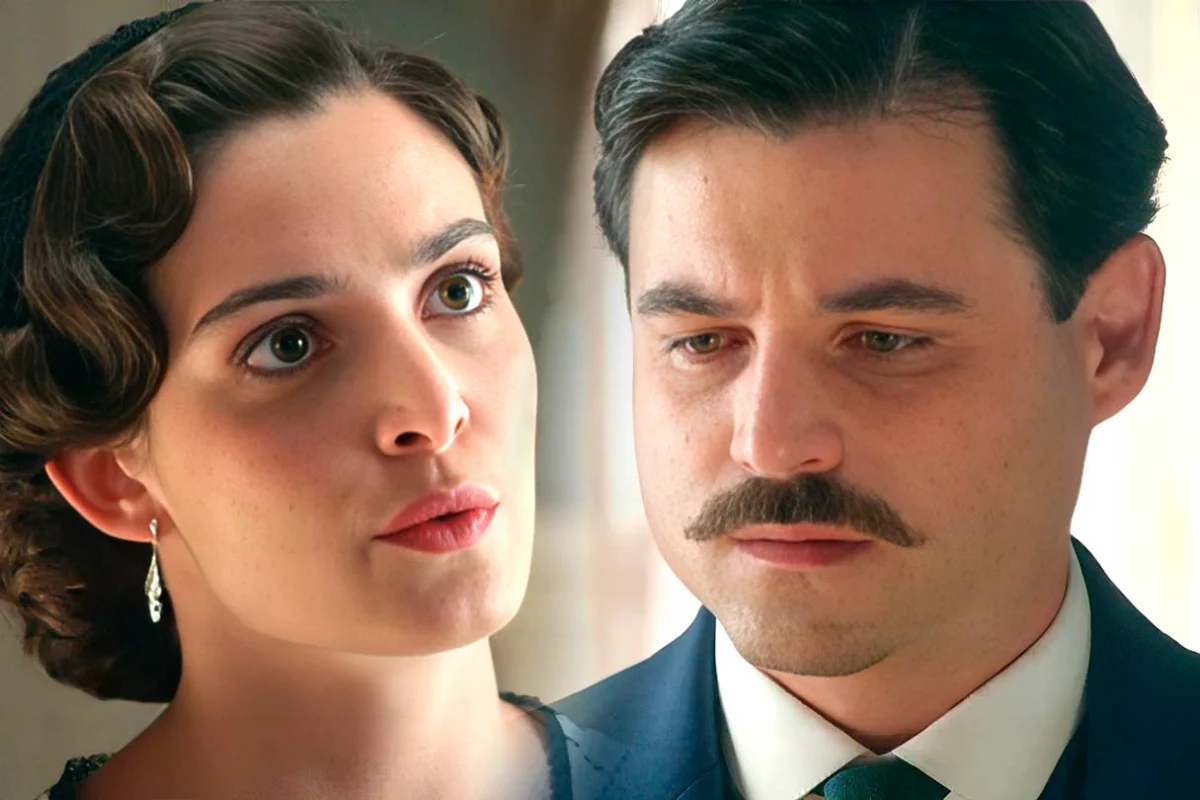
Ambrós also reflected on his role as Vítor in the popular TV3 daily series ‘Com si fos ahir.’ He praised the directors for their meticulous care of the production, which consistently achieves high audience ratings. "Daily series have a filming rhythm where it’s very difficult to contribute new elements, to bring your own perspective and for the series to offer something back," he explained. "These are series where you have to fight precisely to bring interesting elements to the character. My struggle with Vítor has really been that: not settling and not relying on acting techniques I’ve acquired over many years, but trying to remain as alive and engaged in the scene as possible, open to listening and adding to the scenes with my colleagues." He views his work on the series as an exercise in "not forgetting that being in a daily series doesn’t exempt me from the basic things I must do as an actor."
He also highlighted TV3’s long-standing commitment to quality daily series, predating their current national popularity. "Moreover, here in Catalonia, people primarily watch TV3. It’s almost a ritual, watching the TV3 series," he chuckled. "They watch it, period. If they like it, great, and if not, they criticize it, but they watch it. There are many high-quality production companies here that have been working for years, not just on daily series but also in prime time."
Looking ahead, Ambrós is anticipating the release of ‘El Niño,’ a new film directed by Mariano Barroso. He spoke with palpable excitement about the project, which is based on Fernando Aramburu’s novel about a devastating gas explosion in Vizcaya that claimed the lives of an entire class of children. "It’s a very moving film," Ambrós shared. "I’ve known Belén Cuesta, who plays my wife, for a long time. Karra Elejalde has been a revelation; he’s an incredible human being. I care for him immensely and learned a great deal working with him. With Belén, I found a perfect accomplice to delve into the very deep and dark terrains of the plot, and she was a fantastic colleague." He expressed his full confidence in Barroso’s directorial vision and eagerly awaits the film’s premiere.
The Dual Role of Educator and Performer
Beyond his acting career, Ambrós also dedicates time to teaching. He views his role as an educator as a profound source of learning. "I learn absolutely everything," he stated emphatically. "It provides me with incredible learning. I conduct scene work, directing them. So, for me to guide and accompany my students as best as possible, I must have immense control over that scene, and that preparation is already a brutal learning experience that I take with me."
He finds particular value in the diverse perspectives of his students. "There are always students who surprise me immensely; I’m surprised by their interpretation of scenes. They are a different age, and I like that too, because now, at 38, I approach scenes from a different place and with different experiences, and I enjoy seeing how they do it from their 20s," he explained. "So, I learn a great deal from the profession. I learn and they surprise me, and I love being surprised. It’s often difficult to be surprised when you’ve been working for a long time. It’s very healthy because I believe I can offer them many things from where I stand, but they also offer things to me. I enjoy it immensely. Unfortunately, I can’t teach many classes because it’s difficult to balance with my work, but whenever I can, I do it because it’s very, very stimulating. A beautiful job."

 Julia Chirkova
 Julia Prastini
 Nila Kartika Wati
 Jia Lissa
 admin
admin