
 Raisa Andriana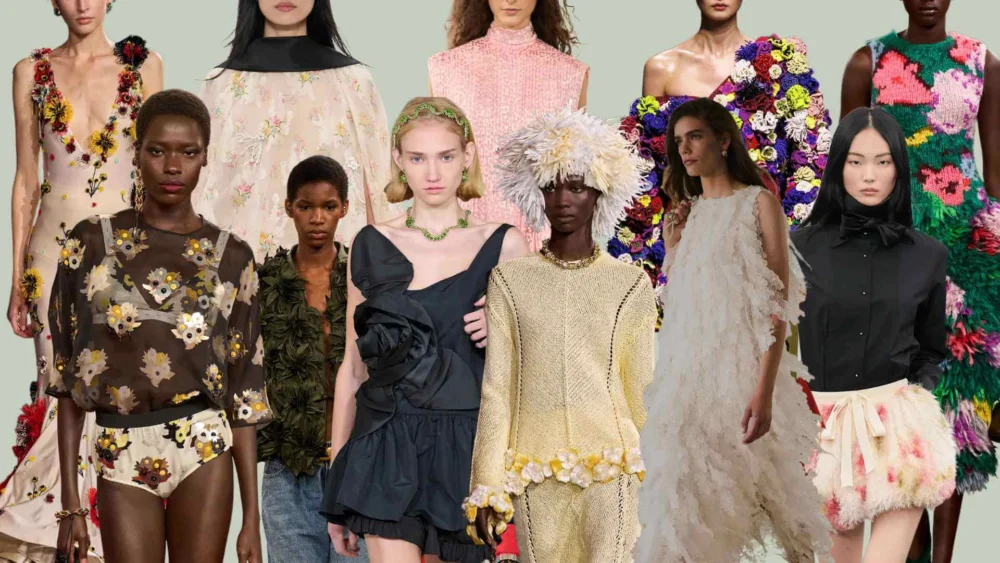
The global fashion landscape has long maintained an inseparable relationship with the botanical world, yet the Spring 2026 collections have signaled a definitive departure from traditional floral representations. During the most recent Fashion Month, which spanned the traditional circuit of New York, London, Milan, and Paris, the industry’s leading creative directors collectively rejected the literal "garden party" aesthetic in favor of high-concept, artistic, and often abstract interpretations of nature. This seasonal shift marks a transition from simple surface ornamentation to complex textile engineering, where flowers are no longer merely printed onto fabric but are integrated into the very architecture of the garments.
The Strategic Evolution of the House of Chanel under Mathieu Blazy
One of the most significant moments of the Spring 2026 season was the highly anticipated debut of Mathieu Blazy as the Creative Director of Chanel. Blazy, renowned for his mastery of "stealth wealth" and innovative material manipulation during his tenure at Bottega Veneta, brought a futurist perspective to the storied French house. His primary objective appeared to be the revitalization of the camellia—Chanel’s most enduring icon—transforming it from a static accessory into a dynamic, three-dimensional element of the silhouette.

Industry analysts noted that Blazy’s approach focused on the "sensory experience of botany." On the runway, this translated into voluminous ballroom skirts adorned with hundreds of hand-applied feathers shaped to resemble blooming petals. Transparent evening gowns were punctuated with micro-beaded floral clusters, while traditional button-down shirts were modernized with oversized rosettes. This strategic pivot towards artisanal complexity is seen as an effort to differentiate Chanel’s ready-to-wear from the increasingly sophisticated "fast-fashion" imitations that dominate the mid-market.
The Influence of Jonathan Anderson at Dior
Simultaneously, the Spring 2026 season saw Jonathan Anderson further cement his influence on the industry with his work for Dior. Anderson’s approach to the house’s legacy of "flower women" was decidedly more deconstructed. His collections featured knit miniskirts with blurred, watercolor-style floral prints that appeared to be melting into the fabric. This "lo-fi" botanical aesthetic appeals to a younger, more digitally native demographic that favors "perfectly imperfect" designs over the rigid structures of the past.
In his recent haute couture and ready-to-wear showcases, Anderson utilized the concept of the "glitch floral," where traditional garden motifs are digitally distorted before being woven into jacquards. This method bridges the gap between heritage craftsmanship and the contemporary obsession with digital art, positioning Dior at the forefront of the "Post-Internet" fashion movement.

A Chronological Analysis of the Spring 2026 Trends
The emergence of the artistic floral trend followed a specific trajectory across the four major fashion capitals, reflecting local cultural priorities and the specific heritage of the participating designers.
- New York (September): The season opened with an emphasis on "Hidden Florals" and subtle textures. Designers like Proenza Schouler and Gabriela Hearst focused on monochromatic relief work, where floral patterns were embossed into leather or woven into tonal silks, catering to the American market’s preference for understated luxury.
- London (September): Simone Rocha and Erdem continued to champion the "Dark Romanticism" of botany. London’s runways were characterized by the use of "Black Florals" and deconstructed lace, often referencing historical mourning attire and English garden gothic.
- Milan (September): Italian houses, led by Fendi and Miu Miu, focused on "3D Architecture." This phase of the month introduced the heavy use of appliqués made from unconventional materials like recycled plastics and laser-cut organza.
- Paris (October): The season culminated in Paris with the most high-tech interpretations. Designers like Dries Van Noten and the creative team at McQueen showcased "Deconstructed Botany," where floral prints were shredded into fringes or integrated into complex, multi-layered outerwear.
The Rise of Three-Dimensional Artistry and Textile Innovation
The most prominent technical trend of the Spring 2026 season is the move toward 3D floral appliqués. Moving beyond the flat embroidery of previous years, houses such as McQueen, Fendi, and Givenchy utilized advanced laser-cutting technology and 3D printing to create hyper-realistic petals that move independently of the wearer.
At Altuzarra, this was manifested in gowns featuring hundreds of transparent dalias sewn in vertical rows, creating a "shimmer" effect that mimics the movement of wildflowers in the wind. This level of detail serves as a direct response to the growing consumer demand for "investment pieces"—garments that possess a level of craftsmanship that justifies their high price point in an uncertain economic climate.

Minimalist Botany: The Gypsophila and White Monochromatics
For the consumer who favors a more reserved palette, the "Gypsophila" or "Baby’s Breath" trend has emerged as a major commercial driver. Rather than the vibrant, multi-colored bouquets of the past, many designers opted for a purely white or ivory landscape.
- Dior and Givenchy: Showcased ivory lace minidresses that utilized negative space to form floral patterns.
- Simone Rocha: Introduced raincoats and sheer overlays featuring white-painted vines, offering a utilitarian take on the botanical theme.
Market data suggests that monochromatic floral pieces have a longer shelf life in a luxury wardrobe, as they are less susceptible to the "trend fatigue" that often affects bold, colorful prints. This minimalist approach aligns with the broader industry movement toward sustainability and "slow fashion," encouraging consumers to purchase items that can be worn across multiple seasons.
The Gothic Shift: Dark Florals and Noir Botany
Contradicting the traditional association of spring with pastel hues, Spring 2026 has embraced "Noir Botany." Black-on-black floral jacquards and dark, moody prints were seen at Balenciaga, Mugler, and Dries Van Noten. These designs often utilize jet-black beads, sequins, and matte fabrics to create a sense of depth and mystery.

This "Gothic Spring" aesthetic is a reflection of a broader cultural shift toward more serious, grounded fashion. By stripping the flower of its bright colors, designers are able to focus on form, silhouette, and the symbolic nature of the plant—often representing themes of resilience and transformation rather than simple beauty.
Market Implications and Consumer Sentiment
The shift toward artistic and abstract florals is not merely a stylistic choice but a calculated business move. According to retail analysts, the "novelty floral" segment is expected to grow by 12% in the luxury sector by the end of 2026. Consumers are increasingly seeking garments that tell a story or demonstrate a unique technical skill, moving away from the "logo-mania" that dominated the early 2020s.
Furthermore, the integration of florals into accessories—such as the mesh floral flats seen at Miu Miu or the rosetted handbags at Chanel—allows luxury brands to offer the trend at various price points. This "entry-level" access to the Spring 2026 aesthetic ensures that the botanical trend permeates all levels of the market, from high-end boutiques to premium department stores.

Broader Impact on the Fashion Industry
The Spring 2026 collections have successfully redefined what it means to wear florals in the modern era. By moving away from kitsch and towards craftsmanship, the industry has reclaimed the botanical motif as a serious medium for artistic expression. This season has proven that even the most "perennial" of trends can be reimagined through the lens of technology, sustainability, and innovative creative direction.
As these collections move from the runways to the retail floor, the impact of this "artistic bloom" will likely be felt for several seasons to come. The emphasis on textile manipulation and 3D structure sets a new benchmark for ready-to-wear, challenging designers to continue pushing the boundaries of fabric technology. In the world of Spring 2026, the flower is no longer just a print; it is a testament to the enduring power of human craftsmanship in an increasingly automated world.

 Eva Lovia
 Julia Chirkova
 Julia Prastini
 Nila Kartika Wati
 Jia Lissa
 admin
admin