
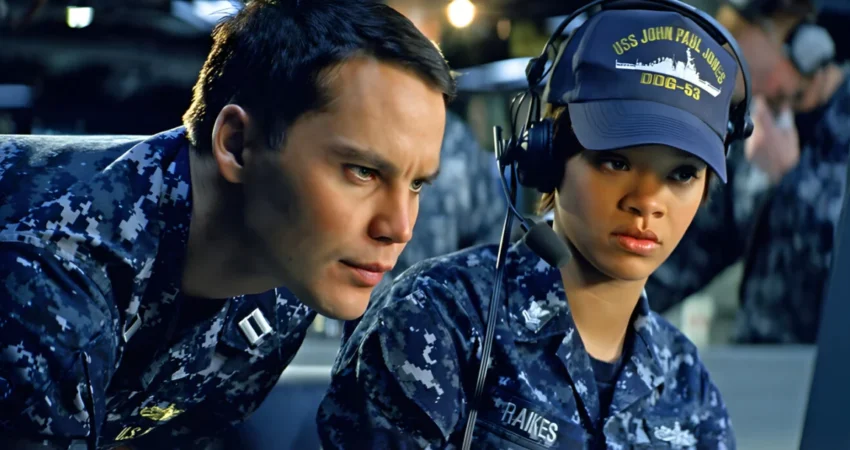
The 2012 military science fiction film Battleship, directed by Peter Berg and inspired by the classic Hasbro board game, is officially scheduled to depart the HBO Max streaming library on September 15. This departure marks the end of a significant residency for the film on the platform, where it has enjoyed a resurgence in popularity among audiences seeking high-octane action and large-scale visual effects. Originally released during a transformative era for blockbuster cinema, the film has undergone a notable critical re-evaluation in the years following its theatrical run, transitioning from a perceived box-office disappointment to a cult favorite within the military-action genre.
The Genesis of a Board Game Adaptation
The development of Battleship began as part of a broader strategic initiative by Hasbro to leverage its intellectual properties into cinematic franchises. Following the massive global success of the Transformers series, which demonstrated that toy-based properties could yield multi-billion-dollar returns, Hasbro and Universal Pictures entered into a multi-picture deal. The challenge for director Peter Berg was to translate a turn-based strategy game involving plastic pegs and hidden grids into a coherent narrative capable of sustaining a two-hour theatrical experience.
Berg, known for his work on Friday Night Lights and The Kingdom, sought to ground the fantastical elements of an alien invasion within the authentic framework of modern naval operations. The production received significant cooperation from the United States Navy, allowing for filming on location in Pearl Harbor and aboard active-duty vessels. This commitment to practical realism served as a counterweight to the extensive digital effects required to bring the extraterrestrial antagonists to life.

The film’s plot centers on the Rim of the Pacific Exercise (RIMPAC), the world’s largest international maritime warfare exercise. During these maneuvers, a fleet of alien spacecraft, identified as "Regents," lands in the Pacific Ocean after being summoned by a deep-space communications array. The invaders deploy a massive energy shield that traps three destroyers—the USS John Paul Jones, the USS Sampson, and the Japanese destroyer Myōkō—cutting them off from the rest of the world’s naval forces. What follows is a high-stakes game of cat-and-mouse that mirrors the strategic mechanics of the original board game, as the human crews must find ways to track the alien vessels without the use of radar.
A Cast of Future Icons and Established Stars
One of the most compelling aspects of Battleship in retrospect is its ensemble cast, which features a mix of established veterans and performers who would later become major award winners and industry staples. The film marked the acting debut of global music sensation Rihanna, who portrayed Petty Officer Cora Raikes. Her casting was a significant marketing draw at the time and remains a point of interest for fans of the artist.
The lead role was held by Taylor Kitsch, who played Lieutenant Alex Hopper, a rebellious officer forced into a leadership position under dire circumstances. Kitsch was joined by Alexander Skarsgård, who played his brother, Commander Stone Hopper. Skarsgård has since achieved immense critical acclaim for his roles in Succession and The Northman. The film also featured Liam Neeson as Admiral Terrence Shane, providing the production with the gravitas of a seasoned action icon.
Perhaps most notable to modern viewers are the supporting roles played by Rami Malek and Jesse Plemons. At the time of Battleship’s release, Malek was a rising talent; he would later win an Academy Award for Best Actor for his portrayal of Freddie Mercury in Bohemian Rhapsody. Similarly, Jesse Plemons, who played Boatswain’s Mate Jimmy "Ordy" Ord, has evolved into one of his generation’s most respected character actors, earning an Academy Award nomination for The Power of the Dog and winning a Best Actor award at the Cannes Film Festival for Kinds of Kindness. The presence of these actors provides the film with a level of performance depth that is often absent from similar summer blockbusters.

The 2012 Box Office Landscape and the Marvel Factor
To understand the commercial narrative surrounding Battleship, one must examine the competitive landscape of the Summer 2012 movie season. The film was released in North America on May 18, 2012, just two weeks after Marvel Studios’ The Avengers. The latter film was a cultural phenomenon that redefined the scale of superhero cinema, ultimately grossing over $1.5 billion worldwide.
Battleship found itself caught in the wake of this unprecedented success. While the film was often labeled a "flop" by contemporary media outlets, the financial data presents a more nuanced picture. Produced on a massive budget estimated at $209 million, the film grossed approximately $65 million domestically but found much greater success in international markets, where it earned $237 million. With a total global box office of $302.8 million, the film was far from a total loss, though it failed to meet the high expectations set by the Transformers franchise.
Industry analysts have frequently pointed to the film’s release timing and the perceived absurdity of its premise as the primary hurdles it faced. However, the film’s international performance demonstrated a strong global appetite for large-scale naval action and science fiction, a trend that has continued to support the film’s legacy on home media and streaming platforms.
Technical Prowess: CGI and Practical Effects
From a technical standpoint, Battleship remains a standout example of early 2010s visual effects. The production utilized Industrial Light & Magic (ILM) to create the alien "Regent" ships and their unique weaponry, including the "shredders"—autonomous, spinning saws capable of tearing through steel and concrete. The design of the alien technology was praised for its distinct aesthetic, which felt mechanical and tactile rather than purely ethereal.

A pivotal sequence in the film involves the reactivation of the USS Missouri, a decommissioned Iowa-class battleship. This scene required a blend of practical effects, historical consultation, and CGI. The production filmed on the actual USS Missouri Memorial in Pearl Harbor, and the sequence famously features real-world Navy veterans—some of whom actually served on the ship—assisting the young protagonists. This tribute to the "Greatest Generation" and the historical legacy of the U.S. Navy resonated with many viewers and remains one of the most celebrated moments in the film.
The score, composed by Steve Jablonsky with contributions from Rage Against the Machine guitarist Tom Morello, further amplified the film’s intensity. The soundtrack’s heavy use of electric guitar and industrial sounds complemented the mechanical nature of the alien invaders, creating a sonic landscape that distinguished it from the more traditional orchestral scores of the era.
Chronology of the Battleship Franchise and Hasbro’s Cinematic Evolution
The timeline of Battleship’s journey from game to screen reflects the volatility of the Hollywood studio system during the transition to franchise-dominated production:
- 2008-2009: Universal Pictures and Hasbro announce a massive partnership to develop films based on Battleship, Monopoly, Candy Land, and Ouija.
- 2010: Peter Berg is attached to direct, and casting begins, including the high-profile signing of Rihanna.
- 2011: The first trailers are released, drawing immediate comparisons to Michael Bay’s Transformers due to the mechanical sounds and large-scale destruction.
- May 2012: Battleship premieres globally. While it tops the charts in several international territories, its U.S. debut is overshadowed by the continued dominance of The Avengers.
- 2013-2020: The film finds a second life on cable television and physical media, where it gains a reputation as a "guilty pleasure" and a solid example of the "military sci-fi" subgenre.
- 2021-2024: The film becomes a staple of various streaming services, consistently appearing in "Top 10" lists on platforms like Netflix and HBO Max when licensed.
The performance of Battleship led Hasbro to recalibrate its film strategy. While the Monopoly and Candy Land projects stalled in development for years, the company eventually found success with smaller-budget horror films like Ouija and, more recently, the critically acclaimed Dungeons & Dragons: Honor Among Thieves. The recent global success of Barbie (though a Mattel property) has renewed industry interest in toy-based narratives, often leading retrospective discussions back to the ambitious, big-budget swings like Battleship.

Broader Impact and Implications for Streaming
The removal of Battleship from HBO Max on September 15 is a reflection of the increasingly complex nature of streaming licenses. As media conglomerates like Warner Bros. Discovery (which owns Max) look to optimize their libraries, high-profile third-party titles—those produced by other studios like Universal—are often cycled in and out of the catalog based on contractual agreements.
For fans of the genre, the departure of Battleship represents the loss of a specific type of blockbuster that is becoming increasingly rare: the standalone, high-budget original sci-fi epic that is not part of a pre-existing cinematic universe. While the film was based on a game, it did not require viewers to have seen five previous entries to understand the plot, a quality that many modern viewers find refreshing in the age of serialized franchises.
As the September 15 deadline approaches, the film’s presence on "Must-Watch" lists highlights a shift in audience sentiment. What was once dismissed as a "board game movie" is now viewed as an expertly crafted action spectacle that prioritizes entertainment value and technical execution. For those who have yet to witness the spectacle of the USS Missouri drifting into battle against extraterrestrial invaders, the next eight days represent the final opportunity to do so within the HBO Max ecosystem.
The legacy of Battleship serves as a reminder of a specific moment in Hollywood history when studios were willing to invest hundreds of millions of dollars into bold, if unusual, concepts. Its enduring popularity on streaming suggests that while critics and initial box office returns provide one perspective, the true test of a blockbuster is its ability to entertain audiences a decade after the initial hype has faded. With its departure from Max imminent, Battleship stands as a testament to the enduring appeal of the "summer movie" spirit—loud, proud, and unapologetically spectacular.

0 Comments