
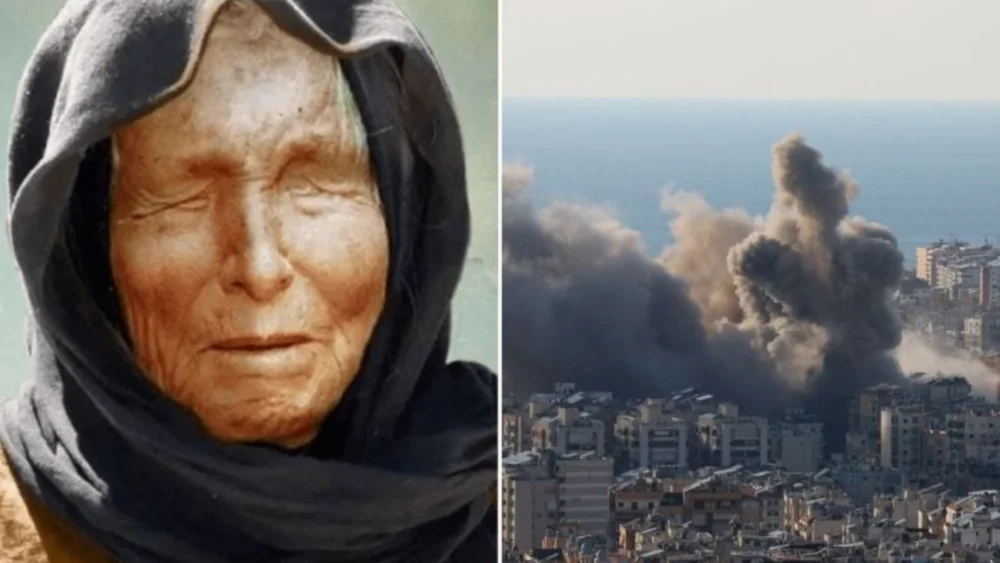
The enigmatic Bulgarian mystic, Vangeliya Pandeva Gushterova, widely known as Baba Vanga, has once again captured the world’s attention as 2026 approaches, fueling discussions among prophecy theorists and concerned citizens alike. Revered by her followers for allegedly foretelling significant historical events, including the devastating 9/11 attacks and the global COVID-19 pandemic, Vanga’s posthumous predictions are now being scrutinized for their potential relevance to a looming Third World War. According to her adherents, Baba Vanga is believed to have anticipated the onset of a major global conflict in 2026, a prophecy that resonates with increasing alarm amidst the current climate of widespread international instability.
The Enduring Legacy of Baba Vanga: A Glimpse into the Blind Prophetess
Born in 1911 in Strumica, then part of the Ottoman Empire (present-day North Macedonia), Baba Vanga’s life was irrevocably altered at the age of 12 when a freak tornado reportedly swept her into a field, leaving her blinded by dust and sand. It was after this traumatic event that she claimed to receive visions and the ability to foresee future events, as well as possessing healing powers. Throughout her life, from the 1930s until her death in 1996, Vanga gained a significant following, with people from all walks of life, including political figures and common citizens, seeking her guidance and prophecies. She spent most of her adult life in Rupite, Bulgaria, where her humble home became a pilgrimage site. Her prophecies were almost exclusively delivered orally, often in a cryptic and metaphorical style, and were recorded and interpreted by close associates and family members. This reliance on intermediaries has been a significant point of contention for critics, who argue that the ambiguity of her statements allows for broad interpretation and retrospective fitting to actual events. Nevertheless, her legend has only grown since her passing, cementing her status as one of the 20th century’s most famous mystics.
The Mechanics of Prophecy: Interpretation and the Human Psyche
The phenomenon of Baba Vanga’s prophecies, much like those of Nostradamus, often hinges on post-hoc interpretation—the process of re-evaluating vague predictions after an event has occurred to make them seem accurate. This psychological phenomenon, often referred to as confirmation bias, allows believers to selectively recall or interpret information in a way that confirms their existing beliefs, creating a compelling narrative of precognition. For instance, Vanga’s alleged prediction of the 9/11 attacks—"The American brethren will fall after being attacked by the steel birds. The wolves will be howling in a bush, and innocent blood will be gushing"—was not widely understood or cited before the tragedy. Only in its aftermath did the "steel birds" become synonymous with the hijacked planes and the "wolves howling in a bush" interpreted as a reference to the ‘Bush’ administration or the perpetrators hiding. Similarly, her vague warnings about a "new virus" or "great sickness" were only retrospectively linked to the COVID-19 pandemic. This interpretive flexibility is a cornerstone of how such prophecies maintain their relevance and continue to captivate the public imagination, especially in times of uncertainty. Experts in folklore and parapsychology often highlight the human tendency to seek patterns and meaning, particularly when faced with unpredictable or overwhelming global events. The need for a sense of control or understanding in a chaotic world can drive individuals to find solace or warnings in prophetic texts, regardless of their empirical validity.
Past Predictions: A Track Record of Ambiguity and Retrospective Accuracy
Baba Vanga’s alleged predictive successes span decades and cover a wide array of global incidents. Beyond 9/11 and COVID-19, several other notable events are often attributed to her foresight:
- The Kursk Submarine Disaster (2000): Vanga reportedly predicted in 1980 that "Kursk will be covered with water and the whole world will weep over it." At the time, "Kursk" was only known as a Russian city, leading many to dismiss the prophecy. However, in August 2000, the Russian nuclear submarine K-141 Kursk sank in the Barents Sea, resulting in the deaths of all 118 crew members, fulfilling the prophecy in a chillingly literal manner.
- The Election of Barack Obama (2008): She is said to have foreseen that the 44th U.S. President would be an African American, adding that he would be the last U.S. president. While Barack Obama indeed became the 44th president, the second part of the prophecy (being the last) has not materialized, serving as a reminder of the often-partial or unfulfilled nature of such predictions.
- The Tsunami of 2004: Followers claim she predicted "a huge wave" that would "cover people and towns." While tsunamis are naturally occurring, the scale of the 2004 Indian Ocean event was unprecedented in modern times, leading many to connect it to her warnings.
- Brexit (2016): Vanga supposedly spoke of Europe "ceasing to exist" or facing significant fragmentation. The United Kingdom’s decision to leave the European Union was seen by some as a partial fulfillment of this prophecy, signaling a potential unraveling of European unity.
- Chernobyl Disaster (1986): Some interpretations link her prophecies of a "nuclear winter" or environmental catastrophe to the Chernobyl nuclear power plant explosion.
It is crucial to note that concrete, verifiable records of these prophecies before the events occurred are scarce. Most accounts rely on anecdotal evidence, oral tradition, and later interpretations by her followers, making objective verification challenging. This inherent ambiguity allows for a wide range of interpretations, bolstering the myth surrounding her abilities while simultaneously inviting skepticism from critical observers.
The 2026 Prophecy: A Third World War on the Horizon?
The core of the current alarm stems from Baba Vanga’s alleged prediction that 2026 would mark the beginning of a Third World War. While the mystic reportedly stated that 2026 would be a "critical year for humanity," she did not explicitly detail whether this criticality would manifest as a global war, widespread social collapse, or transformative global shifts. This lack of specific detail provides ample room for contemporary events to be fitted into the prophetic framework. Counterbalancing this ominous forecast, Vanga also reportedly offered a glimmer of hope by stating that the world would "not come to an end until 5079," suggesting that any conflict, however devastating, would not spell the absolute annihilation of humanity. This longer-term perspective offers a psychological safety net for those who believe in her prophecies but are simultaneously terrified by the prospect of global war.

Geopolitical Parallels: A World on Edge
The unsettling alignment between Baba Vanga’s vague prophecies and the current global geopolitical landscape is what makes the 2026 prediction particularly potent for many. With just months remaining until 2026, the international stage is indeed fraught with tensions that some followers are interpreting as direct precursors to a major conflict.
- Middle East Volatility: The ongoing, and often escalating, conflicts involving Israel and Iran are central to these concerns. Direct military confrontations, proxy wars, and air strikes in strategic regions such as Syria, Iraq, and Yemen have become disturbingly routine. The recent exchange of drone and missile attacks between Israel and Iran has particularly heightened fears of a broader regional conflagration. Furthermore, persistent rumors regarding the health or even death of Iran’s Supreme Leader, Ayatollah Ali Khamenei, have been cited as a potential trigger for unprecedented instability within Iran, which could easily spill over and destabilize the entire Middle East.
- Great Power Rivalry and Intervention: Beyond the Middle East, the interventions and influence of global powers are under intense scrutiny. The United States’ sustained involvement in countries like Venezuela, through sanctions and diplomatic pressure, and its broader strategic maneuvers across the globe, are seen by some as contributing to a climate of international friction. More significantly, the protracted conflict between Russia and Ukraine continues to be a major destabilizing factor in Europe, drawing in NATO members and significantly altering the post-Cold War security architecture. Simultaneously, tensions between China and Taiwan remain a critical flashpoint in the Indo-Pacific, with potential for global economic and military repercussions.
- Economic Instability: Global economies are grappling with persistent inflation, supply chain disruptions exacerbated by geopolitical events, and energy crises. These economic pressures can fuel social unrest and inter-state rivalries, indirectly contributing to an environment ripe for conflict.
- Climate Change and Resource Scarcity: Extreme climatic events—such as prolonged droughts, devastating floods, and unprecedented heatwaves—are increasingly causing resource scarcity, particularly water and arable land. These environmental pressures can lead to mass migrations, internal conflicts, and cross-border disputes, adding another layer of complexity to the global security landscape.
- The Dawn of Cyber Warfare: The rise of cyber warfare presents an entirely new dimension to modern conflict, allowing states and non-state actors to wage attacks on critical infrastructure, disseminate disinformation, and destabilize adversaries without traditional military engagement. This ‘invisible’ front of conflict adds to the pervasive sense of insecurity and unpredictability.
These interwoven crises, while not necessarily pointing to an imminent global war, collectively reinforce a pervasive sense of international instability that many associate with Baba Vanga’s foreboding prophecies.
Social Media: Amplifier of Rumors and Anxiety
The proliferation of social media platforms has played a pivotal role in amplifying the rumors and theories surrounding Baba Vanga’s 2026 prophecy. In the digital age, news—both factual and speculative—travels at unprecedented speeds. Hashtags and trending topics quickly propel discussions about geopolitical events, economic downturns, and climate crises into viral sensations, often linking them back to Vanga’s predictions. Online communities dedicated to prophetic interpretations dissect every global incident, finding patterns and connections that reinforce their beliefs. While these platforms facilitate the sharing of information and foster communities, they also serve as fertile ground for misinformation and conspiracy theories to take root and spread unchecked. The constant stream of alarming headlines, filtered through the lens of Vanga’s predictions, contributes significantly to public anxiety and the perception that the world is indeed hurtling towards a cataclysmic event. This digital echo chamber can make it challenging for individuals to distinguish between credible analysis and speculative claims, further blurring the lines between reality and prophecy.
Expert Perspectives: Caution and Criticality
In light of the widespread public interest, specialists in history, sociology, and prophecy studies urge a measured and cautious approach. They consistently highlight that many prophecies attributed to Baba Vanga are often vague and subsequently reinterpreted to fit events after they have occurred. This retrospective validation, while emotionally compelling for believers, lacks scientific rigor and historical accountability. Historians point out that human societies have always sought meaning in the unknown, and prophets throughout history have offered explanations and warnings during times of great change or anxiety.
Psychologists emphasize the role of cognitive biases, such as the "Barnum effect" (where individuals accept vague or general descriptions of themselves or situations as accurate), in making prophecies seem true. The human brain is hardwired to look for patterns, and in complex situations, it can easily find connections that are not inherently there. Political analysts, while acknowledging the current geopolitical turbulence, stress that associating specific events directly with a prophesied Third World War can be dangerously misleading. Geopolitical trends are the result of complex interplay between numerous factors—economic, political, social, and military—and are not predetermined by ancient prophecies. They caution against allowing such predictions to unduly influence public discourse or policy decisions, advocating instead for fact-based analysis and strategic foresight. Critical thinking and media literacy are deemed essential tools for navigating the deluge of information and misinformation, especially when dealing with claims of precognition that tap into deep-seated fears.
Global Vigilance vs. Premature Alarm: A Delicacy of Perspective
In conclusion, while some interpret Baba Vanga’s pronouncements as a grave warning demanding immediate attention, others argue that directly attributing every global event to a prophesied Third World War is both premature and simplistic. The reality of international relations is inherently complex, driven by a multitude of actors, interests, and unpredictable variables, rather than a predetermined mystical script. Nevertheless, the heightened state of global tension, combined with Baba Vanga’s established reputation as a "seer of catastrophic events," ensures that public attention remains firmly fixed on her predictions.
As 2026 dawns, the year is poised to be viewed by many as a potentially decisive period. For believers, it is a year under constant, anxious surveillance, where every diplomatic maneuver, every military escalation, and every natural disaster will be scrutinized through the lens of Vanga’s prophecies. For critical observers, it serves as a stark reminder of the human desire for certainty in an uncertain world and the enduring power of myth and belief. Regardless of one’s stance on the veracity of her prophecies, the current geopolitical climate necessitates an unwavering focus on diplomacy, conflict resolution, and collaborative efforts to navigate the genuine challenges facing humanity. The year 2026, whether prophesied or not, undeniably demands vigilant and thoughtful engagement from the global community.

0 Comments