
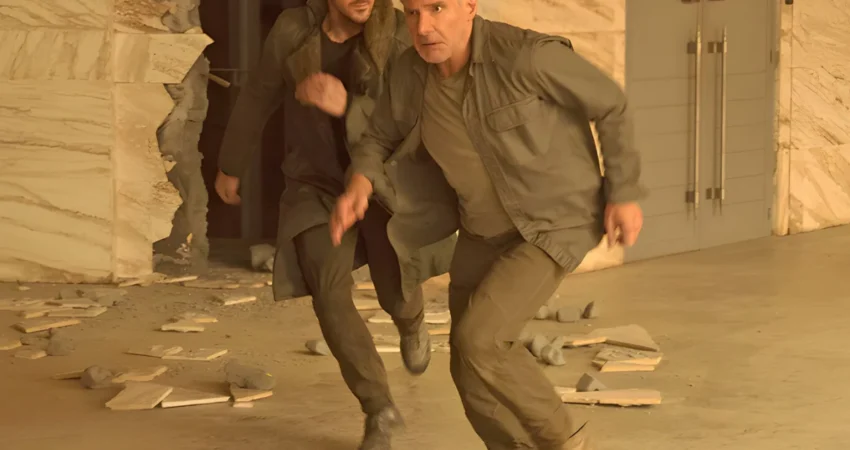
The arrival of Blade Runner 2049 on major streaming platforms marks a significant moment for contemporary cinema, offering audiences an opportunity to revisit a work that has transitioned from a commercial disappointment into a cornerstone of the cyberpunk genre. Directed by Denis Villeneuve and released in 2017, the film serves as the direct sequel to Ridley Scott’s 1982 masterpiece, Blade Runner. Much like its predecessor, the sequel faced an uphill battle at the box office, struggling to recoup its massive production budget during its initial theatrical run. However, in the years following its release, Blade Runner 2049 has undergone a critical re-evaluation, solidifying its status as a cult classic that expands upon the philosophical and aesthetic foundations of the original narrative.
The Evolution of a Science Fiction Legacy
The history of the Blade Runner franchise is characterized by a unique paradox: profound cultural influence coupled with initial commercial failure. When Ridley Scott released the original film in 1982, based on Philip K. Dick’s 1968 novel Do Androids Dream of Electric Sheep?, it was met with polarized reviews and underwhelming ticket sales. Despite this, the film’s "neon-noir" aesthetic and its exploration of what constitutes humanity eventually redefined the science fiction landscape. By the time Denis Villeneuve was tapped to direct a sequel three decades later, the original had become one of the most respected films in cinematic history.
Villeneuve, known for his work on Arrival and Incendies, faced the daunting task of honoring Scott’s legacy while providing a fresh perspective on the dystopian future of Los Angeles. Blade Runner 2049 takes place thirty years after the events of the first film. The story follows Officer K, portrayed by Ryan Gosling, a "nexus-9" replicant who works for the Los Angeles Police Department (LAPD) as a "blade runner," tasked with "retiring" (eliminating) older, rogue replicant models. The discovery of a long-buried secret—the remains of a replicant who apparently died during childbirth—threatens to destabilize the fragile hierarchy between humans and their synthetic counterparts, leading K on a quest to find Rick Deckard (Harrison Ford), the former blade runner who has been missing for thirty years.

Technical Mastery and the Rejection of Digital Dependency
One of the most lauded aspects of Blade Runner 2049 is its technical execution. In an era where many blockbuster films rely heavily on Computer-Generated Imagery (CGI), Villeneuve and his production team made a concerted effort to use practical sets and miniatures whenever possible. This decision contributed to the film’s tactile, immersive atmosphere, grounding the futuristic setting in a tangible reality.
The visual language of the film was crafted by legendary cinematographer Roger Deakins, whose work on the project earned him his first Academy Award for Best Cinematography after fourteen previous nominations. Deakins utilized a distinct color palette to differentiate the various environments of the 2049 world: the oppressive, rain-slicked grey and blue of Los Angeles; the sterile, amber-hued headquarters of the Wallace Corporation; and the radioactive, orange-tinted ruins of Las Vegas. This visual storytelling was complemented by a score composed by Hans Zimmer and Benjamin Wallfisch, who stepped in after the departure of Jóhann Jóhannsson. The soundtrack utilized vintage synthesizers to evoke the spirit of Vangelis’s original 1982 score while introducing a more aggressive, industrial soundscape.
The Financial Paradox: Critical Success versus Commercial Reality
Despite the overwhelming critical acclaim—holding an 88% approval rating on Rotten Tomatoes—Blade Runner 2049 was a financial disappointment for its distributors, Warner Bros. and Sony Pictures. The film was produced on a lavish budget estimated between $150 million and $185 million, excluding marketing costs. It grossed approximately $92 million in the United States and Canada, and $167 million in other territories, for a worldwide total of $259.2 million.
Industry analysts have pointed to several factors that contributed to this shortfall. The film’s runtime, clocking in at 163 minutes (2 hours and 43 minutes), limited the number of daily screenings and was perceived as a barrier for casual moviegoers. Furthermore, the film was rated R, which restricted the potential audience size. Marketing efforts focused on the mystery of the plot, which, while preserving the viewing experience, may have failed to provide a clear "hook" for audiences unfamiliar with the 1982 original. Ridley Scott, who served as an executive producer on the sequel, later remarked in interviews that he believed the film was "too long," though he praised Villeneuve’s direction.

Philosophical Depth and Themes of Identity
The enduring appeal of Blade Runner 2049 lies in its refusal to provide easy answers to complex questions. The film delves deeply into themes of memory, soulfulness, and the ethics of artificial intelligence. Officer K’s journey is not merely a police investigation but an existential crisis. His longing for a "real" past and his relationship with Joi (Ana de Armas), a sophisticated holographic AI, challenge the viewer to define where life begins and technology ends.
Unlike many contemporary sequels that focus on expanding action sequences, Blade Runner 2049 is a meditative, slow-burn thriller. It explores the environmental collapse of Earth, the corporate greed embodied by Niander Wallace (Jared Leto), and the quiet desperation of a marginalized class of beings seeking the "miracle" of biological reproduction. This intellectual rigor is what has allowed the film to remain relevant in academic and cinephile circles, far outlasting its initial box office performance.
Chronology of the Blade Runner Universe
To bridge the thirty-year gap between the two feature films, the production team released three short films that provide essential context for the world of 2049:
- Blade Runner Black Out 2022 (2017): An anime short directed by Shinichiro Watanabe, detailing a massive electromagnetic pulse (EMP) attack that erased digital records across the globe, leading to a ban on replicant production.
- 2036: Nexus Dawn (2017): Directed by Luke Scott, this short introduces Niander Wallace as he demonstrates the total obedience of his new Nexus-9 models to government officials, successfully lobbying for the repeal of the replicant prohibition.
- 2048: Nowhere to Run (2017): Also directed by Luke Scott, this segment follows Sapper Morton (Dave Bautista), a rogue Nexus-8 medic, shortly before the events of the main film, highlighting the precarious lives of hidden replicants.
These additions to the canon helped build a comprehensive lore that rewards deep engagement from the fanbase, further cementing the franchise’s status as a premier example of world-building in cinema.

Future Implications: The Expansion into Television
The resurgence of interest in Blade Runner 2049 on streaming services comes at a pivotal time for the franchise. Amazon MGM Studios is currently in production for a follow-up series titled Blade Runner 2099. Set fifty years after the events of Villeneuve’s film, the series is being executive produced by Ridley Scott, with Silka Luisa serving as showrunner.
The casting of Academy Award winner Michelle Yeoh in a lead role has generated significant anticipation. While plot details remain closely guarded, the series is expected to continue the franchise’s tradition of exploring social stratification and the evolution of synthetic life. The transition from the silver screen to a prestige television format reflects a broader industry trend where complex, high-budget science fiction properties are given more room to breathe through episodic storytelling.
Conclusion and Broader Impact
Blade Runner 2049 stands as a testament to the idea that a film’s value is not solely determined by its opening weekend revenue. It is a rare example of a "legacy sequel" that enhances its predecessor rather than merely duplicating its success. By prioritizing atmosphere, character depth, and philosophical inquiry over traditional blockbuster tropes, Villeneuve created a work that demands multiple viewings.
As the film reaches new audiences on platforms like Max (formerly HBO Max), its influence continues to ripple through the industry. It has set a high bar for visual effects and cinematography, proving that digital tools can be used to create art that feels organic and soulful. For viewers preparing for the 2026 release of Blade Runner 2099, the 2017 film remains an essential piece of the puzzle—a bridge between the analog noir of the past and the digital uncertainties of the future. The legacy of the blade runner, it seems, is far from over; it has merely evolved into its next iteration, proving once again that the most profound stories are those that dare to ask what it truly means to be human.

0 Comments