
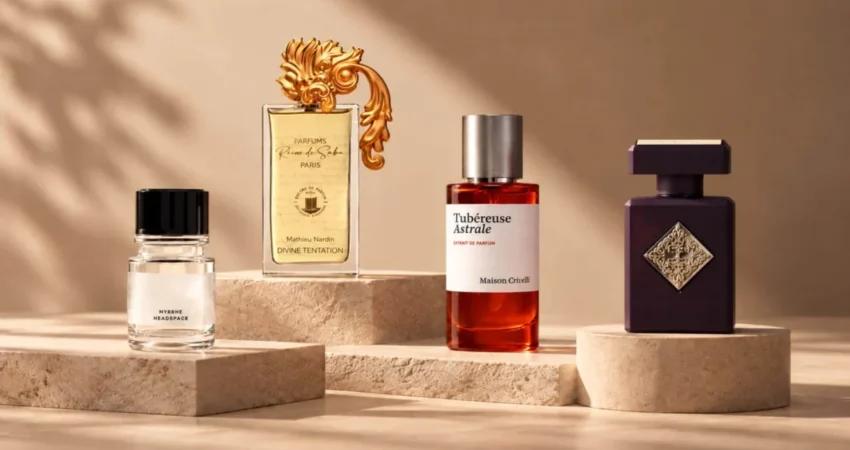
The transition into the cooler months of autumn has traditionally signaled a shift in the global fragrance market toward heavier, more resonant molecular structures. Among these, cinnamon remains one of the most enigmatic and versatile raw materials available to the modern perfumer. While often associated with the domestic warmth of the kitchen or the sweetness of confectionery, cinnamon possesses a complex chemical profile that allows it to pivot from a luminous, gourmand sweetness to a dark, resinous, and almost liturgical depth. As the industry moves toward increasingly sophisticated "spicy" profiles, five specific fragrances have emerged as benchmarks for how this ancient spice can be reinterpreted through the lenses of floral, leather, and ambery accords.

The Botanical and Chemical Foundation of Cinnamon
To understand the versatility of cinnamon in perfumery, one must first distinguish between the primary varieties used in the extraction process. The "true" cinnamon, Cinnamomum verum (also known as Ceylon cinnamon), is native to Sri Lanka. The harvesting process is labor-intensive: the inner bark of the tree is peeled away in thin, delicate layers that naturally curl into "quills" as they dry. From an olfactory perspective, Ceylon cinnamon is prized for its refined, floral, and slightly citrusy nuances. In contrast, Cinnamomum cassia, largely sourced from China and Indonesia, offers a more pungent, fiery, and direct aroma, often utilized when a perfumer seeks to evoke a sense of heat or "red" intensity.
The primary chemical constituent responsible for the characteristic odor of the spice is cinnamaldehyde. In high-quality essential oils obtained via steam distillation, cinnamaldehyde accounts for approximately 65% to 75% of the total composition. However, the modern perfumer’s palette is not limited to the natural oil alone. Through fractional distillation and the use of synthetic isolates, creators can amplify specific facets of the spice—such as its woody undertones or its powdery sweetness—while mitigating its more aggressive, spicy "bite." Furthermore, the International Fragrance Association (IFRA) strictly regulates the concentration of cinnamal in skin-applied products due to its potential as a sensitizer, forcing perfumers to balance olfactory impact with rigorous safety standards.

A Historical Chronology: From Sacred Rituals to the Silk Road
The inclusion of cinnamon in aromatic preparations predates the modern perfume industry by several millennia. In ancient Egypt and Mesopotamia, cinnamon was a vital component of sacred incense and embalming mixtures. Historical records, such as those maintained by The Perfume Society, highlight the Theriaque, an Egyptian blend that combined cinnamon with myrrh, frankincense, and aromatic resins. During this era, the spice was so rare and valuable that it was often gifted to monarchs and deities.
The "Cinnamon Route" became one of the most lucrative and dangerous trade paths in history. To protect their monopolies, Arab traders famously circulated myths about the "Cinnamon Bird" (or Cinnamologus), which supposedly built its nests from cinnamon sticks in inaccessible mountain reaches. By the 15th century, the quest for the source of this spice fueled the Age of Discovery, leading to centuries of colonial conflict between the Portuguese, Dutch, and British for control over the Sri Lankan forests. This transition from a sacred, mythologized substance to a global commodity set the stage for its eventual integration into the "Oriental" (now categorized as Amber) fragrance family of the early 20th century.

Analyzing the Five Archetypes of Modern Cinnamon Perfumery
The current market demonstrates a departure from simple, linear cinnamon scents in favor of complex, multi-layered compositions. The following five fragrances illustrate the spectrum of the spice’s utility in contemporary luxury perfumery.
1. The Voluptuous Gourmand: Divine Tentation by Reine de Saba
Created by perfumer Mathieu Nardin, Divine Tentation represents the pinnacle of the "adult gourmand" trend. Rather than leaning into a juvenile sweetness, Nardin utilizes cinnamon to bridge the gap between ripe fruit and dark spirits. The composition features a prominent note of rum, which provides a boozy, incandescent glow, paired with the jammy texture of fig. The cinnamon here acts as a stabilizing force, adding a dry, spicy texture to the creaminess of vanilla. This fragrance serves as a modern homage to the Queen of Sheba, utilizing materials that would have been found in the ancient incense routes of the Levant.

2. The Solar Floral: Tubéreuse Astrale by Maison Crivelli
In Tubéreuse Astrale, perfumer Quentin Bisch challenges the traditional associations of white florals. Tuberose is often presented as cold or indolic; however, Bisch wraps the flower in a warm, velvety layer of cinnamon and osmanthus. The inclusion of a suede (ante) accord provides a tactile, skin-like quality to the fragrance. With a high concentration of 32%, the scent maintains a remarkable diffusion. The cinnamon in this context is used to "heat up" the floral notes, creating an olfactory sensation that mirrors the glow of a distant star—a concept central to the fragrance’s "Astral" branding.
3. The Minimalist Aesthetic: Black Tea by Jil Sander
Nathalie Lorson’s work for Jil Sander demonstrates the power of restraint. Black Tea moves away from the opulence of ambers and instead focuses on a dry, toasted profile. The cinnamon is paired with black tea extracted via CO₂—a method that preserves the nuanced, smoky, and tannic qualities of the dried leaves better than traditional steam distillation. The presence of aldehydes at the opening provides a crisp, airy clarity, preventing the spice from becoming heavy. This composition is indicative of the "quiet luxury" movement in perfumery, where the focus is on texture and purity rather than overt sillage.

4. The Hedonistic Night: Side Effect by Initio Parfums Privés
Side Effect is a study in olfactory friction. By combining cinnamon with tobacco, rum, and sandalwood, Initio creates a scent that is unabashedly nocturnal and magnetic. The cinnamon here serves to accentuate the spicy facets of the tobacco leaf, while the sandalwood provides a creamy, wood-driven base that tames the "burn" of the alcohol notes. Industry analysts note that this fragrance has gained a significant following in the niche sector for its "powerhouse" performance, catering to a demographic that values longevity and a bold, identifiable trail.
5. The Liturgical Shadow: Myrrhe by Headspace
The final entry in this selection, created by Julien Rasquinet, explores the most ancient facet of cinnamon: its relationship with resins. Myrrhe utilizes cinnamon to ignite a base of myrrh, incense (olibanum), and cedarwood. The "Headspace" technology—a scientific method used to capture the air surrounding an object to reconstruct its scent in a lab—is employed here to evoke the image of a sun-drenched rock in a desert landscape. The cinnamon provides a mineralic heat, making the fragrance feel less like a perfume and more like a captured atmosphere. It is the most somber and contemplative use of the spice, stripping away all sweetness to reveal a raw, elemental core.

Market Context and Industry Implications
The resurgence of cinnamon as a focal point in high-end perfumery reflects broader shifts in consumer behavior. Data from market research firms, such as Grand View Research, indicate a growing consumer appetite for "unisex" or gender-neutral fragrances that prioritize spice and wood over traditional floral or citrus notes. Cinnamon, with its ability to be both "masculine" (via tobacco and leather) and "feminine" (via florals and vanilla), is uniquely positioned to thrive in this landscape.
Furthermore, the luxury fragrance sector is increasingly emphasizing "ingredient storytelling." Consumers are no longer satisfied with the generic label of "spices"; they seek the specific provenance of Ceylon cinnamon or the technical details of CO₂ extraction. This has led brands to be more transparent about their sourcing and the identity of the "noses" or perfumers behind the bottle.

Sustainability and Future Outlook
As demand for high-quality cinnamon continues to rise, the industry faces challenges regarding sustainability and supply chain ethics. Sri Lanka’s cinnamon industry is currently navigating the impacts of climate change, which can alter the chemical composition of the bark and affect the yield of essential oils. Leading fragrance houses (such as Givaudan, Firmenich, and IFF) have responded by implementing "Sourcing for Shared Value" programs, ensuring that the farmers who harvest these aromatic barks receive fair compensation and use sustainable agricultural practices.
In conclusion, the versatility of cinnamon ensures its continued relevance in the art of perfumery. Whether it is used to evoke the comfort of a childhood memory, the elegance of a white floral bouquet, or the mystery of an ancient temple, cinnamon remains a fundamental tool for the perfumer. As technology allows for even more precise extractions and molecular reconstructions, the industry can expect to see cinnamon appearing in even more unconventional pairings, further solidifying its status as a cornerstone of olfactory design.

0 Comments