
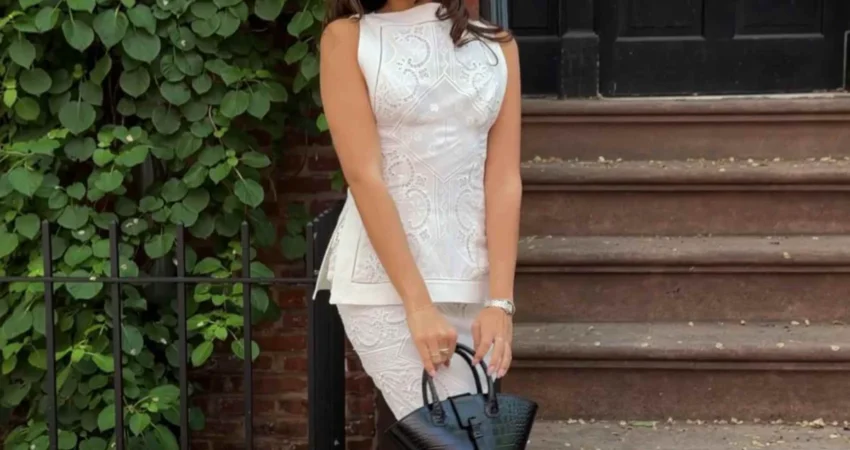
The phenomenon of the "total look"—a meticulously coordinated ensemble featuring matching colors, prints, or fabrics—has transitioned from a seasonal trend into a fundamental pillar of the modern woman’s wardrobe for the Autumn/Winter 2026/2027 season. As the global fashion industry grapples with the dual pressures of economic volatility and a growing consumer demand for "effortless" styling, the total look has emerged as a strategic solution to the pervasive issue of decision fatigue. This psychological state, characterized by the exhaustion resulting from the myriad choices individuals must make daily, is particularly acute during the morning routine. By providing a pre-assembled aesthetic, major retailers and high-end designers alike are offering consumers a streamlined path to professional and social readiness.

The current season marks a significant shift in the composition of these sets. While previous years were dominated by the "power suit" or the loungewear-inspired knit trouser set, the 2026/2027 cycle has seen a decisive return to the skirt-and-top combination. This evolution reflects a broader movement within the industry to reclaim traditional femininity through a lens of modern utility. The versatility of the two-piece set allows for a "modular" approach to dressing; while designed to be worn together for maximum impact, each piece can be integrated into a wider wardrobe, thereby increasing the "cost-per-wear" value—a metric that has become increasingly important to the value-conscious consumer of the mid-2020s.
Historical Context and the Evolution of Coordinated Dressing
The concept of the total look is not a contemporary invention but rather a reinvention of mid-century sartorial standards. In the 1950s and 1960s, the "twinset" and the coordinated skirt suit were the hallmarks of a polished wardrobe, popularized by icons such as Grace Kelly and Jacqueline Kennedy. These ensembles signaled a level of social standing and attention to detail that defined the era’s fashion. However, as the 1970s and 1980s introduced more eclectic, mix-and-match philosophies, the rigid coordination of the total look fell out of favor, often viewed as overly formal or lacking in individual creativity.

The resurgence witnessed in the current 2026/2027 season is driven by a different set of motivations. Today’s total look is rooted in the "Quiet Luxury" movement that gained momentum earlier in the decade. It emphasizes silhouette, fabric quality, and a cohesive color palette over loud logos or disparate styling. Furthermore, the rise of social media platforms has accelerated the demand for "Instagrammable" outfits that appear cohesive and intentional. Fashion analysts note that a coordinated set creates a stronger visual impact in digital spaces than mismatched separates, leading to higher engagement and, subsequently, higher sell-through rates for retailers.
Market Analysis and Consumer Spending Patterns
Recent data from retail analytics firms indicates that the "co-ords" category has seen a 22% year-over-year increase in search volume leading into the Autumn 2026 season. Consumers are moving away from impulse-buying individual items and are instead looking for "investment sets." This shift is reflected in the inventory strategies of global giants like Inditex and H&M, as well as boutique Spanish labels such as Bimani and Scalpers.

Industry experts suggest that the total look serves as a hedge against inflation for the consumer. When a customer purchases a set, such as the satin ensemble from Massimo Dutti or the knit set from Scalpers, they are effectively purchasing three outfits in one: the combined look, the top paired with denim or tailored trousers, and the skirt paired with a basic white shirt or a heavy coat. This versatility is a primary driver in the current retail climate, where "functional elegance" is the most marketable attribute of a garment.
Key Trends for AW 26/27: Materials and Silhouettes
The 2026/2027 collections are defined by several distinct material trends that elevate the total look from simple coordination to high-fashion statement.

The Faux Leather Resurgence
Zara’s contribution to the season highlights the ongoing dominance of synthetic and eco-friendly leather alternatives. The total look in leather—specifically a midi skirt paired with a matching top—offers a structured, architectural silhouette that bridges the gap between office wear and evening attire. The use of gold appliques and hardware, as seen in recent Zara releases, adds a layer of "jewelry-inspired" detail that eliminates the need for heavy accessorizing.
Innovative Knitwear
Scalpers has capitalized on the "broken knit" or textured knitwear trend. Unlike the flat jerseys of previous seasons, the 2026/2027 knits feature intricate weaves that provide depth and warmth. This trend is particularly popular in Northern European and North American markets, where the climate demands functional layering. The knit set provides the comfort of loungewear with the visual sophistication of a formal suit.

Satin and Fluidity
Massimo Dutti’s focus on satinized finishes and fluid silhouettes addresses the "day-to-night" requirement of the modern workforce. The use of drawstrings at the neck and waist in their latest sets allows for a customizable fit, moving away from the "one size fits all" approach of fast fashion. This focus on "fluid tailoring" is a hallmark of the 2026 aesthetic, prioritizing movement and comfort without sacrificing a sharp, professional image.
Print Maximialism and Optical Illusions
Brands like Bimani, Nekane, and Basyco Jerez are utilizing prints to create "optical dress" effects. By matching a printed blouse perfectly with a printed skirt, the wearer achieves the look of a midi dress with the practical benefits of separates. The use of "Teja" (terracotta) tones, stripes, and botanical prints reflects a desire for color in a season traditionally dominated by grey and black.

Chronology of the Season’s Launch
The rollout of the Autumn/Winter 2026/2027 total looks followed a strategic timeline designed to capture the "Back to School" and "Back to Office" consumer mindset.
- Late August 2026: Initial "Transitional" drops featured lighter fabrics, such as the H&M striped sets and Bimani’s sleeveless printed tops. These were marketed as bridge pieces for the late summer heat.
- September 2026: The core "Office" collections launched, featuring the Zara leather sets and Massimo Dutti satins. This coincided with major international fashion weeks, where street style influencers were heavily photographed in coordinated sets.
- October 2026: The "Winter Warmth" phase began, introducing the heavy knits from Scalpers and layered looks from Basyco Jerez, focusing on textures that provide insulation.
Official Responses and Industry Sentiment
Designers have been vocal about the shift toward coordination. In a recent trade publication interview, a senior creative director at a leading Spanish fashion house noted, "We are designing for a woman who has no time to waste but refuses to compromise on her aesthetic identity. The total look is our answer to her lifestyle. It is an architectural approach to fashion—building a silhouette from the ground up."

Retailers have also adjusted their floor layouts to accommodate this trend. Stores are increasingly moving away from grouping by category (e.g., all skirts in one section, all tops in another) and are instead creating "storytelling" vignettes where sets are displayed together. This merchandising strategy has been credited with increasing the average transaction value, as customers are significantly more likely to purchase the full set than a single piece when presented with the complete visual.
Broader Implications: Sustainability and the Future of the Wardrobe
The proliferation of the total look has interesting implications for the sustainability movement. While the high volume of production remains a concern, the "set" philosophy encourages a more thoughtful approach to dressing. Consumers are reporting longer retention periods for coordinated sets compared to standalone "trend" pieces. The ability to deconstruct a set and wear the components separately aligns with the "capsule wardrobe" movement, which advocates for fewer, higher-quality items that work together harmoniously.

Furthermore, the 2026/2027 season has seen an increase in the use of recycled polyesters in satin finishes and responsibly sourced wools in knitwear. As the "total look" becomes a staple, the industry is under increased pressure to ensure that these high-visibility sets are produced under ethical standards, as they often become the "face" of a brand’s seasonal campaign.
Conclusion: The Enduring Appeal of Visual Harmony
As the Autumn/Winter 2026/2027 season progresses, the total look remains the dominant narrative in women’s fashion. Its success lies in its ability to solve a practical problem while delivering a high-fashion result. Whether through the rugged texture of Zara’s faux leather, the cozy sophistication of Scalpers’ knits, or the elegant fluidity of Massimo Dutti’s satins, the coordinated set provides a sense of order and intentionality in an increasingly chaotic world. For the consumer, the message is clear: dressing well does not have to be difficult, and visual harmony is the ultimate luxury. The total look is not merely a trend; it is a refined method of modern living that is likely to influence sartorial choices well into the 2030s.

0 Comments