
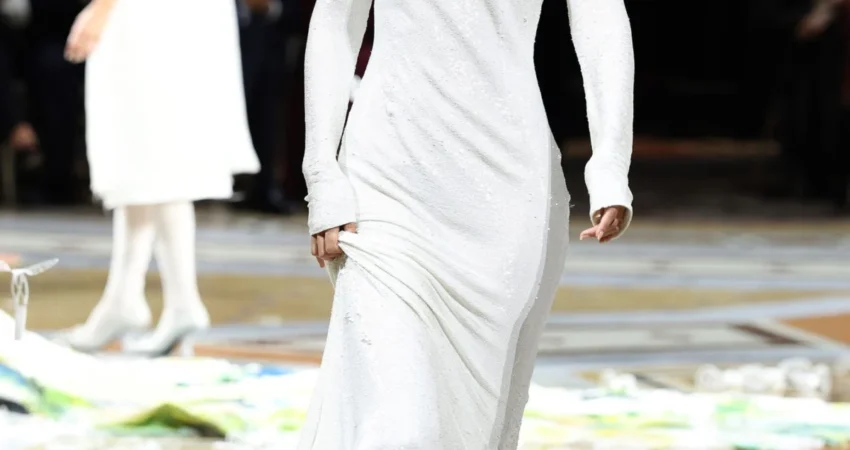
The 2026 edition of Vogue World officially descended upon Milan, transforming the historic Galleria Vittorio Emanuele II into a sprawling epicenter where Italian fashion, heritage, and contemporary entertainment converged. As one of the most anticipated events on the international fashion calendar, the spectacle served not only as a celebration of aesthetic beauty but as a definitive statement on the current state of the global luxury industry. Held within the glass-vaulted arcade of Italy’s oldest active shopping gallery, the event showcased a meticulously choreographed presentation that bridged the gap between traditional craftsmanship and the burgeoning influence of fashion technology.
The evening was structured as a multi-sensory experience, drawing a curated audience of international dignitaries, industry leaders, and cultural icons. By utilizing the Galleria as its stage, Vogue World 2026 highlighted the architectural grandeur of Milan while simultaneously providing a platform for the world’s most prestigious fashion houses to debut their visions for the upcoming seasons. Major participants included storied labels such as Versace, Gucci, Valentino, and Dolce & Gabbana, each contributing to a narrative that explored the evolution of Italian style from its artisanal roots to its digital future.
A Four-Act Chronology of Italian Excellence
The runway presentation was strategically divided into four distinct acts, each designed to represent a specific pillar of the Italian fashion identity. This chronological and thematic approach allowed the audience to witness a comprehensive retrospective and a forward-looking forecast of the industry.

The first act focused exclusively on the "Artesanía" or craftsmanship of Italian fashion. This segment paid homage to the "Fatto a Mano" (Handmade) tradition that remains the backbone of the luxury sector in Italy. Models navigated the marble floors of the Galleria wearing garments that emphasized intricate needlework, bespoke tailoring, and the manipulation of high-quality textiles. This act served as a reminder that despite the rapid pace of the modern fashion cycle, the value of human touch and ancestral techniques remains a primary driver of luxury consumption.
The second act transitioned into the contemporary facet of the industry. Here, the focus shifted toward ready-to-wear collections that define the current street-style landscape of Milan. The designs presented reflected a sophisticated urbanity, blending comfort with the high-octane glamour associated with Italian nightlife and professional life. This act illustrated how brands like Versace and Dolce & Gabbana have successfully adapted their heritage codes to meet the demands of a younger, more globalized demographic.
The third act explored the intersection of fashion and technology. In an era where digital garments and augmented reality are becoming increasingly relevant, this segment showcased how Italian houses are integrating smart textiles and tech-driven production methods into their ateliers. The use of innovative materials that react to light and movement provided a stark, futuristic contrast to the 19th-century surroundings of the Galleria.
The final act served as a grand culmination, bringing together the most iconic designs of the night in a display of pure elegance. This act was characterized by a return to formalwear and haute couture, emphasizing the silhouettes and color palettes that Vogue World 2026 has officially designated as the leading trends for the Autumn 2026 season.

Defining the Color Palette: The Tonal Trends of Autumn 2026
One of the most significant takeaways from the Milan event was the solidification of a specific color story that is expected to dominate global retail markets. The dresses featured on the runway were more than mere garments; they were a study in the psychological and cultural weight of color in Italian fashion.
The Minimalist Purity of White
The show emphasized a return to "Immaculate Minimalism," led by the appearance of Italian supermodel Mariacarla Boscono. Boscono, a perennial muse for the world’s top designers, appeared in a white dress that epitomized ethereal sophistication. This aesthetic was further reinforced by industry leaders Gigi Hadid and Vittoria Ceretti, who both wore pristine, monochromatic gowns that relied on structure and drape rather than ornamentation. The prevalence of white in the 2026 collections suggests a shift toward "quiet luxury," where the quality of the fabric and the precision of the cut take precedence over loud branding.
The Rise of Sophisticated Brown
A major highlight of the evening was the appearance of Belarusian tennis star Aryna Sabalenka, who modeled a deep brown dress designed by Demna Gvasalia for Gucci. This particular shade of brown has been gaining momentum since the previous autumn, but its prominence at Vogue World 2026 confirms its status as the "new black" for the upcoming season. Despite the garment featuring a high neck and long sleeves, the design maintained a sense of mystery and seduction inherent to the Gucci house. The choice of brown reflects a broader industry trend toward earth tones and organic colors, signaling a move away from the neon and synthetic hues of previous years.
The Timeless Authority of Black
In a city like Milan, the color black is more than a fashion choice; it is a cultural staple. Vogue World 2026 reaffirmed the dominance of black through various interpretations, from sharp blazers to flowing evening gowns. Ashley Graham made a notable appearance on the runway wearing an Autumn-Winter 2026 Haute Couture design by Pierpaolo Piccioli for Balenciaga. The inclusion of this look highlighted the versatility of black as a medium for high-fashion experimentation. Analysts note that black remains the safest and most profitable color for luxury brands, as it appeals to a wide range of global consumers while maintaining an aura of exclusivity and authority.

Graphite Grey and the Armani Legacy
The presentation also featured a majestic display of graphite grey, most notably in the designs presented by Armani Privé. Grey, often considered a neutral or utilitarian tone, was elevated to a level of high-fashion prominence. In the context of Italian wardrobes, graphite grey represents a middle ground between the severity of black and the softness of earth tones. It is a color that speaks to the professional elegance of the Milanese woman, and its inclusion in the Vogue World lineup suggests it will be a key player in outerwear and formal suiting for 2026.
Celebrity Influence and Cultural Impact
The success of Vogue World 2026 was bolstered by a heavy celebrity presence, which served to amplify the event’s reach across digital platforms. Beyond the models on the runway, the front row and guest list included figures such as Jennifer Lopez, whose presence underscored the intersection of Hollywood and high fashion.
The involvement of athletes like Aryna Sabalenka points to a growing trend where luxury brands are looking toward the world of sports for new ambassadors. This "sportification" of luxury allows brands to tap into the massive, loyal fan bases of global athletes, bringing a sense of dynamism and physical prowess to the traditional fashion narrative.
Supporting Data and Economic Context
The choice of Milan as the host city for Vogue World 2026 is backed by strong economic indicators. According to data from the Camera Nazionale della Moda Italiana (CNMI), the Italian fashion industry saw a significant uptick in exports in the mid-2020s, with a particular focus on the Asian and North American markets. Events like Vogue World act as massive marketing engines that drive interest in "Made in Italy" products.

Preliminary social media analytics suggest that Vogue World 2026 generated over 500 million impressions within the first 24 hours of the show. This digital footprint is crucial for the participating brands, as it translates directly into brand equity and future sales. The fusion of a physical event in a historic location with a massive digital broadcast strategy is now the standard for success in the high-fashion industry.
Industry Implications and Future Outlook
The implications of Vogue World 2026 extend far beyond the borders of Milan. By setting a clear agenda for colors, silhouettes, and technological integration, the event provides a roadmap for retailers and smaller designers worldwide. The emphasis on craftsmanship (Act 1) suggests a continuing consumer interest in sustainability and "slow fashion," where the longevity of a garment is valued over its immediate trendiness.
Furthermore, the creative shifts mentioned during the event—such as the collaboration between Demna Gvasalia and Gucci—indicate a period of intense experimentation among major fashion conglomerates. These moves are often designed to revitalize legacy brands and capture the attention of a shifting global audience.
As the fashion world looks toward the end of the decade, Vogue World 2026 stands as a testament to the enduring power of Milan. By successfully blending the historical significance of the Galleria Vittorio Emanuele II with the cutting-edge visions of today’s designers, the event has once again proven that Italian fashion is not just a reflection of culture, but a primary architect of it. The trends established during this spectacular night in Milan will undoubtedly influence how the world dresses for years to come.

0 Comments