
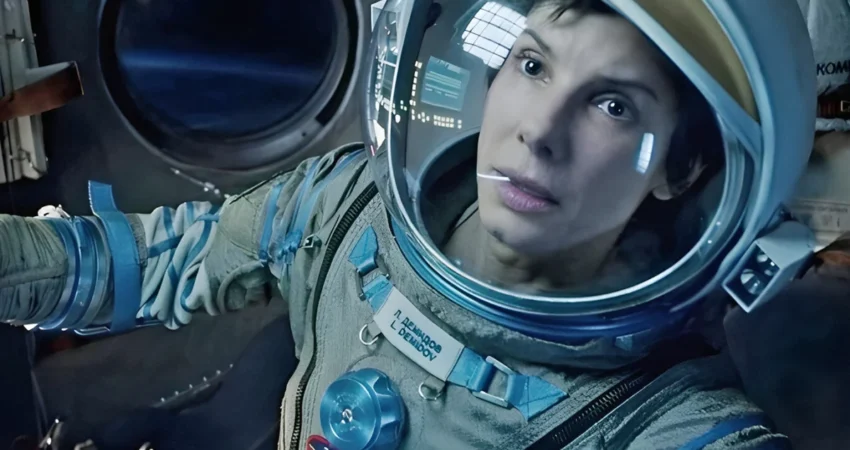
The landscape of digital cinema and streaming accessibility is set to shift as the critically acclaimed science fiction thriller Gravity prepares to exit the HBO Max catalog. Directed by Alfonso Cuarón and released in 2013, the film represented a watershed moment for the genre, merging high-stakes survival drama with groundbreaking visual effects that redefined the industry’s approach to depicting outer space. With its scheduled departure on September 30, 2026, audiences are faced with a final window of opportunity to experience a work that James Cameron once described as "the best space film ever done."
The Genesis and Narrative Core of a Modern Classic
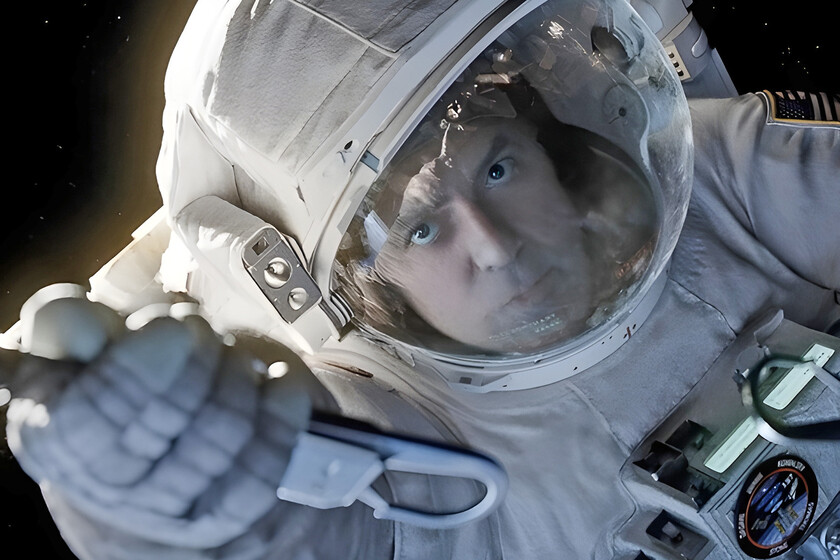
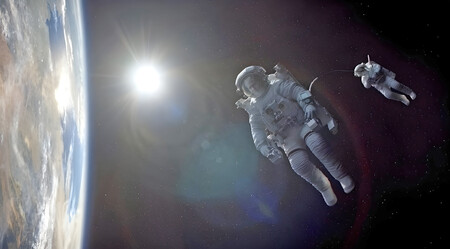
Gravity follows the harrowing journey of Dr. Ryan Stone (Sandra Bullock), a brilliant medical engineer on her first shuttle mission, and Matt Kowalski (George Clooney), a veteran astronaut in command of his final flight. The narrative is catalyzed by a catastrophic event: the destruction of a defunct Russian satellite triggers a chain reaction of orbital debris—a real-world phenomenon known as the Kessler Syndrome. This high-velocity cloud of shrapnel destroys the Space Shuttle Explorer, leaving Stone and Kowalski tethered to nothing but each other, spiraling into the blackness of the void.
The film’s screenplay, co-written by Alfonso Cuarón and his son Jonás Cuarón, intentionally stripped away the tropes of traditional space operas. There are no extraterrestrial threats, no laser battles, and no complex political subplots. Instead, the film focuses on the primal human instinct to survive against the indifferent physics of the universe. The isolation of the setting serves as a metaphor for Stone’s internal struggle with grief and loss, transforming a survival story into a profound meditation on the resilience of the human spirit.
A Chronology of Production and Technical Innovation
The journey to bring Gravity to the screen was as arduous as the mission depicted in the film. Development began years before its 2013 release, as the technology required to realize Cuarón’s vision simply did not exist. The production faced a 4.5-year development cycle, a significant portion of which was dedicated to inventing new filming techniques.
- 2010 – Casting and Pre-production: The project initially saw various high-profile names attached, including Angelina Jolie and Natalie Portman. Ultimately, Sandra Bullock was cast, a decision that would lead to one of the most physically demanding performances in modern history.
- 2011 – The Invention of the "Light Box": Cinematographer Emmanuel Lubezki and the visual effects team at Framestore realized that traditional lighting would not work for a zero-gravity environment. They constructed a 20-foot-tall "Light Box" lined with 1.9 million LED bulbs to simulate the complex light reflections of Earth, the sun, and the stars on the actors’ faces.
- 2012 – Post-production and Animation: Because 90% of the film consists of computer-generated imagery (CGI), the actors often performed in isolation, strapped into complex rigs that allowed for 360-degree rotation. The digital environments were rendered with a level of detail that required massive computational power, ensuring that every bolt on the International Space Station (ISS) and every flake of debris was photoreal.
- 2013 – Global Release: The film premiered at the Venice Film Festival in August 2013, immediately garnering universal acclaim for its immersion and technical prowess.
Statistical Success and Critical Recognition
Upon its release, Gravity became a rare "unicorn" in the film industry: a high-budget experimental film that achieved massive commercial success. Produced on a budget of approximately $100 million, the film went on to gross $723.2 million at the global box office. This financial performance proved that audiences were hungry for sophisticated, adult-oriented science fiction.
The film’s critical reception was equally staggering. It currently maintains a 96% "Certified Fresh" rating on Rotten Tomatoes, with critics praising the seamless integration of technology and emotion. The American Film Institute (AFI) named it one of the top ten films of the year, and it later appeared on The New York Times’ prestigious list of the "100 Best Movies of the 21st Century."
The 86th Academy Awards served as the ultimate validation for Cuarón’s vision. Gravity received ten nominations and won seven Oscars, including:

- Best Director: Alfonso Cuarón (making him the first Mexican filmmaker to win the award).
- Best Cinematography: Emmanuel Lubezki.
- Best Visual Effects.
- Best Original Score: Steven Price.
- Best Film Editing.
- Best Sound Editing.
- Best Sound Mixing.
Scientific Realism and NASA’s Response
One of the most discussed aspects of Gravity is its commitment to technical and scientific accuracy. While the film takes creative liberties with the proximity of various space stations (the ISS, the Hubble Space Telescope, and the Chinese Tiangong station are not as close to each other in reality), the depiction of physics in a vacuum is remarkably faithful.
NASA astronauts have frequently commented on the film’s authenticity. Retired astronaut Cady Coleman, who was aboard the ISS during the film’s production, provided insights to Sandra Bullock regarding life in microgravity. Astronaut Buzz Aldrin, the second man to walk on the moon, praised the film’s depiction of the "Earth-view" and the terrifying silence of space.
The production team consulted extensively with NASA experts to ensure that the movements of the characters reflected the lack of resistance in a vacuum. Unlike many sci-fi films where sound travels through space, Cuarón made the bold choice to maintain the silence of the void, relying on Steven Price’s pulsating score and the vibrations felt through the characters’ suits to convey impact and tension. This adherence to the laws of physics heightened the sense of claustrophobia and danger, making the environment itself the primary antagonist.
Broader Impact on the Film Industry
Gravity’s legacy extends far beyond its box office numbers. It ushered in a new era of "prestige sci-fi," paving the way for subsequent hits like Christopher Nolan’s Interstellar (2014) and Ridley Scott’s The Martian (2015). It demonstrated that visual effects could be used not just for spectacle, but as a tool for intimate character studies.
The film also marked a significant milestone for the "Three Amigos" of Mexican cinema—Alfonso Cuarón, Guillermo del Toro, and Alejandro G. Iñárritu. Cuarón’s win for Best Director opened the doors for a decade of dominance by Mexican filmmakers in the category, fundamentally changing the cultural landscape of Hollywood.
Furthermore, the film’s use of long, uninterrupted takes (the opening scene is a continuous 17-minute shot) challenged directors to think more fluidly about camera movement in digital spaces. This technique, which Lubezki and Cuarón had experimented with in Children of Men, reached its zenith in Gravity, providing a sense of "first-person" vulnerability that few films have matched since.
The Streaming Departure and Digital Rights Management
The removal of Gravity from HBO Max (now rebranded as Max in many territories) highlights the ongoing volatility of streaming catalogs. Despite being a Warner Bros. production, licensing agreements and regional rights often dictate the availability of even the most successful "in-house" titles.
For subscribers, the September 30 deadline represents more than just the loss of a movie; it is the departure of a cinematic benchmark. As streaming platforms increasingly pivot toward original content and "rotating" libraries, the permanent accessibility of film history becomes more precarious. Analysts suggest that the movement of such high-profile titles often precedes a shift to other platforms or a push toward "Premium Video on Demand" (PVOD) models, where viewers must pay per-viewing regardless of their subscription status.

Implications for Future Viewership
As Gravity enters its final days on the platform, its relevance remains undiminished. In an era where CGI is often criticized for looking "cheap" or "rushed," the meticulous craftsmanship of Cuarón’s 2013 masterpiece stands as a reminder of what is possible when technology is married to a singular artistic vision.
The film remains a vital watch for students of cinema, fans of science, and those seeking a visceral emotional experience. Its departure from a major streaming service serves as a prompt for audiences to revisit the film—not just for its technical wizardry, but for its core message: that even in the face of total isolation and overwhelming odds, the act of "letting go" and finding the will to move forward is the most human achievement of all.
For those who have yet to see it, or those who wish to experience the tension of the debris field one last time, the clock is ticking. Gravity will remain available on HBO Max until the end of September 2026, after which it will drift into the next phase of its digital lifecycle, leaving behind a legacy that continues to pull audiences in with the force of its namesake.

0 Comments