
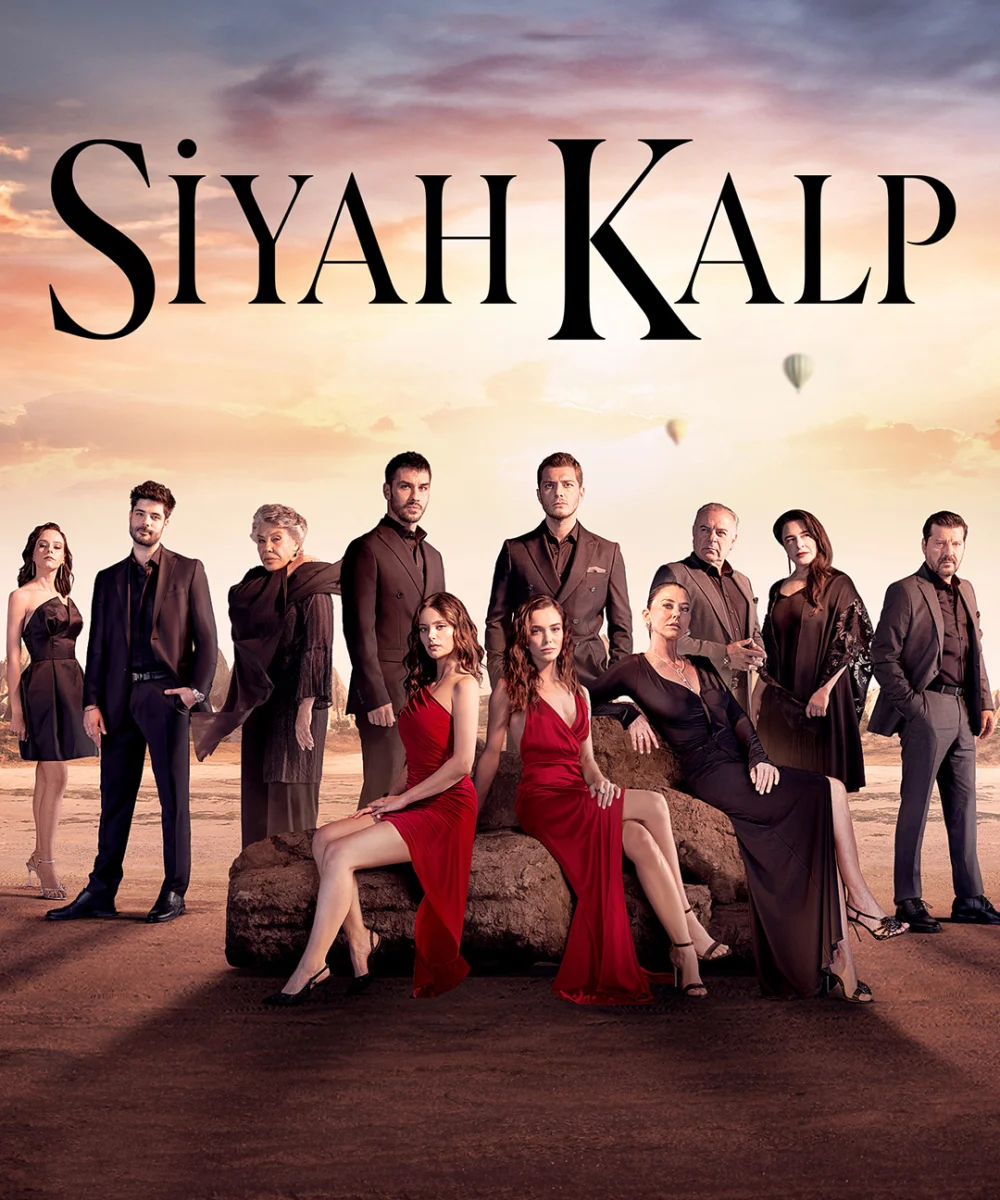
Produced by Tims&B Productions, a company renowned for its high-quality and globally successful dramas, and directed by the experienced duo Murat Saracoglu and Evren Karabiyik Gunaydin, with a script penned by Yildiz Tunc, the series brings together a formidable creative team. The choice of Nevsehir, Turkey, specifically the enchanting region of Cappadocia, as a primary filming location, is anticipated to add a unique visual grandeur and atmospheric depth to the unfolding drama, enhancing the emotional resonance of the story.
The Genesis of a Deep-Seated Conflict: Sumru’s Past and Present
At the heart of Valley of Hearts lies the profoundly tragic decision made by Sumru, portrayed by the acclaimed Ece Uslu, in her youth. Faced with an unimaginable personal trauma—having been raped by her fiancée—Sumru made the heartbreaking choice to abandon her newborn twins without ever holding them. This act, driven by a desire to escape a painful past and societal stigma, set in motion a chain of events that would define multiple lives. Seeking a fresh start, Sumru relocated to Cappadocia with her mother, Nihayet (Isil Yucesoy), and soon married Samet (Burak Sergen), a powerful and wealthy figure in the region’s burgeoning tourism industry.
In her new life, Sumru meticulously constructed an facade of perfection. Residing in the opulent Sansalan Mansion, she appears to lead an idyllic existence, characterized by a loving husband, two biological children—Esat (Genco Ozak) and Harika (Derin Ince)—and the admiration of her community. She extends her maternal care even to her stepson, Cihan (Burak Tozkoparan). The twins she abandoned, however, remain a fiercely guarded secret, unspoken even to her own mother, a testament to the depth of her denial and the lengths to which she has gone to bury her past. This stark dichotomy between her public persona and her hidden truth forms the foundational tension of the series, hinting at the fragile nature of her carefully built world.
The Return of the Past: Nuh and Melek’s Quest for Truth
While Sumru built her new life, her abandoned twins, Nuh (Aras Aydin) and Melek (Hafsanur Sancaktutan), endured a dramatically different upbringing. Raised by their grandmother while their father served time in prison, their lives were marked by hardship and a gnawing sense of abandonment. The absence of a mother figure, coupled with the societal implications of their circumstances, fostered deep resentment within them. As their grandmother neared her passing, she revealed the long-held secret of their mother’s identity, a revelation that shattered their world and ignited a burning desire for answers and recognition.
Following their grandmother’s death, Nuh and Melek embarked on a journey to Cappadocia, driven by a complex mix of emotions: a yearning to meet the mother who left them, a desperate hope for an explanation, and a fierce determination to claim the place they believe is rightfully theirs. Their confrontation with Sumru, however, proved to be a devastating blow. Sumru’s initial reaction was one of cold denial, outright refuting their claims. This rejection was further compounded by a clandestine meeting days later, where Sumru offered them money, not as an act of reconciliation, but as a transaction to ensure their permanent disappearance from her life. Her chilling declaration, "Giving birth doesn’t make me your mother," left Nuh and Melek stunned and further cemented their feelings of betrayal and pain. The sight of Sumru living a seemingly happy and privileged life with her other children intensified their suffering, deepening their resolve to uncover the truth and challenge her constructed reality.
Intrigue Within the Mansion and Unforeseen Connections
Adding another layer of complexity to the unfolding drama is the arrival of Hikmet (Esra Dermancioglu), Sumru’s widowed sister-in-law, and her daughter Sevilay (Leyla Tanlar) at the Sansalan Mansion. Hikmet and Samet harbor a secret agenda: to arrange a marriage between Sevilay and Cihan, Samet’s son. Their objective is to consolidate family wealth and ensure its retention within their trusted circle, a common trope in Turkish dramas that often highlights the tension between tradition, economic imperatives, and individual desires.
However, fate intervenes in the picturesque landscape of Cappadocia. Cihan, Sumru’s stepson, crosses paths with Melek, and an undeniable connection sparks between them. Simultaneously, Sevilay finds herself unexpectedly drawn to Nuh. These nascent affections are immediately overshadowed by the pre-existing arrangement for Cihan and Sevilay’s marriage, setting the stage for a classic conflict between duty and desire. The burgeoning relationships between these four young individuals, intertwined by destiny and circumstance, promise to unravel the carefully woven fabric of the Sansalan family.
The Battle for Truth and Revenge
Unwilling to be silenced or bought off, Melek and Nuh make the resolute decision to remain in Cappadocia. Their goal is clear: to expose the truth about Sumru’s past to her new family. Melek strategically secures a position working at the Sansalan mansion, allowing her proximity to her biological family and fostering an unexpected bond with her grandmother, Nihayet. This move positions her at the heart of the family’s secrets, providing an insider’s perspective crucial to her quest.
Nuh, meanwhile, finds an unlikely ally in Tahsin (Ilker Aksum), a long-standing adversary of the Sansalan family. United by a shared sense of bitterness and a desire for retribution, Nuh and Tahsin begin to formulate a plan for revenge, aiming to dismantle the Sansalan empire and expose Sumru’s deception. This alliance introduces a darker, more volatile dimension to the narrative, raising questions about the morality of their actions and the potential collateral damage of their pursuit of justice.
As the emotional stakes escalate, the clandestine relationships between Melek and Cihan, and Nuh and Sevilay, continue to deepen. Caught between the expectations of an arranged marriage and their undeniable feelings, these young lovers find themselves navigating a treacherous path of loyalty, hidden truths, and burgeoning romance. The central questions of the series revolve around these intertwined destinies: Will Melek and Nuh succeed in exposing Sumru’s past and claiming their rightful place? Will they uncover the full extent of Sumru’s motivations for abandonment? Can love flourish amidst the painful truths that emerge between Melek and Cihan, and Nuh and Sevilay? And what are the true implications of Hikmet and Samet’s secret plan for the Sansalan family’s future?
Key Characters and Their Complexities
The narrative depth of Valley of Hearts is significantly bolstered by its richly drawn characters, each grappling with internal conflicts and external pressures.
-
Sumru Sansalan (Ece Uslu): Sumru is a fascinating study in denial and self-preservation. Her portrayal by Ece Uslu, known for her powerful dramatic performances, suggests a character who is not merely villainous but deeply scarred. Her past trauma of rape, which she eventually discloses, provides crucial context for her abandonment of the twins, though it does not fully absolve her in the eyes of her children. She has constructed a life of luxury and public admiration, masking a profound internal struggle and a coldness that shocks Melek and Nuh. Her journey will likely explore the themes of guilt, forgiveness, and the possibility of redemption.
-
Cihan Sansalan (Burak Tozkoparan): Samet’s biological son and Sumru’s stepson, Cihan, is presented as a kind-hearted and thoughtful individual who has always felt somewhat estranged from his family, choosing to live abroad. His return to Cappadocia due to his father’s illness thrusts him into the heart of the family’s machinations. His immediate attraction to Melek serves as a catalyst for his quiet rebellion against the pre-arranged marriage to Sevilay, highlighting his moral compass and desire for genuine connection over familial obligation. Burak Tozkoparan, with his nuanced acting, is expected to bring depth to Cihan’s internal conflict.
-
Melek Cakirca (Hafsanur Sancaktutan): Melek embodies resilience and compassion despite a childhood marked by abandonment and hardship. Portrayed by Hafsanur Sancaktutan, Melek’s character is driven by a profound need for answers rather than mere revenge. She seeks closure and, perhaps, a connection with her birth mother, a desire that sets her apart from her more embittered brother. Her evolving relationship with Cihan represents a beacon of hope and belonging, offering her the possibility of a stable and loving future.
-
Nuh Cakirca (Aras Aydin): Nuh is a strong-willed and emotionally charged young man, whose life has been profoundly shaped by betrayal and rejection. Aras Aydin’s portrayal is expected to capture Nuh’s deep-seated anger and his struggle to reconcile his desire for revenge with his underlying moral compass. Fiercely protective of Melek, Nuh’s alliance with Tahsin pushes him towards a path of darker retribution. Yet, his tenderness and capacity for love are revealed in his relationship with Sevilay, showcasing the duality of his character.
-
Sevilay (Leyla Tanlar): Initially presented as a naive and vulnerable young woman, Sevilay, played by Leyla Tanlar, quickly proves to be more complex. Despite the efforts of her mother and uncle to dictate her future through an arranged marriage, Sevilay possesses an inherent determination to forge her own destiny. Her unexpected connection with Nuh forces her to confront societal expectations, class distinctions, and the true meaning of love and freedom, making her a compelling figure in the unfolding drama.
Broader Impact and Context of Turkish Dramas
Valley of Hearts enters a vibrant global market for Turkish dramas, which have gained immense popularity worldwide, particularly across the Middle East, Latin America, and parts of Europe and Asia. These series are celebrated for their high production values, engaging storylines, and emphasis on universal themes such as family loyalty, forbidden love, social class disparities, and the struggle between tradition and modernity. The extended episode lengths, characteristic of Turkish television, allow for intricate plot developments and deep dives into character psychology, a format that resonates with international audiences accustomed to binge-watching compelling narratives.
Tims&B Productions, the force behind Valley of Hearts, has a proven track record of creating hits like "Magnificent Century" and "Bir Zamanlar Çukurova," demonstrating their expertise in crafting dramas that blend historical richness or contemporary social issues with compelling human stories. Show TV, as one of Turkey’s major national broadcasters, provides a significant platform for the series, ensuring wide domestic reach and contributing to its potential international distribution.
The selection of Cappadocia as a filming location is not merely aesthetic; it serves as a powerful narrative device. Its unique geological formations, ancient cave dwellings, and historical significance often symbolize hidden depths, timelessness, and the unearthing of secrets—themes that are central to Valley of Hearts. The visual splendor of the region will undoubtedly enhance the drama’s appeal and provide a stunning backdrop for the emotional turmoil experienced by its characters.
Anticipated Themes and Societal Commentary
Valley of Hearts is poised to explore several pertinent themes that resonate within Turkish society and globally. The abandonment of children, particularly under traumatic circumstances, delves into complex ethical and moral questions. The series will likely prompt discussions about maternal responsibility, the long-term psychological impact of such events on both the abandoned and the abandoner, and the arduous path toward forgiveness and reconciliation.
The theme of social class disparity is also prominent, highlighted by the contrast between Sumru’s opulent life in the Sansalan Mansion and the hardships faced by Nuh and Melek. This tension is further exacerbated by the arranged marriage plot involving Cihan and Sevilay, which underscores the role of wealth and status in dictating personal choices within conservative societal structures. The burgeoning forbidden loves between the main young characters will challenge these class boundaries and societal expectations, reflecting a broader commentary on individual freedom versus familial duty.
Revenge, a powerful human emotion, forms a significant arc for Nuh and Tahsin. The series will examine the corrosive nature of vengeance and question whether true justice can be achieved through retaliatory actions, or if it lies in understanding and empathy. Ultimately, Valley of Hearts appears to be a multi-layered drama that will not only entertain with its gripping plot but also provoke thought on universal human experiences, making it a highly anticipated addition to the Turkish drama landscape. Its journey from September 2024 promises to be one filled with passion, secrets, and the enduring quest for identity and belonging.

0 Comments