
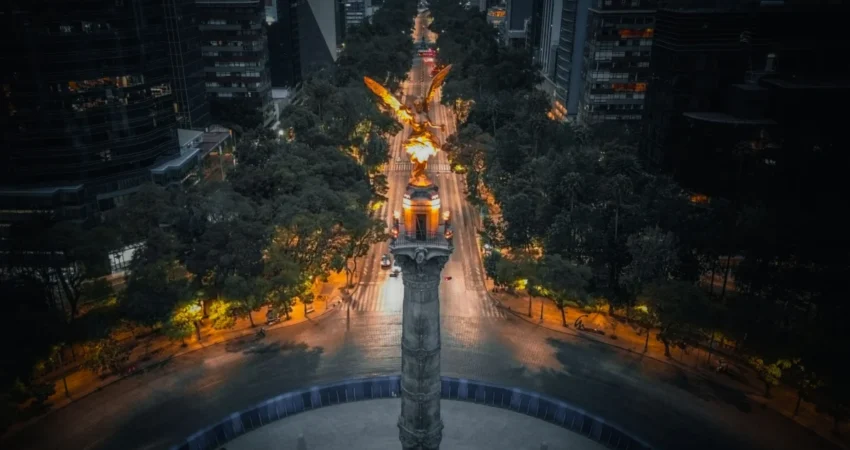
Mexico City is poised for a transformative autumn in 2026 as the capital prepares for its most mystic season, blending international fashion legacies, avant-garde design, and the ancestral rituals of Día de Muertos. As the rainy season begins to wane, the city’s cultural infrastructure—ranging from the historic center to the alternative corridors of Roma and Juárez—is set to host a series of high-profile exhibitions, culinary festivals, and cinematic premieres. This surge in activity reflects a broader trend of "cultural tourism" that has seen the city become a global hub for the creative industries. October 2026 is not merely a month of celebration but a curated showcase of how traditional Mexican heritage intersects with contemporary global movements in art and commerce.

Fashion and Gender: The Jean Paul Gaultier Legacy in Roma Norte
One of the cornerstone events of the month is the sensory exhibition "Et Gaultier Créa L’Homme. Le Male: Pasado, Presente y Futuro," located at Sinaloa 153 in the Roma Norte district. The exhibition celebrates the legacy of "Le Male," a fragrance that revolutionized the perfume industry upon its release in 1995 by challenging traditional olfactory codes of masculinity. In the 2026 iteration, the brand has collaborated with contemporary Mexican artist Carlos Rodríguez to reinterpret the sailor archetype—a recurring symbol in Gaultier’s work.

Rodríguez, known for his exploration of daily masculinity through painting and ceramics, provides a local lens on Gaultier’s transgressive spirit. The exhibition serves as a "Le Male Factory," a space dedicated to exploring homoeroticism, seduction, and queer history. By integrating local artistic talent, the French fashion house acknowledges Mexico City’s role as a progressive center for gender discourse. This collaboration highlights the importance of the "cultural mix" that Gaultier has championed throughout his career, now reflected in the intimate and social standards of 21st-century Mexico.

Art Nouveau and Synesthesia: Major Museum Openings
The Museo Kaluz will host a landmark event with "Alphonse Mucha: La magia de la línea," marking the first time the work of the Czech Art Nouveau master (1860–1939) has been exhibited in Mexico. Running from October 9, 2026, to February 8, 2027, the exhibition features approximately 130 pieces, including lithographs, posters, and drawings. Curated by Tomoko Sato and Elizabeth Brooke in collaboration with the Mucha Foundation, the show arrives in CDMX following a successful North American tour. Mucha’s influence on modern graphic design and advertising remains profound, and this exhibition provides a critical look at how his "Stile Mucha" continues to resonate in contemporary visual culture.

Simultaneously, the Seminario de Cultura Mexicana in Polanco presents "Synæsthesia" by Valerie Campos. Running from October 3 to November 15, the show features 30 works that explore the intersection of sound and visual form. Campos, whose career spans two decades between New York and Mexico City, uses painting and assemblage to translate auditory perception into tangible imagery. This exhibition underscores the city’s commitment to supporting mid-career artists who are pushing the boundaries of sensory perception in fine art.

Design and Materiality: Reclaiming the Human Gesture
In an era increasingly dominated by artificial intelligence and digital immediacy, several October exhibitions focus on the "memory of the hands." Galería Consigna and Ikpali Studio present "Vol. II – Cuerpo de obra" at Kepler 101, an exhibition that deconstructs the creative process behind collectible design. Featuring work from 16 studios, including the archives of the legendary architect Pedro Ramírez Vázquez, the show argues that the value of an object lies in the time and human decision-making required for its creation.

This theme is echoed at Galería CLAROSCURO with "Amparanakan Amayupa: La memoria de las manos" by Bolivian artist Elvira Espejo. Espejo, a former director of the National Museum of Ethnography and Folklore in Bolivia, uses photography and textiles to document the ancestral knowledge embedded in the act of weaving. Her work serves as a living archive, suggesting that physical gestures are a form of language that bypasses written text to connect generations.

Cinematic Landscapes: From Morelia to the French Tour
October is a critical month for the Mexican film industry, anchored by the Morelia International Film Festival (FICM). A highlight of the 2026 selection is "Nosotros," the debut feature by Joaquín Ruano. A co-production between Mexico and Guatemala, the film follows the relationship between a security guard and a trans woman in Guatemala City, exploring themes of identity and social prejudice. Its screening on October 20 at Cinépolis Centro follows a successful world premiere at the Toronto International Film Festival, signaling the growing strength of Central American narratives within the Mexican cinematic circuit.

For enthusiasts of European cinema, the 30th French Film Tour continues its nationwide journey, concluding in Mexico City on October 14. The 2026 tour features seven unreleased films, including "Abandonado" by Vincent Garenq and "Sólo una ilusión" by the acclaimed duo Eric Toledano and Olivier Nakache. To encourage attendance, the festival has introduced a "Cinebono" (240 MXN for four tickets), a strategy that has helped the tour reach over 76 cities across the republic, making it one of the most successful foreign film showcases in the country.

Gastronomy and the Evolution of Tradition
The city’s culinary scene in October 2026 is defined by two trends: the celebration of long-standing institutions and the creative reinterpretation of seasonal staples. Merotoro, a pillar of the Condesa neighborhood founded by Jair Téllez, celebrates 16 years of operation. Since 2010, Merotoro has been instrumental in bringing the "Baja California" philosophy—prioritizing product seasonality and direct relationships with fishermen—to the capital.

The seasonal "Pan de Muerto" has also undergone a creative evolution. Cardín Pastelería in Roma Norte offers versions infused with guava and cardamom, while Sofitel Mexico City Reforma introduces the "Catrín" and "Catrina" croissants, blending French pastry techniques with Mexican ingredients like cafe de olla and cempasúchil (marigold). In Santa María la Ribera, Pan de María has introduced a Sicilian twist with a pistachio cream filling, reflecting the city’s increasingly cosmopolitan palate.

In the realm of mixology, Handshake Speakeasy—frequently cited among the world’s best bars—has partnered with The Macallan to launch "Poached Pear." This cocktail, featuring Double Cask 12-year whisky, rooibos, and brown butter, is the result of an international research trip through Scotland and Latin America, emphasizing the "globalization of craft" in the city’s nightlife.

Regional Escapades and the Path to the Afterlife
As the end of the month approaches, attention shifts toward the Day of the Dead. For those seeking an authentic experience, "Umbral de la Memoria" offers a private four-day journey through Michoacán from October 30 to November 2. This program emphasizes the "Noche de Ánimas" (Night of the Souls) over the commercial aspects of the holiday, taking visitors through Capula, Tzintzuntzan, and Lake Pátzcuaro. Gastronomy plays a central role, with Chef Hugo Mora preparing menus that interpret the symbolic importance of the season through contemporary Mexican cuisine.

In Yucatán, the tradition of "Hanal Pixán" (Food for the Souls) provides an alternative perspective. Hotels like Cigno and Kahal in Mérida are hosting events that feature "recado negro" sugar and cempasúchil-infused gin, showcasing how Mayan traditions continue to adapt to modern luxury hospitality.

Wellness, Commerce, and Immersive Entertainment
The lifestyle sector in October 2026 is marked by the opening of the new NAVY Training Center in Condesa. Utilizing the "Navy Method," which focuses on functional strength and technical progression, the facility reflects the city’s growing "boutique fitness" market. On the business front, the D2C (Direct-to-Consumer) Summit by Tiendanube on October 21 in Polanco will gather e-commerce leaders to discuss the impact of artificial intelligence and digital operations on the Mexican retail landscape.

Finally, for families and fans of immersive entertainment, "Harry Potter: A Forbidden Forest Experience" makes its Mexican debut at Parque Naucalli on October 23. Following successful runs in New York and Singapore, the nighttime trail uses advanced lighting and animatronics to recreate the Wizarding World, contributing to the city’s growing portfolio of high-tech, international entertainment franchises.

Broader Impact and Cultural Significance
The dense schedule of October 2026 serves as a barometer for Mexico City’s economic and cultural health. The convergence of international brands like Jean Paul Gaultier and The Macallan with local artisans and grassroots film festivals demonstrates a sophisticated ecosystem where global capital supports local heritage. According to tourism data from previous years, October and November represent the highest period of economic influx for the city’s service sector, driven largely by the global fascination with the Day of the Dead.

By offering a range of activities that span from the elite galleries of Polanco to the industrial dance floors of Atlampa (hosting the Innervisions electronic music festival on October 3), Mexico City reaffirms its status as a "City of the World." The 2026 agenda suggests that the city’s strength lies in its ability to be both a sanctuary for ancient traditions and a laboratory for the future of art, design, and commerce. Residents and visitors alike are encouraged to engage with these spaces not just as consumers, but as participants in a city that is actively redefining its identity on the world stage.

0 Comments