
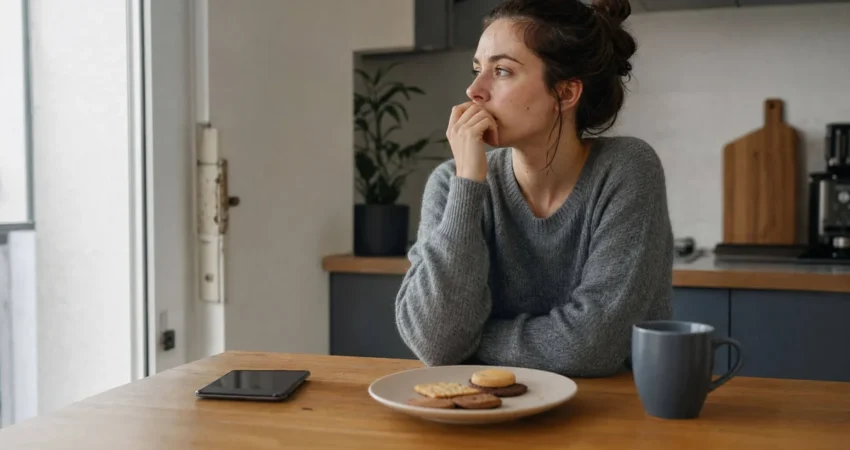
A landmark study conducted by the University of Salzburg, published in the early months of 2026, has provided a significant shift in the scientific understanding of dietary behaviors, particularly the impulse to snack shortly after a primary meal. The research, featured in the journal Stress and Health, suggests that the urge to engage in "picoteo"—the Spanish term for grazing or snacking—is more closely correlated with a perceived lack of time and the pressure of a busy schedule than with generalized psychological stress. This finding, supported by a massive meta-analysis of over 50 previous studies, offers a new lens through which nutritionists and psychologists view the modern epidemic of mindless eating.
For decades, the prevailing narrative in both clinical and popular psychology has centered on "emotional eating," a phenomenon where individuals consume high-calorie, low-nutrient foods to cope with negative emotions or high-stress environments. However, the Salzburg study, led by researchers Christoph Bamberg, Jens Blechert, and Julia Reichenberger, indicates that the mechanics of the modern workday—characterized by "time pressure"—may be the primary driver of these habits. When individuals feel they are constantly behind schedule, the probability of snacking increases significantly, often regardless of their actual hunger levels or emotional state.
The Salzburg Study: Methodology and Key Findings
The University of Salzburg research followed a cohort of 64 participants, primarily female university students with an average age of 25, over a period of four weeks. To capture real-time data, the researchers utilized a method known as ecological momentary assessment (EMA). Participants were prompted via their mobile devices six times a day to report their current worries, emotional states, time constraints, and food consumption.
The results were telling: general setbacks or daily stressors did not show a statistically significant relationship with the frequency of snacking. In contrast, "time pressure"—the feeling of having too much to do and too little time to do it—was a consistent predictor. Under normal conditions, the probability of a participant snacking was approximately 28%. When time pressure was introduced, that probability rose to 33%.

Crucially, the study noted that the emotions felt at the moment of snacking did not explain the behavior. This suggests that snacking under time pressure is less of an emotional release and more of a functional or habitual response to a compressed schedule. The authors did note, however, that because the sample size was relatively small and consisted of young, healthy individuals with generally low stress levels, the findings should be viewed as a foundational step rather than a universal rule applicable to all demographics.
A Global Perspective: The Leeds University Meta-Analysis
The findings in Salzburg do not stand in isolation. They are reinforced by a comprehensive meta-analysis published in the Health Psychology Review, which synthesized data from 54 separate studies involving a total of 119,820 healthy adults. Conducted by researchers D. Hill and D. B. O’Connor at the University of Leeds, this meta-analysis sought to quantify the exact relationship between stress and food intake.
The Leeds study found only a "small" overall relationship between stress and eating. While the data indicated that people under stress tend to consume slightly more unhealthy foods and slightly fewer healthy foods, the results were highly inconsistent across different study groups. The researchers concluded that stress does not affect everyone’s appetite in the same way; while some individuals "stress-eat," others may experience a total loss of appetite (stress-fasting). This variability suggests that focusing solely on stress as the cause of poor eating habits overlooks other critical environmental factors—such as the "time poverty" identified by the Salzburg team.
The Spanish Context: The Sanitas Oral Health Study 2026
In Spain, the conversation regarding snacking and stress has been further informed by the Sanitas Oral Health Study 2026. Conducted by the consultancy MásMétrica, the survey polled 2,005 individuals between the ages of 18 and 75. The data revealed a strong subjective link between stress levels and the consumption of sweets.
According to the Sanitas report, 72.1% of respondents who rated their stress levels at an 8 out of 10 or higher admitted to using snacks or sweets as a primary method of relief. In contrast, only 36% of those with low stress levels (rated 2 out of 10 or lower) reported similar behaviors. While this survey highlights a correlation, experts point out that it measures self-perception rather than objective causation. It confirms that people believe they snack because they are stressed, but the Salzburg data suggests the underlying trigger may actually be the frantic pace of the day that causes both the stress and the snacking.

The Physiology of "False Hunger" vs. Nutritional Deficit
One of the most complex aspects of post-meal snacking is distinguishing between "true hunger" and "hedonic hunger." True hunger is a physiological signal from the body indicating a need for energy, governed by hormones like ghrelin (the hunger hormone) and leptin (the satiety hormone). Hedonic hunger, on the other hand, is the desire to eat for pleasure or as a response to environmental cues.
Nutritionists argue that many instances of "snacking" are actually the body’s legitimate response to an inadequate primary meal. If an individual eats a light salad or consumes a meal while standing up in five minutes, the brain may not receive the necessary "fullness" signals. This is often referred to as the cephalic phase of digestion—the period where the sight, smell, and deliberate chewing of food prepare the stomach and brain for satiety. When this phase is bypassed due to haste, the body may demand more food twenty minutes later, leading to the "drawer of sweets" scenario.
The Three-Question Diagnostic Tool
To help individuals navigate the impulse to snack, researchers and dietitians suggest a brief "pause and reflect" strategy. Before reaching for the pantry, individuals are encouraged to ask three specific questions to determine the root cause of their craving:
- What was the previous meal like? Was the meal nutritionally complete, or was it a rushed, low-calorie substitute? If the meal was consumed while multitasking or in a state of high rush, the body may simply be asking for the energy it missed.
- What are the physical sensations in the body? Is the stomach physically empty, or is the sensation more akin to "fidgety hands," boredom, or a need for a mental break? Often, the desire for a sweet snack is actually a disguised need for a 15-minute nap or a glass of water.
- What is the current environment? Is the urge to snack coinciding with a specific task, such as a repetitive work meeting or a long afternoon at home? Identifying environmental triggers—like the "time pressure" noted in Salzburg—can help in decoupling the act of eating from the environmental cue.
Chronology of Nutritional Science Shifts
The shift from "willpower-based" dieting to "environment-based" awareness marks a significant era in nutritional science.
- 2000-2010: Focus was largely on caloric restriction and the "discipline" of the individual.
- 2010-2020: The rise of "Mindful Eating" and the recognition of emotional eating as a psychological response to trauma or high cortisol.
- 2020-2026: Emerging research begins to focus on "Decision Fatigue" and "Time Poverty." The current era recognizes that the structure of modern life—constant connectivity and the erosion of the "lunch hour"—is a physiological disruptor.
Broader Implications and Public Health
The implications of the Salzburg study extend beyond individual habits into the realm of corporate wellness and public health policy. If time pressure is a primary driver of unhealthy snacking, then traditional health interventions that focus solely on "nutritional education" may be insufficient.

Instead, experts suggest that organizations should focus on "time hygiene." This includes encouraging employees to take full, uninterrupted lunch breaks away from their desks and reducing the culture of "back-to-back" meetings. By alleviating the perceived pressure of time, companies may inadvertently improve the metabolic health of their workforce.
Furthermore, the study highlights the dangers of "ultra-processed" snacks, which are designed to be consumed quickly and provide an immediate, albeit temporary, dopamine hit. In a time-pressured environment, these foods become the default choice, creating a cycle of blood sugar spikes and crashes that further degrade an individual’s ability to manage their time and energy.
When to Seek Professional Intervention
While occasional snacking is a normal part of human behavior, clinicians warn that a persistent, uncontrollable urge to eat—especially when accompanied by distress—may indicate an underlying issue.
Medical professionals suggest seeking help if:
- The snacking feels entirely outside of one’s control.
- Eating occurs to the point of physical discomfort or pain.
- The behavior is accompanied by intense feelings of guilt, shame, or secrecy.
- Sudden changes in appetite are paired with symptoms of anxiety or depression.
General practitioners, nutritionists, and mental health specialists can provide tailored strategies, such as Cognitive Behavioral Therapy (CBT) for eating behaviors or personalized meal planning, to help individuals regain a sense of agency over their dietary choices.

Conclusion
The 2026 research from the University of Salzburg serves as a vital reminder that our relationship with food is not just a matter of "stress" or "willpower," but a complex interaction with the clock. By identifying "time pressure" as a key catalyst for snacking, science is providing individuals with a more practical tool for self-regulation. Rather than judging oneself for a lack of discipline, the path forward involves auditing one’s schedule, prioritizing restful meals, and recognizing that sometimes, the body isn’t asking for a cookie—it’s asking for a moment of peace.

0 Comments