
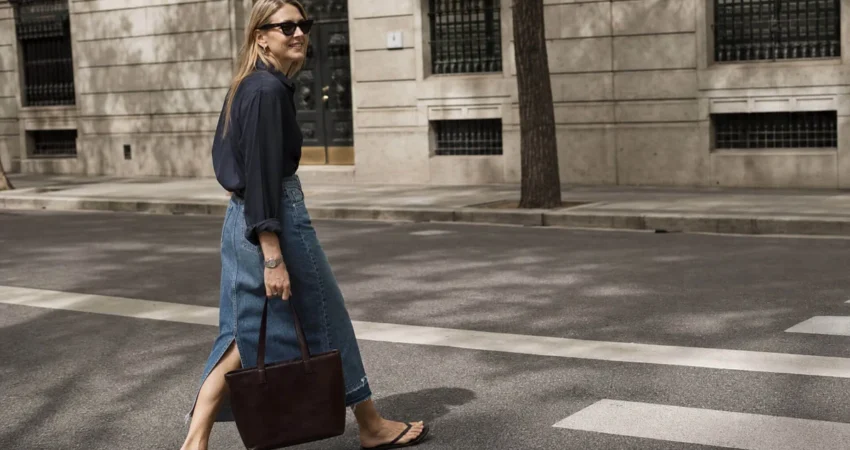
The denim midi skirt has solidified its position as a cornerstone of the contemporary woman’s wardrobe, transcending its origins as a casual weekend garment to become a versatile staple suitable for professional, social, and formal environments. In the current fashion cycle, major retail conglomerates including Inditex—via its brands Zara and Massimo Dutti—and Mango have pivoted their seasonal collections to highlight the denim midi as a primary alternative to traditional trousers and silk skirts. This strategic focus reflects a broader consumer shift toward "utilitarian elegance," where durability meets sophisticated tailoring. As the fashion industry moves through the mid-2020s, the denim midi skirt is no longer viewed as a fleeting trend but as a strategic investment piece, valued for its high "cost-per-wear" ratio and its ability to bridge the gap between varying seasonal demands.
Historical Context and the Resurgence of the Midi Length
To understand the current dominance of the denim midi skirt, one must look at the cyclical nature of denim trends over the last five decades. While the denim mini skirt dominated the early 2000s and the floor-grazing maxi skirt saw a resurgence in the early 2020s, the midi length—falling between the knee and the mid-calf—has emerged as the most commercially viable silhouette. This specific length finds its roots in the 1970s bohemian aesthetic, later refined by the minimalism of the 1990s.
The current resurgence is largely attributed to a market-wide move toward "modest fashion" and "quiet luxury." Fashion analysts note that the midi length provides a level of coverage that is appropriate for the workplace while maintaining a feminine silhouette that the more cumbersome maxi skirt often obscures. By 2024, the denim midi has evolved from the rigid, heavy fabrics of the past to include blends with elastane and Tencel, allowing for greater movement and comfort, which has further accelerated its adoption among diverse age demographics.

Market Analysis: The Strategic Offerings of Zara, Mango, and Massimo Dutti
Retail giants have responded to the sustained demand for denim midis by diversifying their design portfolios. Each brand targets a specific market segment through distinct cuts, price points, and material choices.
Zara: The Avant-Garde Daily Staple
Zara’s current iteration of the denim midi, priced competitively at 29.95 euros, focuses on the asymmetrical hemline. This design choice is a calculated move to appeal to a younger, trend-conscious demographic that seeks to differentiate itself from traditional "mom-jean" aesthetics. The asymmetrical cut provides dynamic movement, breaking the visual weight of the denim. From a retail perspective, Zara’s ability to mass-produce complex cuts at a low price point continues to drive the democratization of high-fashion silhouettes.
Mango: Refined Versatility
Mango has positioned its 39.99-euro asymmetrical denim skirt as a bridge between high-street fashion and premium apparel. Unlike Zara’s more experimental edges, Mango’s design tends to favor a cleaner finish that appeals to the "elevated casual" consumer. Market data suggests that Mango’s customer base prioritizes pieces that can transition seamlessly from a creative office environment to evening social engagements. The brand’s focus on mid-wash denim ensures that the piece remains relevant across all four seasons.
Massimo Dutti: The Premium Flare
As the high-end subsidiary of Inditex, Massimo Dutti focuses on the "flare fit" and high-waisted construction. By utilizing superior denim weights and sophisticated tailoring, Massimo Dutti targets a consumer looking for longevity. The flare fit, which widens subtly from the knee, mimics the silhouette of classic A-line skirts but retains the rugged texture of denim. This model is often marketed alongside leather accessories and cashmere knitwear, reinforcing its status as a luxury-adjacent item.

Chronology of a Global Trend: From Runway to High Street
The trajectory of the denim midi skirt’s current popularity can be traced through a clear timeline of industry movements:
- Late 2022: Luxury fashion houses such as Celine and Givenchy reintroduced structured denim skirts in their Spring/Summer collections, moving away from distressed finishes toward raw, dark indigo washes.
- Early 2023: Social media "influencer" culture adopted the long denim skirt, initially favoring the maxi length. However, consumer feedback indicated that the maxi was impractical for urban commuting and daily chores.
- Mid-2023: High-street retailers began refining the length to the "midi" standard to increase wearability.
- 2024-2025: The integration of technical features—such as front slits for mobility and high-rise waists for ergonomic comfort—became standard across global retail inventories.
Supporting Data: The Economic Impact of Denim
The global denim market is projected to reach approximately $95 billion by 2030, according to industry reports. Within this sector, skirts have seen a year-over-year growth of 12% in the "bottoms" category. Retailers have observed that while jean sales remain steady, the denim skirt offers a higher profit margin due to lower manufacturing complexity compared to multi-seam trousers, despite the comparable retail price.
Furthermore, search engine data reveals a 45% increase in queries for "denim midi skirt styling" during the transition months of September and March. This indicates that consumers are actively seeking ways to extend the life of the garment across different weather patterns, moving away from the "disposable fashion" mindset.
Seasonal Strategy: The Twelve-Month Wardrobe Anchor
One of the primary drivers of the denim midi’s success is its season-less nature. Journalistic analysis of street style and retail lookbooks suggests three primary modes of integration:

The Professional Transition (Autumn/Spring)
During transitional seasons, the denim midi serves as a substitute for the wool pencil skirt. When paired with a crisp white poplin shirt and leather loafers or ballet flats, the outfit adheres to professional dress codes while offering the comfort of a more durable fabric. This combination has become a "uniform" for professionals in creative and tech sectors.
The Winter Insulation Strategy
In colder climates, the denim midi is frequently styled with high-shaft leather boots and heavy knitwear. The weight of the denim provides a natural windbreak, which, when layered over thermal hosiery, makes it a viable winter alternative to trousers. The addition of a structured blazer or a long wool coat elevates the denim from casual to "business-formal."
Summer Breathability
Contrary to the perception that denim is too heavy for heat, the midi skirt offers better air circulation than restrictive skinny jeans. When paired with lightweight linen tops and flat sandals, the denim midi becomes a durable option for travel and outdoor activities, resisting the wrinkling that often plagues lighter fabrics like silk or rayon.
Industry Implications and Sustainability
The shift toward denim skirts also touches upon the industry’s ongoing sustainability challenges. Denim production is traditionally water-intensive; however, the longevity of a midi skirt helps mitigate its environmental footprint. Because the denim midi is less prone to "going out of style" than highly specific jean cuts (such as ultra-low-rise or extreme flares), it remains in the consumer’s wardrobe for a longer duration.

Major players like Inditex and Mango have also begun incorporating "Join Life" or "Committed" labels on their denim products, indicating the use of organic cotton or water-saving dye processes. This alignment with environmental standards is increasingly important to the modern consumer, who views the denim midi as a responsible, long-term purchase.
Conclusion: The Enduring Legacy of the Denim Midi
The rise of the denim midi skirt from Zara, Mango, and Massimo Dutti represents a broader movement in the fashion industry toward practical, multi-functional clothing. By combining the historical reliability of denim with the sophisticated silhouette of the midi length, these retailers have created a product that satisfies the modern demand for style, comfort, and durability.
As market data continues to show strong performance for this category, it is clear that the denim midi has moved beyond the realm of "trend" and into the pantheon of fashion essentials. Whether it is through the edgy asymmetry of Zara or the refined tailoring of Massimo Dutti, the denim midi skirt remains a testament to the power of versatile design in an ever-changing retail landscape. It is a garment that truly serves the wearer for all twelve months of the year, proving that in the world of fashion, the most successful items are those that adapt to the reality of daily life.

0 Comments