
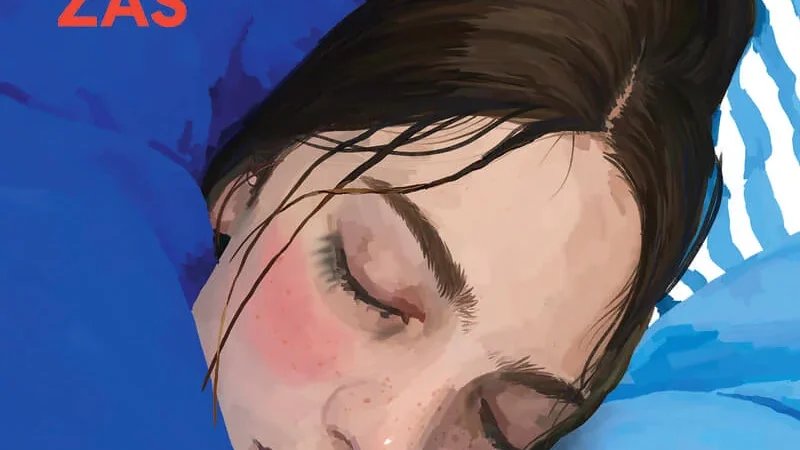
The publication of Los años secos (Temas de Hoy) by Raquel Zas has ignited a profound sociological and cultural debate regarding the nuances of female autonomy in the 21st century. At the heart of the novel lies a fundamental distinction that often remains blurred in contemporary discourse: the difference between consenting to a sexual act and actually desiring it. Through the lens of her protagonist, Clara, Zas dissects the "gender scripts" that continue to govern intimate relationships, revealing how many women still navigate a landscape defined by the fear of rejection, the need for external validation, and the pressure to perform a specific brand of sexual liberation that may not align with their internal reality.
The Narrative Core of Los años secos
Raquel Zas introduces readers to Clara, a character who serves as a mirror for a widespread but frequently silenced experience. Clara is a woman who has mastered the art of role-playing to ensure she remains "lovable" and "chosen." Her journey is not one of overt physical coercion, but rather of a subtle, internal erosion of boundaries. She finds herself in situations that are uncomfortable, boring, or even degrading, yet she participates in them to avoid the perceived social or emotional consequences of saying "no."
The novel challenges the binary of sexual encounters—traditionally viewed as either consensual or non-consensual—by introducing a vast "gray area" of unwanted but agreed-upon sex. Zas posits that for many women, consent is treated as the "floor"—the bare minimum requirement—whereas genuine desire and pleasure should be the "ceiling" toward which society strives. By focusing on Clara’s internal monologue, Zas highlights how the fear of loneliness and the social mandate to be a "desirable woman" can lead to a disconnection from one’s own body and instincts.
A Chronology of Sexual Consent and Liberation
To understand the context of Zas’s work, it is necessary to examine the evolution of sexual politics over the last several decades. The transition from "No means No" to "Only Yes means Yes" represents a significant legal and cultural shift, yet Zas argues that even these frameworks may be insufficient if they do not account for the quality of the "Yes."
- The 1960s and 70s (The First Wave of Liberation): The introduction of the contraceptive pill and the second-wave feminist movement sought to decouple sex from reproduction, advocating for women’s right to enjoy their bodies.
- The 1990s and 2000s (The Era of Choice): Post-feminism emphasized individual "choice" and "empowerment," often through the reclamation of traditional markers of femininity. However, this era also saw the rise of "raunch culture," where sexual availability was sometimes conflated with liberation.
- The 2010s (#MeToo and Enthusiastic Consent): The #MeToo movement brought global attention to sexual harassment and the nuances of power dynamics. This led to the promotion of "enthusiastic consent," moving away from the absence of a "no" toward the presence of a "yes."
- The 2020s (The Pleasure Gap and Authenticity): Current discourse, epitomized by Zas’s novel, focuses on the "Pleasure Gap" and the realization that legal consent does not always equal emotional or physical fulfillment.
Zas’s work enters this timeline at a moment when the "Only Yes is Yes" law (Ley de Libertad Sexual) in Spain has codified consent as an explicit act. However, Zas suggests that the legal victory is only the beginning. The next frontier is the cultural deconstruction of the pressures that make a "yes" feel mandatory for social survival.

Supporting Data: The Pleasure Gap and Sociological Trends
The themes explored in Los años secos are supported by a growing body of research regarding the "Pleasure Gap"—the statistical disparity in sexual satisfaction between men and women in heterosexual encounters. According to various studies published in The Journal of Sexual Medicine and other sociological reviews, women in heterosexual relationships are significantly less likely to experience orgasm than their male partners.
Data indicates that while approximately 95% of heterosexual men report reaching orgasm during their last sexual encounter, only about 65% of heterosexual women report the same. This discrepancy is often attributed to "phallocentrism"—a sexual culture that prioritizes male climax and views female pleasure as secondary or optional. Furthermore, a 2021 study on "compliance" found that a significant percentage of women engage in "consensual but unwanted" sex to maintain harmony in a relationship or to avoid being perceived as "difficult" or "frigid."
Zas’s consultation with professional sexologists during the writing process confirms these findings. Experts report that a high percentage of women seek therapy because they feel "defective" for not desiring sex or for not enjoying the types of sex they feel they should. This "sense of defectiveness" is a central theme in Clara’s life, reflecting a broader public health issue where the burden of sexual satisfaction is placed entirely on the woman’s ability to "perform" liberation.
The Paradox of Modern Sexual Liberation
One of the most provocative arguments Zas makes is that modern sexual liberation has, in some ways, imposed new obligations on women. In the past, the "good woman" was defined by her chastity; today, the "modern woman" is often defined by her sexual agency, confidence, and availability.
Zas argues that this shift has created a new "script" where women feel they must be "desiring subjects" at all times. If a woman does not know exactly what she wants, or if she does not want anything at all, she may feel like a failure of the feminist project. The author highlights the irony that many women are now using their "liberation" to participate in practices they do not actually enjoy, simply to avoid appearing "puritanical" or "boring."
This "performance of desire" is often fueled by the male gaze, which has been internalized by many women. As Zas notes in her analysis, women often learn to view themselves from the outside, monitoring their own behavior and appearance during intimacy to ensure they are fulfilling the role of the "desirable partner." This self-objectification acts as a barrier to genuine sensation and presence.

The Psychological Impact of the Fear of Loneliness
Beyond the physical acts of sex, Los años secos explores the existential fear of isolation. Zas posits that the "great evil" of modern society is unchosen loneliness. In an increasingly disconnected world, the desire for companionship can become so desperate that individuals—particularly women, who are socialized to be caregivers and pleasers—will sacrifice their own boundaries to secure a connection.
Clara’s character represents the extreme end of this spectrum, but Zas suggests her behavior is a logical response to a culture that equates a woman’s value with her ability to be "chosen" by a man. The "need to be elegible" leads to a disconnection from the self; when one is constantly focused on being what another person wants, the capacity to know what one wants begins to atrophy.
Implications for Education and Future Policy
The conversation sparked by Zas has significant implications for sexual education and social policy. Current educational programs often focus heavily on the mechanics of sex and the prevention of STIs and pregnancy, with a secondary focus on the legal definitions of consent. However, Zas’s work suggests that a more holistic approach is needed—one that includes "pleasure literacy" and the emotional intelligence to navigate complex desires.
- Redefining Consent in Education: Moving beyond "permission" to include "desire" and "enthusiasm" as key components of healthy relationships.
- Addressing Phallocentrism: Deconstructing the cultural narratives that place male satisfaction at the center of the sexual experience.
- Mental Health Support: Recognizing the psychological toll of "consensual but unwanted" sex and providing resources for women to reconnect with their physical autonomy.
Broader Impact and Critical Reception
The reception of Los años secos suggests a growing appetite for literature that deals honestly with the contradictions of modern womanhood. Critics have praised Zas for her refusal to provide easy answers or to turn Clara into a "perfect" feminist role model. Instead, the novel offers a raw, sometimes uncomfortable look at the messy reality of trying to find oneself within a rigid social structure.
By bringing the "dry years" into the public eye, Zas has validated the experiences of countless women who have felt "defective" for their lack of desire or their confusion regarding their own boundaries. The book serves as a call to action—not for a return to puritanism, but for a move toward a more authentic, self-determined form of intimacy.
As society continues to grapple with the aftermath of the #MeToo movement and the implementation of new consent laws, Los años secos provides a necessary roadmap for the next stage of the journey. It reminds us that true liberation is not just the right to say "yes" or "no," but the freedom to exist without a script, to explore without shame, and to prioritize one’s own well-being over the expectations of others. The distinction between consent and desire is not merely a linguistic one; it is a fundamental pillar of human dignity and bodily autonomy.

0 Comments