
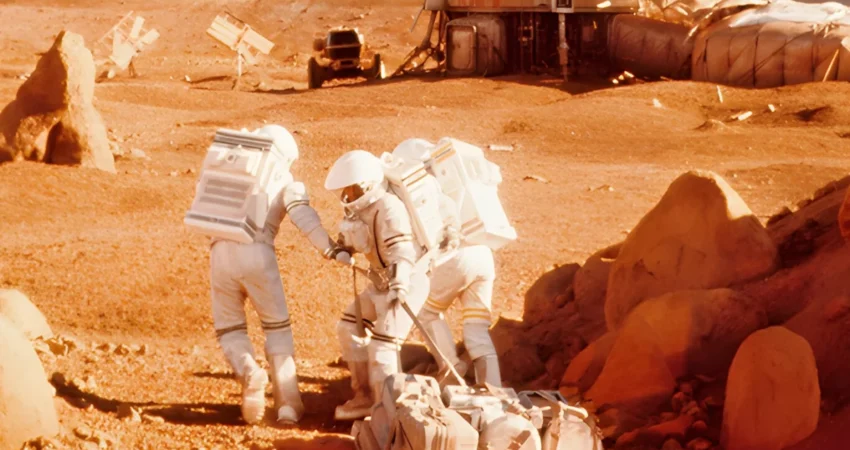
The release of Brian De Palma’s Mission to Mars in March 2000 marked a significant moment in the evolution of contemporary science fiction, arriving at a time when public fascination with the Red Planet had reached a fever pitch. Driven by NASA’s renewed interest in Martian exploration and the upcoming launch of various robotic rovers, the film was positioned as a high-budget, prestige exploration of humanity’s extraterrestrial origins. However, upon its debut, the film became the center of one of the most drastic critical schisms in cinematic history. While American critics largely dismissed the project as a derivative and pacing-challenged failure, the French cinematic establishment championed it as a visionary masterpiece of visual storytelling. Today, as the film finds a new audience on the Disney+ streaming platform, its legacy as a misunderstood piece of "hard" science fiction continues to provoke debate among cinephiles and genre enthusiasts alike.
The Narrative Foundation and Production Context
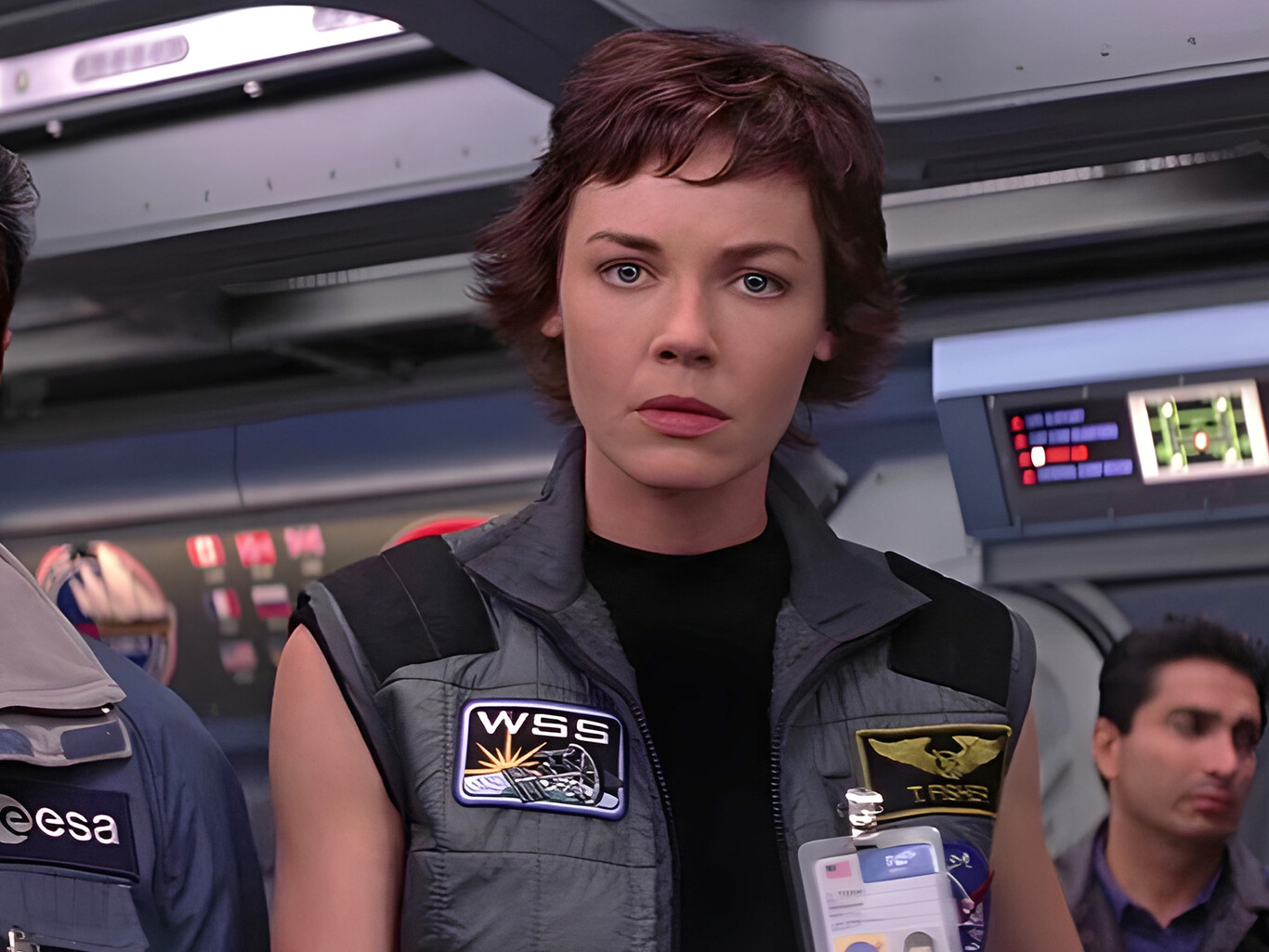
Set in the then-near future of 2020, Mission to Mars follows the crew of the Mars 1 mission, the first manned flight to the fourth planet from the sun. The mission, led by Luke Graham (played by Don Cheadle), encounters a mysterious and catastrophic anomaly at the Cydonia region—a site famous in real-world conspiracy lore for the "Face on Mars" photograph taken by the Viking 1 orbiter in 1976. When communication is lost and the crew is presumed dead, a second rescue mission is dispatched, consisting of Commander Woody Blake (Tim Robbins), Jim McConnell (Gary Sinise), Terri Fisher (Connie Nielsen), and Phil Ohlmyer (Jerry O’Connell).
The production was an ambitious undertaking for Touchstone Pictures, with a budget estimated at $100 million. Director Brian De Palma, known primarily for his mastery of the suspense thriller and films like Scarface and Mission: Impossible, sought to create a film that balanced scientific realism with metaphysical wonder. To achieve this, the production utilized extensive consultations with NASA specialists to ensure the spacecraft designs and the physics of zero-gravity environments were as accurate as the technology of the era allowed. The film’s visual language was further elevated by the cinematography of Stephen H. Burum and a haunting, unconventional score by the legendary Ennio Morricone, which eschewed traditional heroic fanfares in favor of organ-heavy, liturgical compositions.
The Great Atlantic Divide: A Tale of Two Receptions
The reception of Mission to Mars serves as a primary case study in the differing cultural philosophies of film criticism between the United States and Europe. In the American market, the film was met with immediate and harsh resistance. Reviewers from major outlets criticized the film for its deliberate pacing and its perceived reliance on tropes established by Stanley Kubrick’s 2001: A Space Odyssey. On the review aggregator Rotten Tomatoes, the film maintains a low 25% approval rating, and at the time of its release, Brian De Palma received a Razzie Award nomination for Worst Director—a move that many now view as a reactionary oversight.
Conversely, the French critical community, led by the influential magazine Cahiers du Cinéma, hailed the film as a triumph of the "auteur" theory. The publication ranked Mission to Mars as the fourth-best film of the year 2000. French critics argued that De Palma had successfully used the science fiction genre to explore complex themes of grief, faith, and the circular nature of biological life. They praised the film’s long, fluid takes—particularly the sequence involving a zero-gravity dance to Van Morrison’s "Moondance"—as a demonstration of technical virtuosity that prioritized emotional resonance over rapid-fire action.

Chronology of the Mars Movie Craze
The turn of the millennium saw a rare phenomenon in Hollywood: the "twin film" effect, where two major studios released high-concept movies about the same subject within months of each other. Mission to Mars was followed shortly by Warner Bros.’ Red Planet (2000). This period of production was fueled by a specific timeline of scientific events:
- 1996: The discovery of the ALH84001 meteorite, which some scientists initially believed contained evidence of microscopic Martian fossils, sparked global headlines.
- 1997: The Mars Pathfinder mission and its Sojourner rover successfully landed, providing the first close-up images of the Martian surface in decades.
- 1998-1999: Pre-production for Mission to Mars began, with Disney/Touchstone seeking to capitalize on the "Mars Fever" gripping the public.
- March 2000: Mission to Mars premiered, earning roughly $111 million worldwide, barely recouping its production and marketing costs.
This chronology highlights that De Palma’s film was not merely a creative endeavor but a cultural response to a decade of renewed space-age optimism. The film’s failure to resonate with domestic audiences at the time is often attributed to a shift in viewer expectations; audiences in 2000 were increasingly gravitating toward the fast-paced, CGI-heavy spectacles of the post-Matrix era, whereas Mission to Mars remained rooted in the slower, more methodical traditions of 1970s science fiction.
Supporting Data: The Technical and Scientific Ambition
Despite the narrative criticisms, Mission to Mars remains a technical landmark. The film’s depiction of the "Mars Recovery Expedition" ship involved a rotating centrifuge to simulate gravity, a concept based on legitimate aerospace engineering theories for long-duration spaceflight. The visual effects team, led by Dream Quest Images and Industrial Light & Magic (ILM), worked to create a Martian landscape that reflected the data provided by the Mars Global Surveyor.
Statistically, the film’s impact on the genre is noted in its enduring presence in technical discussions. It was one of the last major science fiction films to rely heavily on large-scale physical miniatures alongside digital compositing. The "Face on Mars" structure in the film was a massive set piece that combined practical sand-covered environments with digital enhancements to create a sense of overwhelming scale. Furthermore, the film’s exploration of the "panspermia" theory—the hypothesis that life on Earth was "seeded" by biological material from space—provided a narrative bridge between hard science and speculative philosophy that has since been explored in films like Ridley Scott’s Prometheus.
Official Responses and Artistic Defense
In the years following the film’s release, Brian De Palma has remained steadfast in his defense of the project. In various interviews and retrospectives, De Palma has noted that his goal was to capture the "loneliness and the majesty" of space. Actors Gary Sinise and Don Cheadle have also spoken about the rigors of the shoot, which involved complex wire-work to simulate weightlessness, often requiring the cast to remain suspended for hours to achieve the director’s signature long takes.
The scientific community’s reaction was similarly nuanced. While NASA distanced itself from the film’s more fantastical elements—specifically the ancient alien civilization revealed in the final act—planetary scientists praised the film for its atmospheric accuracy. The red-tinted sky and the specific texture of the Martian dust storms were noted as being significantly more realistic than the portrayals found in earlier "B-movie" iterations of the planet.

Broader Impact and Implications for Modern Streaming
The availability of Mission to Mars on Disney+ provides a unique opportunity for a critical reappraisal. In the context of modern science fiction hits like Christopher Nolan’s Interstellar or Ridley Scott’s The Martian, De Palma’s work feels less like an outlier and more like a precursor. The film’s focus on the emotional toll of space travel and the existential questions posed by the discovery of alien life are themes that have become central to the "prestige sci-fi" subgenre of the 2010s and 2020s.
Furthermore, the film’s inclusion in the Disney+ library allows a new generation of viewers to experience Morricone’s score and Burum’s cinematography in high definition, stripping away the 24-year-old baggage of its initial box office performance. For students of cinema, the film remains a vital example of how directorial style can clash with studio expectations and how international perspectives can offer a completely different valuation of art.
As space agencies today prepare for the Artemis missions and the eventual goal of a manned mission to Mars in the 2030s, Mission to Mars stands as a fascinating document of the year 2000’s hopes and fears. It is a film that asks where we came from and where we are going, wrapped in the visual splendor of one of Hollywood’s most uncompromising directors. Whether viewed as a Razzie-nominated stumble or a French-certified masterpiece, its place in the firmament of space cinema is undeniably secure.

0 Comments