

The cinematic landscape is frequently populated by survival dramas, yet few carry the historical weight and technical improbability of the 1981 Aeroflot disaster, a tragedy that remained a state secret in the Soviet Union for nearly a decade. The recent arrival of the 2022 Russian film, titled The Fall of Flight 811 (originally Odna or The One) on Netflix, has reignited global interest in the harrowing experience of Larisa Savitskaya. On August 24, 1981, Savitskaya became the sole survivor of a mid-air collision between a civilian airliner and a military bomber, enduring a freefall from an altitude of 5,220 meters (approximately 17,126 feet) and surviving three days in the harsh Siberian wilderness. This account examines the technical failures, the physiological miracle of Savitskaya’s survival, and the systematic efforts by the Soviet government to suppress the incident from public record.
The Collision Over Zavitinsk: A Failure of Coordination
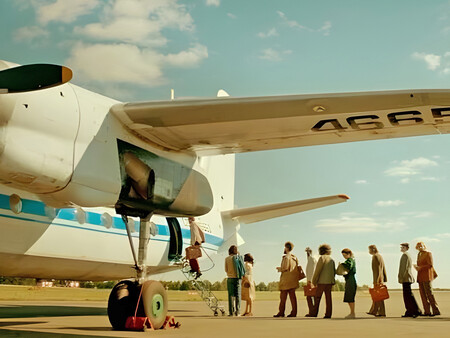
The events of August 24, 1981, began as a routine civilian flight. Larisa Savitskaya, then a 20-year-old student, and her new husband, Vladimir Savitsky, were returning from their honeymoon in Komsomolsk-on-Amur. They boarded Aeroflot Flight 811, an Antonov An-24RV twin-turboprop, bound for Blagoveshchensk. Despite the aircraft being only half-full, the couple took seats in the rear of the plane, a decision that would later prove pivotal to Larisa’s survival.
Simultaneously, the Soviet Air Force was conducting military exercises in the same airspace. A Tupolev Tu-16K strategic bomber was participating in a weather reconnaissance mission. The investigation, which remained classified for years, eventually revealed a catastrophic failure in communication between civilian and military air traffic controllers. The civilian controllers were reportedly not informed of the military flight paths, and the military pilots were operating under the assumption that the corridor was clear.
At 3:21 PM local time, at an altitude of over five kilometers, the Tu-16K collided with the An-24RV. The impact was devastating. The bomber’s wing sliced through the fuselage of the civilian airliner, immediately killing most of the passengers and crew. The An-24 began to disintegrate in mid-air, shedding its wings and tail section.
The Physics of a Five-Kilometer Fall
The survival of Larisa Savitskaya is often cited in aviation history alongside other "miracle" falls, such as those of Vesna Vulović or Juliane Koepcke. However, Savitskaya’s ordeal lasted significantly longer in terms of the descent. Experts estimate that the fragmented section of the fuselage containing Savitskaya’s seat took approximately eight minutes to reach the ground.
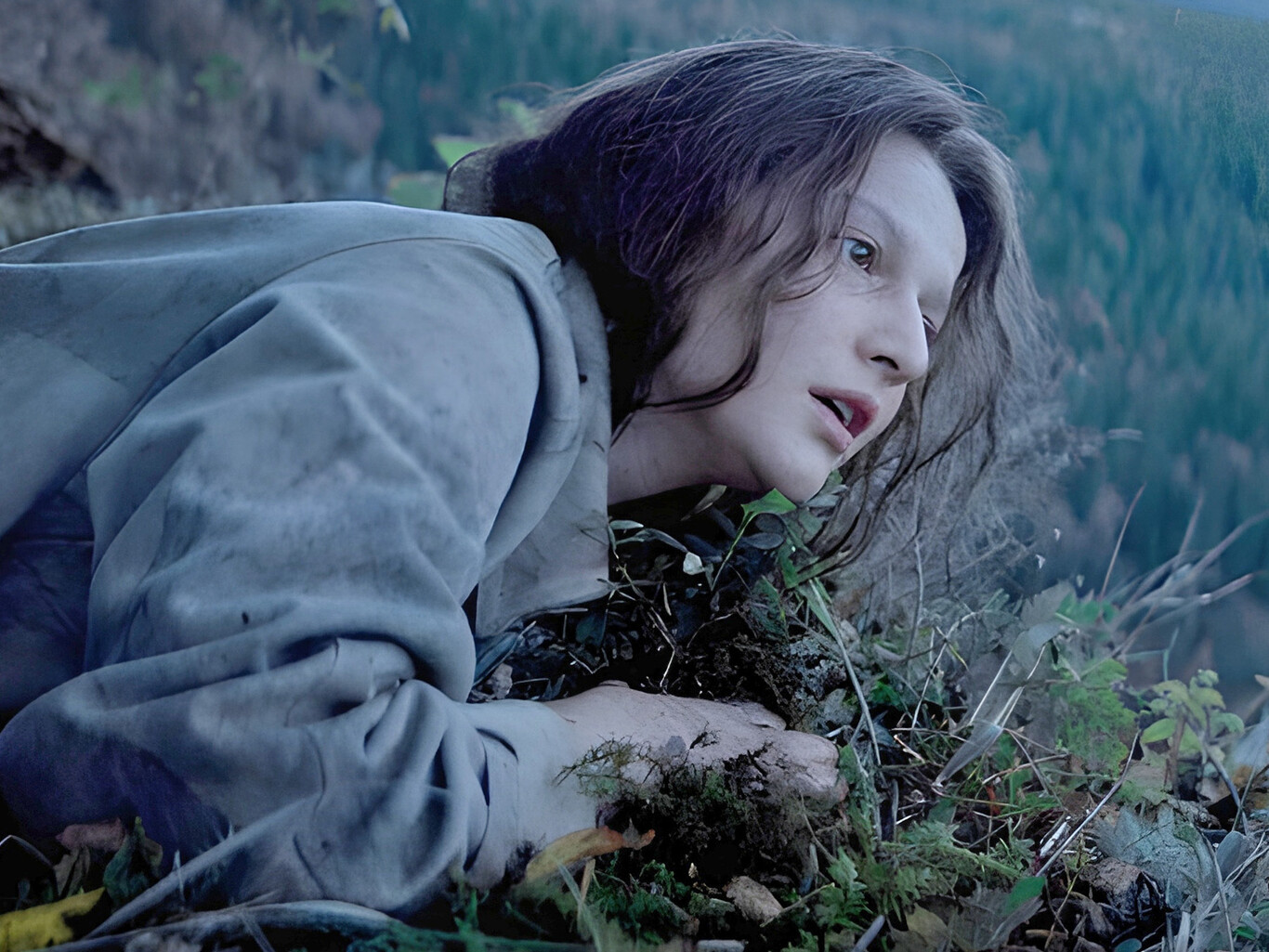
During this descent, the piece of the aircraft acted as a rudimentary glider, fluttering rather than falling in a straight vertical line. Savitskaya later recounted that she remained conscious for much of the fall. Recalling a scene from an Italian film she had seen, Miracles Still Happen, which depicted a similar survival story, she braced herself against the seat, pressing her feet against the floor and gripping the armrests.
The impact occurred in a dense Siberian birch forest. The flexible branches of the trees, combined with the marshy ground of the Amur region, served as a natural shock absorber. While the impact was softened, it was by no means gentle. Savitskaya sustained a broken spine in five places, fractured ribs, a broken arm, a concussion, and lost nearly all of her teeth. Her husband, Vladimir, who had been sitting beside her, was killed instantly during the initial collision.

Three Days in the Siberian Wilderness
Upon regaining consciousness on the forest floor, Savitskaya found herself surrounded by debris and the bodies of other passengers. Despite her severe injuries and the psychological trauma of witnessing her husband’s death, her survival instinct took over. For three days, she remained near the wreckage, using pieces of the aircraft’s upholstery to keep warm against the dropping nighttime temperatures and torrential rains.
The search and rescue operation was initially focused on recovering bodies, as the Soviet authorities assumed there were no survivors from such a high-altitude collision. It was not until the third day that rescuers spotted Savitskaya. Witnesses reported that the rescue teams were in a state of shock upon finding her alive; she was reportedly sitting in a salvaged airplane chair, smoking cigarettes she had found in the wreckage to ward off mosquitoes.
The Decade of Silence: The KGB and State Censorship
In the Soviet Union of the early 1980s, the official state narrative maintained that aviation accidents were a symptom of Western capitalist negligence and rarely, if ever, occurred within the USSR. Following the crash of Flight 811, the KGB (Committee for State Security) moved quickly to classify the incident.
The families of the 37 victims were told very little about the cause of the disaster. Savitskaya was forced to sign a non-disclosure agreement, preventing her from speaking to the press or the public about her experience. The official cause of death for the passengers was listed vaguely, and the collision with a military aircraft was strictly omitted from public records.
Furthermore, the compensation provided to Savitskaya was emblematic of the government’s dismissive stance. Under Soviet law at the time, the state provided 300 rubles for the families of those killed in air disasters. However, because Savitskaya had survived, she did not qualify for the death benefit. Instead, she was awarded a mere 75 rubles (approximately $20 USD at the time) for her injuries.
The story did not reach the public until 1985, during the era of Glasnost (Openness) initiated by Mikhail Gorbachev. It was only then that a small newspaper in Moscow was permitted to publish a brief account of her survival, though the full details of the military collision remained obscured until the 1990s.
Chronology of the Flight 811 Disaster and Its Aftermath
- August 24, 1981, 2:56 PM: Aeroflot Flight 811 departs Komsomolsk-on-Amur.
- August 24, 1981, 3:21 PM: Mid-air collision with a Tu-16K bomber at 5,220 meters.
- August 24, 1981, 3:29 PM: Savitskaya’s section of the fuselage impacts the Siberian forest.
- August 24–27, 1981: Savitskaya survives alone in the wilderness with multiple fractures.
- August 27, 1981: Rescue teams locate Savitskaya; she is transported to a hospital in Zavitinsk.
- 1981–1985: The incident remains a state secret; Savitskaya lives in obscurity under a gag order.
- 1985: First limited publication of the survival story in Soviet media.
- 2001: Guinness World Records recognizes Savitskaya for two records: the person who survived the highest fall without a parachute and the person who received the smallest insurance payout for an air disaster.
- 2022: The film The One is released in Russia, with Savitskaya serving as a technical consultant.
Broader Implications and Modern Reception
The resurgence of this story through the film The Fall of Flight 811 highlights a growing interest in "hidden" Soviet history. For modern audiences, the fascination lies not only in the physical miracle of survival but in the chilling efficiency of the bureaucratic cover-up. The film’s production team worked closely with Larisa Savitskaya to ensure the technical accuracy of the crash sequence and the subsequent survival scenes. Her involvement provided a level of authenticity that distinguishes the film from typical Hollywood disaster tropes.
From an aviation safety perspective, the 1981 disaster served as a grim catalyst for reforming the coordination between military and civilian air traffic control in the Soviet Union. The investigation eventually led to stricter protocols for shared airspace, though these changes were implemented quietly to avoid admitting the original failure.

Today, Larisa Savitskaya lives a quiet life, but her story remains a testament to human resilience. The film’s success on streaming platforms like Netflix suggests that the public remains captivated by the intersection of individual survival and political intrigue. By bringing this Cold War-era secret to light, the film ensures that the victims of Flight 811 are remembered, and the improbable survival of a 20-year-old student is recognized as one of the most remarkable feats in the history of aviation.
As a piece of historical record, The Fall of Flight 811 offers a sobering look at a time when the preservation of a state’s reputation was prioritized over the transparency of its tragedies. For Savitskaya, the film represents a final breaking of the silence that was imposed upon her more than four decades ago.

0 Comments