
 Lana Rhoades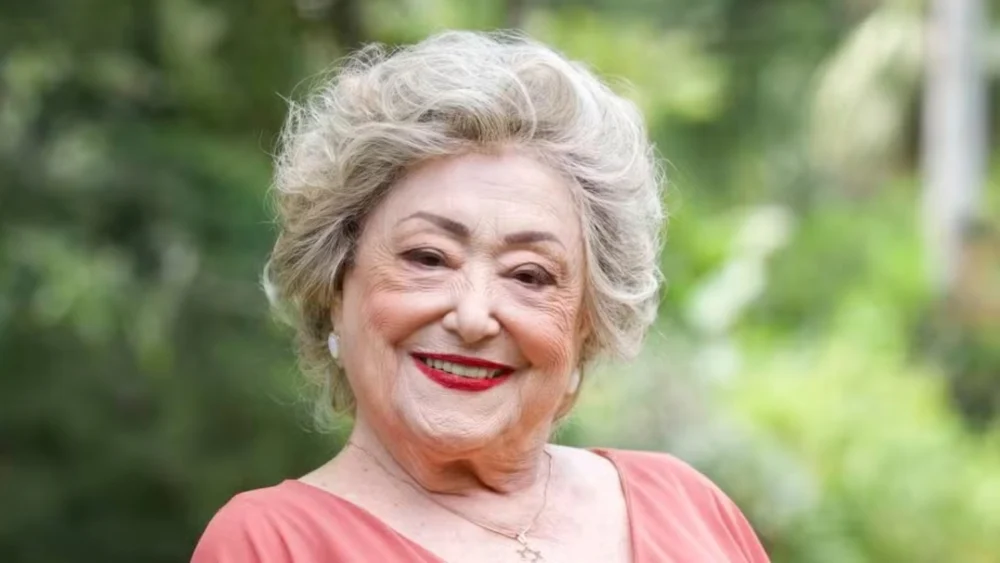
At 86 years old, the revered Brazilian actress Suely Franco, celebrated for her recent portrayal of Rosa in the acclaimed telenovela Dona de Mim, has been nominated for the prestigious "Melhores do Ano" (Best of the Year) award in the supporting actress category, a highlight of TV Globo’s popular Sunday program, Domingão com Huck. This significant industry recognition arrives concurrently with a landmark decision by TV Globo: the veteran artist has been granted a lifetime contract with the network, a move that stands in stark contrast to the prevailing industry trend of project-based agreements. This unprecedented professional security underscores Franco’s enduring legacy and her invaluable contributions to Brazilian television, marking a pivotal moment in her illustrious career and for the landscape of veteran talent in the entertainment sector.
A Testament to Legacy: The Lifetime Contract
The news of Suely Franco’s lifetime contract, first reported by the "Play" column of O Globo newspaper, has resonated widely across the Brazilian media landscape. For decades, Franco, like many of her peers, operated under a contract-per-project model, a standard practice that, while offering flexibility, often entailed periods of professional uncertainty. The transition to a vitalício (lifetime) agreement is particularly noteworthy in the current climate of the Brazilian television industry. In recent years, TV Globo, the dominant force in national broadcasting, has systematically restructured its talent contracts, largely moving away from long-term, fixed employment agreements in favor of more flexible, per-production arrangements. This strategic shift was driven by a combination of factors, including economic pressures, evolving production models, and the increasing demand for agility in a competitive media environment.
Against this backdrop, the decision to offer Suely Franco a lifetime contract signals an exceptional recognition of her artistic merit, her unwavering dedication, and her iconic status within Brazilian culture. It suggests a conscious effort by the network to safeguard its heritage and to honor artists who have shaped its identity over many decades. While TV Globo has not released an official statement detailing the specific terms or motivations behind this particular contract, industry analysts interpret it as a profound acknowledgment of Franco’s indispensable role, her immense popularity, and the symbolic value she represents. Such a contract not only provides unparalleled professional stability for the actress but also sends a powerful message about the network’s commitment to valuing its foundational talents, potentially setting a precedent or at least highlighting the exceptional nature of certain artistic contributions that transcend standard contractual frameworks. It is a rare gesture that elevates Franco beyond mere employee status, positioning her as an integral, permanent fixture of the institution itself.
An Enduring Career: Franco’s Illustrious Trajectory
Suely Franco’s career spans more than six decades, a period marked by an extraordinary range of performances across theater, cinema, and television. Born in 1936, her artistic journey began in the vibrant theatrical scene of the mid-20th century, where she honed her craft and established herself as a versatile and compelling performer. Her transition to television solidified her status as a household name, particularly through her memorable roles in numerous telenovelas and series.
Among her most cherished characters is Dona Benta from Sítio do Picapau Amarelo (Yellow Woodpecker Farm), a beloved children’s series based on the works of Monteiro Lobato. Franco inherited the role from the esteemed Nicette Bruno, making it her own with warmth and wisdom, endearing her to a new generation of viewers. This role, which she frequently references, exemplifies her ability to inhabit characters that resonate deeply with the public, often imbued with a charming charisma that transcends the screen. Her portrayal of Dona Benta, a wise and affectionate grandmother figure, solidified her image as a comforting and authoritative presence in Brazilian media.
More recently, her performance as Rosa in Dona de Mim (literally "Owner of Me," but often translated as "A Life Worth Living" for international audiences) has brought her renewed critical acclaim. Aired between 2019 and 2020, Dona de Mim was a critically and commercially successful prime-time telenovela that explored themes of identity, self-discovery, and the complexities of human relationships. Franco’s character, Rosa, was integral to the narrative, showcasing her continued ability to deliver nuanced and impactful performances even in the later stages of her career. Her nomination for "Melhores do Ano" specifically for this role underscores the fact that her talent has not diminished with age; rather, it has matured, offering depth and authenticity that captivate both audiences and critics alike.
Defying Retirement: A Philosophy of Perpetual Motion
Franco’s decision to embrace a lifetime contract aligns perfectly with her long-held philosophy on work and aging, a perspective she shared in a May 2022 interview with O Globo. "I never want to stop. When we love what we do, we don’t want to stop at all. Stopping is death. Working, I am happy. I don’t envision retirement at all," she articulated with conviction. This statement is more than just a personal preference; it reflects a profound connection to her craft, viewing acting not merely as a profession but as a vital source of joy and purpose. For Franco, work is synonymous with life itself, an engine that propels her forward and keeps her engaged with the world.
Her sentiment resonates with many artists and professionals who find deep fulfillment in their vocations, viewing retirement not as liberation but as a cessation of a cherished activity. In an industry where youth is often celebrated, Franco stands as a powerful advocate for the enduring value of experience and the vitality that can be maintained well into advanced age. Her commitment to her art is unwavering, and her enthusiasm for performing remains as strong as ever, challenging societal stereotypes about aging and productivity.
Beyond her professional life, Franco’s vibrant approach extends to her personal habits and outlook. "I love to dance. I joke with colleagues dancing. I show them that I do better than them, who are much younger than me. It’s living with joy, because whoever lives with sadness is death," she revealed. This playful defiance of age-related limitations underscores her belief in maintaining an active, joyful existence. She embodies a spirit of perpetual motion, demonstrating that physical and mental agility can be sustained through passion and a positive mindset. This philosophy not only inspires her colleagues but also serves as a powerful message to her audience about embracing life with gusto, regardless of one’s age. Her ability to infuse her life with such exuberance undoubtedly contributes to the charisma and authenticity she brings to her roles, making her performances all the more compelling.

Navigating Adversity: The Pandemic’s Shadow
While Suely Franco’s recent professional triumphs paint a picture of enduring success, her journey has not been without significant challenges, particularly during the unprecedented global health crisis of the COVID-19 pandemic. The economic fallout from the pandemic had a profound impact on many sectors, including the entertainment industry, leading to widespread production halts and contract cancellations. Franco was not immune to these difficulties. As she candidly shared, "When came the pandemic, the contracts ended, I was no longer employed. I had to return home." This period of unemployment created significant financial strain, forcing her to make difficult decisions regarding her living situation.
Unable to afford the condominium fees for her apartment in Catete, a neighborhood in the South Zone of Rio de Janeiro, which offered amenities like an elevator and space for exercise, Franco made the difficult choice to move back to an older, family-owned apartment in Urca, another South Zone neighborhood. While this property was hers and thus free of rent or condominium payments, it presented its own set of challenges for an octogenarian. "The apartment in Urca is mine, I don’t need to pay anything. However, I still need to move from here, because, as it is very old, it doesn’t have an elevator. It’s on the fourth floor," she explained.
Living on the fourth floor of a building without an elevator posed considerable physical difficulties for Franco, impacting her mobility and daily life. "To leave the house becomes difficult," she noted, highlighting the practical implications for an 86-year-old navigating multiple flights of stairs just to access the outside world. This personal struggle, a direct consequence of the pandemic’s economic disruption, offers a poignant glimpse into the precarity that even established artists can face, and underscores her resilience in confronting such adversity. Her ability to overcome these personal hardships while maintaining her professional drive and optimistic outlook further amplifies the significance of her current success. The contrast between the challenging period of the pandemic and her current professional peak – securing a lifetime contract and a major award nomination – illustrates a remarkable narrative of perseverance and triumph against the odds.
"Melhores do Ano": Recognition for a Career of Excellence
The "Melhores do Ano" award, presented annually by TV Globo’s Domingão com Huck, is one of Brazil’s most prestigious television accolades. Established in 1995, it celebrates excellence in various categories, from acting to journalism, and is highly regarded within the industry and by the public. Nominations are typically determined by a panel of experts, with the final winners often chosen through public vote, granting it significant popular legitimacy.
Suely Franco’s nomination in the supporting actress category for her role in Dona de Mim is a testament to the enduring quality of her performances. It places her among a select group of talents recognized for their exceptional contributions during the year. For an actress of her age to receive such a nomination is particularly inspiring, challenging the notion that artistic relevance diminishes with time. It signifies that her recent work is not merely a nostalgic nod to a veteran but a contemporary performance of outstanding merit, capable of captivating modern audiences and critics alike.
This recognition not only celebrates her specific role as Rosa but also serves as an acknowledgment of her entire career, a cumulative tribute to her dedication, versatility, and impact on Brazilian culture. The nomination, coupled with the lifetime contract, culminates a period of both personal challenge and profound professional vindication for Franco. It reinforces her position as a living legend and a vital, active contributor to the ongoing narrative of Brazilian entertainment.
Broader Industry Implications: Valuing Veteran Talent
Suely Franco’s story, particularly the acquisition of a lifetime contract from TV Globo in an era of precarious employment, carries significant implications for the broader entertainment industry. It highlights a critical discussion point: the value placed on veteran talent. In an industry often fixated on youth and fleeting trends, Franco’s trajectory serves as a powerful reminder of the irreplaceable wisdom, experience, and gravitas that seasoned performers bring to their craft. Their long careers are not just a collection of roles but a living archive of cultural history, reflecting societal changes and artistic evolution.
The network’s decision, while likely an exceptional case, may spark conversations about how major production houses can better support and retain their long-serving artists. It suggests that beyond economic considerations, there is a reputational and cultural imperative to honor those who have built the industry’s foundations. For other veteran actors who have faced similar contractual uncertainties or who might be contemplating retirement, Franco’s continued vibrancy and professional security could serve as an inspiring example. It demonstrates that age need not be a barrier to continued artistic engagement and recognition, and that an actor’s prime can extend well beyond conventional expectations.
Furthermore, Franco’s narrative underscores the importance of resilience in the face of an ever-changing industry landscape. Her ability to adapt, to persevere through personal and professional hardships, and to maintain an unwavering passion for her work offers a compelling blueprint for longevity in a demanding field. Her lifetime contract is not just a personal victory; it is a symbolic affirmation of the enduring power of talent, dedication, and the irreplaceable legacy of Brazil’s artistic icons. As the entertainment world continues to evolve, stories like Suely Franco’s serve as vital touchstones, reminding us of the profound value of experience and the timeless appeal of true artistic mastery.




 Eva Lovia
 Julia Chirkova
 Julia Prastini
 Nila Kartika Wati
 Lina Irawan
 Jia Lissa