
 Julia Chirkova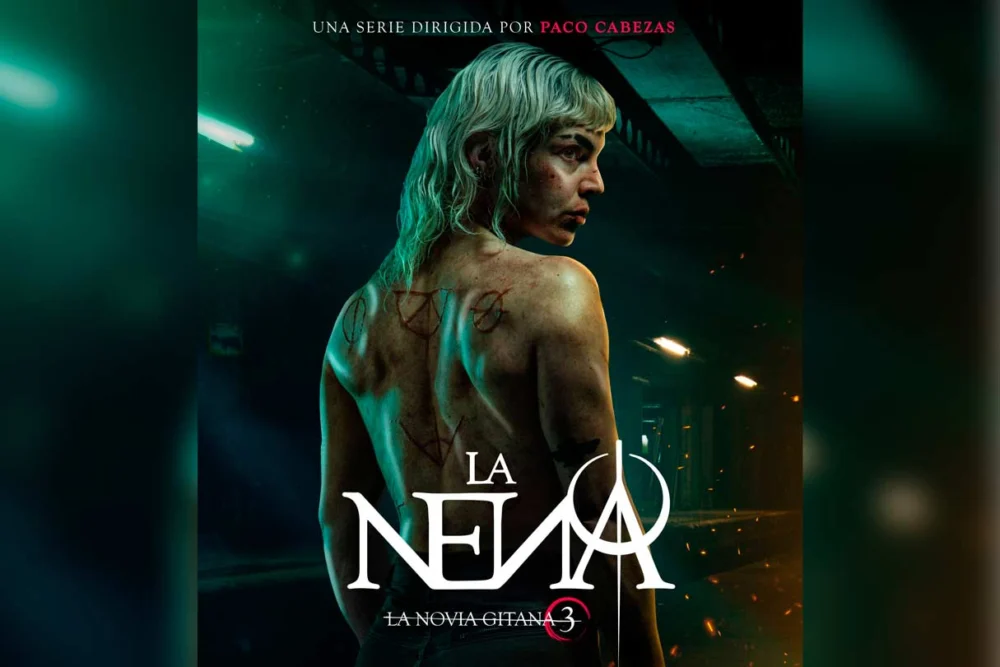
Atresmedia has officially announced the highly anticipated premiere date for "La Nena," the third and final installment of the television saga based on the bestselling novels by Carmen Mola. Viewers can mark their calendars for April 12th, when the platform atresplayer will release the concluding eight-episode season. This final chapter promises to bring a definitive close to the gripping narrative that began with "La Novia Gitana" and continued with "La Red Púrpura," solidifying its place as one of the most successful thriller series in recent Spanish fiction. The announcement, disseminated through official Atresmedia channels, signals the culmination of a journey that has captivated audiences and underscored the growing strength of Spanish-produced content in the international streaming landscape.
The series once again features the formidable Nerea Barros reprising her role as Inspector Elena Blanco, a character who has become synonymous with gritty determination and unwavering resolve. Joining Barros are a talented ensemble cast that includes Lucía Martín Abelló, Ignacio Montes, Mona Martínez, Vicente Romero, Francesc Garrido, Ginés García Millán, Daniel Ibáñez, Óscar de la Fuente, Carmen Prada, Roberto Álamo, and Carlos Cabra, among others. Their collective performances have been instrumental in bringing Carmen Mola’s complex characters and intricate plots to life, earning critical acclaim and a dedicated fanbase. The strategic release on atresplayer, Atresmedia’s digital platform, further emphasizes the company’s commitment to leveraging its in-house production capabilities and catering to a digital-first audience.
A Literary Phenomenon Brought to the Screen
"La Nena" is the television adaptation of the third novel in the universe meticulously crafted by the pseudonymous author Carmen Mola. This literary creation has achieved remarkable success, positioning itself as a significant phenomenon within the Spanish thriller genre. The television series has effectively translated this literary success into a compelling visual narrative, expanding upon the storylines introduced in "La Novia Gitana" and "La Red Púrpura." The transition from page to screen has been a testament to the collaborative efforts of writers, directors, and actors, all dedicated to honoring the source material while delivering an engaging television experience. The decision to adapt the entire trilogy into a television series reflects a growing trend in the industry, where successful book series are increasingly being developed into multi-season dramas, allowing for deeper character development and more intricate plotlines.
At the heart of the narrative remains the specialized unit known as the Brigada de Análisis de Casos (BAC), or the Case Analysis Brigade. This dedicated team, led by Inspector Blanco, will find themselves confronting unprecedented threats as they attempt to unravel an increasingly convoluted criminal enterprise. The events of "La Nena" unfold in the aftermath of the second season’s climactic moments, with the team still grappling with a pervasive network of violence that appears relentless in its pursuit. The BAC’s investigations have consistently pushed the boundaries of conventional police procedural drama, delving into the darker aspects of human nature and the societal underpinnings of crime. Their work on "La Nena" is expected to be their most challenging yet, testing their resilience and their commitment to justice.
Adding further depth and complexity to the unfolding drama, "La Nena" introduces a host of new characters, further expanding the already rich tapestry of the series. Notable additions to the cast include Eduardo Casanova, Raúl Sanz, Pepe Sevilla, Santi Prego, and Daniel Freire. These new faces are poised to bring fresh dynamics to the established team, potentially altering existing alliances and introducing new conflicts. The strategic introduction of new talent is a common practice in serial storytelling, aimed at revitalizing the narrative and keeping the audience engaged with new perspectives and unexpected twists. The synergy between the returning cast and these new additions will undoubtedly be a key factor in the success of this final season.
Elena Blanco’s Disappearance and the Escalating Danger
The narrative arc of "La Nena" commences several months after the conclusion of "La Red Púrpura." The devastating loss of Lucas has left Inspector Elena Blanco in a state of profound distress, leading to her unexplained disappearance. Only one individual, Mariajo, holds the key to Blanco’s whereabouts, and she steadfastly guards this secret, even from her closest colleagues within the BAC. This deliberate concealment immediately sets a tone of mystery and suspense, raising questions about Mariajo’s motives and her connection to Blanco’s current predicament. The personal toll that these high-stakes investigations take on the characters has always been a central theme, and Blanco’s withdrawal highlights the immense psychological burden carried by those who confront the darkest elements of society.
However, the insidious reach of violence cannot be contained indefinitely. A resurgence of criminal activity inevitably pulls Elena Blanco back into the fray, forcing her to confront the demons she desperately sought to leave behind. Her return signifies a renewed commitment to her duty, but it also opens the door for past traumas to resurface. The investigation now intensifies as the team pursues Nuria González, a figure known ominously as "La Madre" (The Mother). This pursuit uncovers a criminal network of staggering proportions, revealing a level of organization and ruthlessness that surpasses anything the BAC has encountered before. The concept of "La Madre" as a central antagonist suggests a hierarchical and deeply entrenched criminal operation, moving beyond individual perpetrators to a more systemic threat.
Concurrently, Chesca embarks on a divergent path. Estranged from her former allies, she finds herself embroiled in a personal vendetta, a solitary battle where the established rules of engagement have been abandoned. This independent pursuit by Chesca introduces a parallel narrative thread, potentially creating friction with the main investigation or offering unexpected assistance. Her decision to operate outside the confines of the BAC suggests a deep-seated personal motivation, possibly driven by past injustices or a desire for a more direct form of retribution. The fracturing of team dynamics and the emergence of individual agendas can significantly heighten the dramatic tension in a season finale.
A Visionary Director at the Helm
The directorial reins for "La Nena" are once again in the capable hands of Paco Cabezas, who has been the guiding force behind the previous two installments of the television saga. Cabezas’s international portfolio boasts an impressive list of credits, including critically acclaimed productions such as "The Umbrella Academy," "Penny Dreadful," and "Fear the Walking Dead." His distinctive visual style and his ability to craft compelling atmospheric tension have been pivotal in shaping the aesthetic and emotional landscape of the "La Novia Gitana" series. For this final season, Cabezas will be collaborating with Miguel Ángel Trudu, bringing a fresh perspective to the directorial team while maintaining the established tone and quality of the production. The continuity of a key director like Cabezas ensures a cohesive narrative and visual identity throughout the trilogy, providing a sense of familiarity for long-time viewers while allowing for evolution and innovation.
The series is a significant coproduction between Buendía Estudios Canarias and Diagonal (Banijay Iberia), with the active participation of Atresmedia. This collaborative effort highlights the robust production ecosystem within Spain and the growing international appeal of its content. The involvement of multiple production entities often signifies a shared investment in quality and a broader reach for distribution. Buendía Estudios Canarias, known for its work on high-profile Spanish dramas, and Diagonal (Banijay Iberia), a prominent player in the European television production landscape, bring a wealth of experience and resources to the project. Atresmedia’s continued backing underscores its confidence in the franchise and its commitment to delivering premium content to its audience.
With its eight episodes, each approximately 50 minutes in length, "La Nena" is poised to deliver a conclusion marked by intense suspense and significant revelations. The series has consistently delivered intricate plots, compelling character arcs, and a visceral exploration of dark themes. This final chapter is expected to tie up loose ends, provide catharsis for its characters, and offer a satisfying resolution to the overarching narrative. The approximately 400 minutes of runtime allocated to this final season will allow for a thorough exploration of the remaining plotlines, ensuring that no aspect of the complex story is left unresolved. The success of the "La Novia Gitana" saga on atresplayer has not only entertained audiences but has also contributed significantly to the platform’s reputation as a purveyor of high-quality Spanish-language fiction, further solidifying its position in the competitive streaming market. The series’ journey from a successful literary work to a critically acclaimed television adaptation serves as a powerful example of effective cross-media adaptation and the enduring appeal of well-crafted crime narratives.




 Eva Lovia
 Julia Prastini
 Nila Kartika Wati
 Lina Irawan
 Jia Lissa