
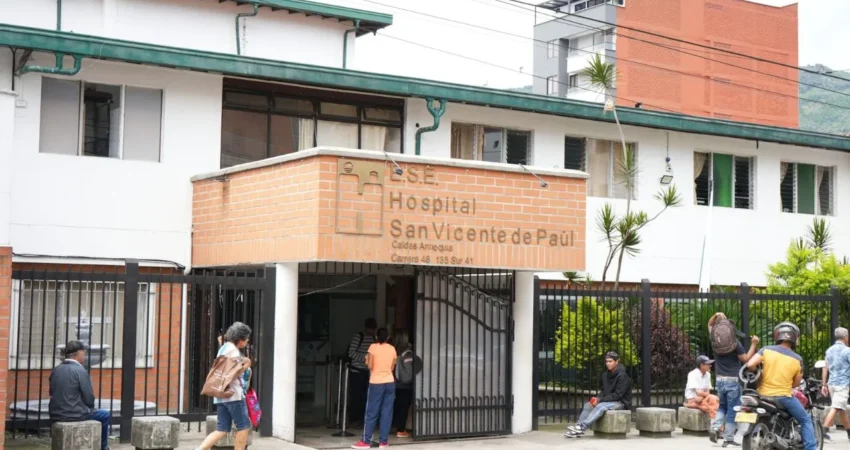
A grave incident of violence has cast a shadow over the E.S.E. Hospital San Vicente de Paúl in Caldas, Antioquia, where a security guard was reportedly assaulted by four individuals in the early hours of September 5th while performing his duties in the Emergency Department. The hospital administration has strongly condemned the attack, vowing to pursue legal avenues to ensure accountability and reiterating a persistent call for respect and dialogue within its facilities. This disturbing event comes on the heels of another aggression against healthcare workers at the Hospital General de Medellín, raising renewed concerns about the safety and well-being of medical personnel across the region.
Escalation of Violence in Healthcare Settings
The attack on the Caldas hospital security guard underscores a troubling trend of aggression directed towards healthcare professionals in Colombia. These incidents not only endanger the lives and physical integrity of the staff but also disrupt the crucial delivery of medical services, creating an atmosphere of fear and insecurity within institutions dedicated to healing. The hospital’s official statement emphasized that no worker should face violence while carrying out their professional responsibilities, a sentiment that resonates deeply within a sector that often deals with emotionally charged situations.
Chronology of the Caldas Incident
While specific details regarding the events immediately preceding the assault have not been fully disclosed by the hospital, the incident reportedly occurred during the pre-dawn hours of Tuesday, September 5th. The security guard was on duty in the Emergency Department, a high-traffic area that often experiences heightened emotional states among patients and their families due to the nature of medical emergencies. The hospital confirmed that four individuals were involved in the alleged aggression. The institution has stated its intention to cooperate fully with law enforcement authorities to investigate the matter thoroughly and bring those responsible to justice. The lack of immediate public detail about the provocation for the attack highlights the need for a comprehensive investigation to establish the full sequence of events and the motivations behind the aggression.
Hospital’s Response and Call for Calm
In the wake of the attack, the E.S.E. Hospital San Vicente de Paúl issued a formal statement denouncing the act of violence. The institution articulated that while it understands that situations of distress, worry, or uncertainty can arise among patients and their relatives, these circumstances can never justify resorting to aggression against healthcare workers. The hospital stressed that its personnel, encompassing clinical, administrative, and security teams, are dedicated to serving the community and deserve a safe working environment.
The hospital’s appeal for calm and respect was unequivocal. "We make a call to the citizenry to always maintain respect, tolerance, and dialogue," the statement read. This plea for de-escalation and constructive communication aims to foster a more supportive environment for both patients and staff. The institution also reminded the public that its facilities house individuals from various professional backgrounds, all of whom play vital roles in the operation of the hospital and the care of patients. Preserving a secure and respectful atmosphere is paramount for the effective functioning of any healthcare institution.
Broader Implications: Safety Concerns for Healthcare Workers
The incident in Caldas is not an isolated event, and its timing is particularly significant given a similar, albeit distinct, act of aggression that occurred just days prior at the Hospital General de Medellín. This pattern of violence raises significant alarm bells about the safety of healthcare workers across Antioquia and potentially throughout Colombia. These attacks can have far-reaching consequences, including:
- Impact on Staff Morale and Retention: Constant threats of violence can lead to burnout, anxiety, and a reluctance among healthcare professionals to continue working in high-risk environments. This could exacerbate existing staffing shortages in the healthcare sector.
- Deterioration of Patient Care: Fear and stress among staff can indirectly affect the quality of care provided. When healthcare workers are preoccupied with their safety, their focus on patient well-being may be compromised.
- Erosion of Public Trust: While the majority of patients and their families are respectful, such incidents can breed suspicion and distrust towards healthcare institutions and their staff, even among those who have had positive experiences.
- Increased Security Costs: Hospitals may be forced to allocate more resources towards enhanced security measures, diverting funds that could otherwise be used for patient care, equipment, or staff training.
The Colombian Ministry of Health and Social Protection has, in the past, acknowledged the growing problem of violence against healthcare workers and has called for stricter penalties and more robust security protocols. However, the persistent nature of these attacks suggests that more comprehensive and effective strategies are needed to address the root causes and ensure the safety of those on the front lines of healthcare.
The Medellín Incident: A Parallel Case
The attack in Caldas gained further national attention due to its proximity to a violent confrontation at the Hospital General de Medellín. In that instance, several staff members were reportedly assaulted by relatives of a patient who had passed away while undergoing end-of-life care protocols. According to reports from the Medellín hospital, the family members reacted aggressively towards members of the clinical and support staff following the patient’s death.
The situation at the Hospital General de Medellín escalated to a point where the hospital had to activate its security protocols and request the intervention of law enforcement. The Public Force’s presence was necessary to de-escalate the situation and ensure the safety of the remaining staff and patients. The intervention resulted in the detention of two individuals believed to be involved in the aggression. The affected hospital workers received immediate support from their colleagues and psychological first aid.
Nadia Guevara, the assistant manager of the Hospital General de Medellín, provided context for the incident, stating, "Unfortunate, this led the families to attack our clinical and support team." She further elaborated on the need for external intervention: "We had to activate security protocols, make a call to the public force, who attended to this need and detained the aggressors."
While both incidents involve aggression within hospital settings, the specific circumstances and motivations appear to be distinct. The Caldas incident involves an alleged assault on a security guard by four individuals, with the context of the provocation still under investigation. The Medellín case directly links the aggression to the death of a patient and the subsequent reaction of the patient’s family. Despite these differences, both events highlight the pervasive issue of violence that healthcare professionals are increasingly facing.
Towards a Safer Healthcare Environment
Addressing the recurring problem of violence against healthcare workers requires a multi-faceted approach. This includes:
- Enhanced Security Measures: Hospitals need to continually assess and upgrade their security infrastructure, including surveillance systems, access control, and adequate staffing of security personnel.
- De-escalation Training: Providing staff with comprehensive training in de-escalation techniques can equip them to manage tense situations effectively and prevent them from escalating into violence.
- Legal Framework and Enforcement: Robust legal frameworks that impose severe penalties for assaulting healthcare workers are crucial, coupled with consistent and effective enforcement by the judicial system.
- Public Awareness Campaigns: Educating the public about the challenges faced by healthcare professionals and fostering a culture of respect and empathy can help shift attitudes and behaviors.
- Support Systems for Victims: Ensuring that healthcare workers who experience violence have access to immediate psychological and legal support is essential for their recovery and for maintaining their commitment to the profession.
The E.S.E. Hospital San Vicente de Paúl’s commitment to pursuing justice for its injured staff member and the Hospital General de Medellín’s proactive response to a violent incident are critical steps. However, sustained effort and collaboration among healthcare institutions, government agencies, law enforcement, and the community are necessary to create a secure environment where healthcare can be delivered without fear of reprisal or harm. The safety of those who dedicate their lives to caring for others must be a paramount concern for society as a whole. The repeated occurrences of such incidents serve as a stark reminder that the fight for a respectful and secure healthcare environment is ongoing and requires constant vigilance and action.

0 Comments