
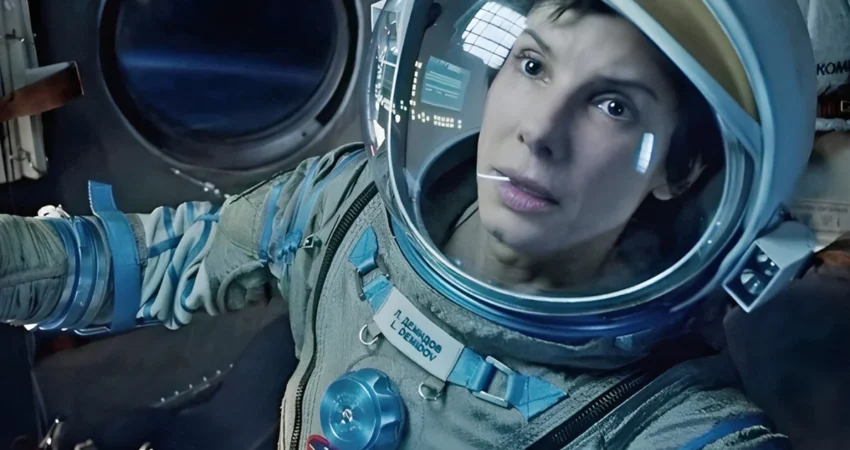
The landscape of digital streaming is undergoing a significant shift as one of the most critically acclaimed films of the 21st century prepares to depart from its current home. Warner Bros. Pictures’ 2013 space thriller, Gravity, directed by Academy Award-winner Alfonso Cuarón, is scheduled to leave the HBO Max library on September 30, 2026. This departure marks the end of a long-standing availability for a film that redefined the technical possibilities of cinema and remains a benchmark for the science fiction genre. As the countdown to its removal begins, audiences have a final window to experience a production that holds seven Academy Awards and is frequently cited as a masterpiece of immersive storytelling.
The removal of Gravity highlights the fluid nature of licensing agreements within the streaming industry. While HBO Max—now frequently referred to as Max in various territories—serves as the primary repository for Warner Bros. Discovery content, revolving licensing deals often see high-profile titles cycle out of the catalog to appear on other platforms or enter a period of exclusivity elsewhere. For Gravity, a film that relies heavily on its visual and auditory fidelity, its presence on a high-bitrate streaming service has been a cornerstone for cinephiles who lack physical media copies.
The Narrative Core of a Survival Epic
Gravity follows the harrowing journey of Dr. Ryan Stone, portrayed by Sandra Bullock, a brilliant medical engineer on her first shuttle mission. She is accompanied by veteran astronaut Matt Kowalski, played by George Clooney, who is commanding his final flight before retirement. The narrative is deceptively simple: during a routine spacewalk to service the Hubble Space Telescope, a catastrophic chain reaction of satellite debris—a phenomenon known as the Kessler Syndrome—destroys their shuttle, the Explorer.
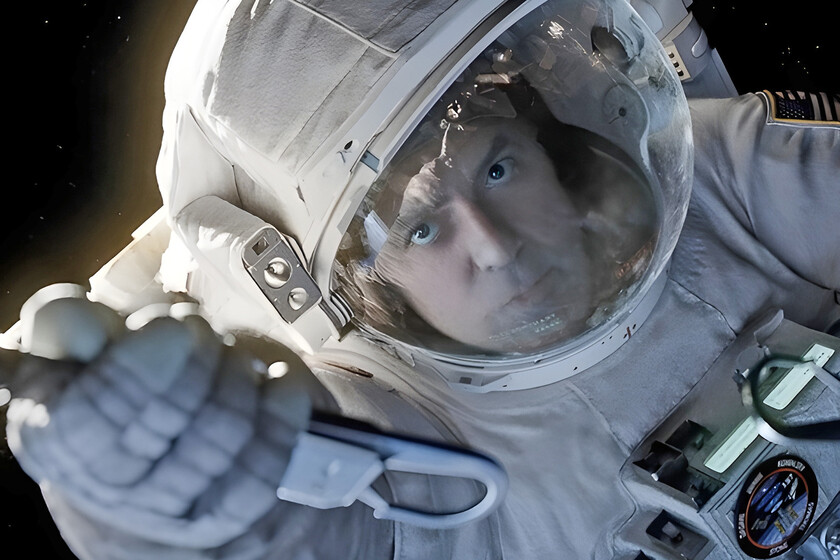
Left tethered to nothing but each other and drifting into the infinite blackness of space, Stone and Kowalski must find a way to reach the International Space Station (ISS) and, eventually, a Chinese Tiangong station to secure a return craft. The film eschews traditional science fiction tropes such as alien encounters or futuristic warfare, focusing instead on the primal human instinct for survival. It explores profound themes of grief, isolation, and the metaphorical process of rebirth, as Dr. Stone must overcome the psychological weight of a personal tragedy on Earth to find the will to live in an environment that is fundamentally hostile to human life.
Technical Innovation and the Light Box
The production of Gravity is as legendary as the film itself. Development began years before its 2013 release, as Alfonso Cuarón and his son, Jonás Cuarón, wrote a script that many in Hollywood deemed unfilmable at the time. The primary challenge was the depiction of zero gravity. Traditional methods, such as the "vomit comet" (parabolic flights) or wirework, were insufficient for the long, sweeping shots Cuarón envisioned.
To solve this, Cuarón collaborated with cinematographer Emmanuel Lubezki and the visual effects team at Framestore to create "The Light Box." This was a 20-foot-tall cube outfitted with 1.9 million individually controllable LEDs. Sandra Bullock would be placed inside the box on a specialized rig, and the LEDs would project the light of the Earth, the Sun, and the stars onto her face and suit. Instead of moving the actress to simulate flight, the "universe" moved around her, allowing for perfect lighting integration with the computer-generated environments.
This innovation allowed Lubezki to capture the subtle reflections and color shifts of the Earth’s atmosphere on the astronauts’ visors, a level of detail that had never been achieved in a space-set film. The result was a seamless blend of live-action performance and digital artistry that earned Lubezki the first of his three consecutive Academy Awards for Best Cinematography.

Critical Acclaim and Global Box Office Success
Upon its premiere at the 70th Venice International Film Festival, Gravity received an immediate standing ovation, with critics praising its "visceral" and "nerve-shredding" intensity. This critical momentum carried through to its theatrical release in October 2013. Produced on a budget of approximately $100 million, the film defied industry expectations for a minimalist survival drama. It opened to $55.8 million in the United States and went on to gross $274 million domestically and $449 million internationally, for a staggering global total of $723.2 million.
The film’s success was not limited to the box office. During the 86th Academy Awards in 2014, Gravity was the most-awarded film of the night. It received 10 nominations and won in seven categories:
- Best Director (Alfonso Cuarón)
- Best Cinematography (Emmanuel Lubezki)
- Best Visual Effects
- Best Film Editing
- Best Original Score (Steven Price)
- Best Sound Editing
- Best Sound Mixing
The win for Best Director was particularly historic, as Alfonso Cuarón became the first Mexican filmmaker to receive the honor, paving the way for a decade of dominance by Mexican directors in that category.
Scientific Realism and Astronaut Reactions
One of the enduring legacies of Gravity is its commitment to physical realism, though it did take necessary creative liberties for the sake of the narrative. The film was lauded by NASA personnel and former astronauts for its depiction of the "look and feel" of space. Buzz Aldrin, the second man to walk on the moon, praised the film’s depiction of zero gravity, stating, "I was so extravagantly impressed by the portrayal of the colors in space and the Earth below."
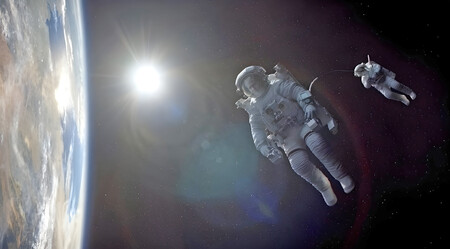
However, the film also faced scrutiny from the scientific community. Renowned astrophysicist Neil deGrasse Tyson famously pointed out several inaccuracies on social media, such as the fact that the Hubble Space Telescope, the ISS, and the Tiangong station are in different orbital planes and altitudes, making it impossible to travel between them with a simple Manned Maneuvering Unit (MMU). Despite these critiques, Tyson later admitted that he enjoyed the film and appreciated its ability to bring complex physics to a mainstream audience.
The film’s sound design also adhered to scientific principles. Because sound cannot travel in a vacuum, the audience only hears noises that would be transmitted through the astronauts’ suits via vibrations or through their radio communications. This creates a haunting, claustrophobic auditory experience that emphasizes the silence of the void.
A Chronology of Production and Impact
The journey of Gravity from concept to cultural phenomenon follows a distinct timeline:
- 2009-2010: Alfonso and Jonás Cuarón develop the script. Universal Pictures originally holds the rights before the project moves to Warner Bros.
- 2011: Principal photography begins. Sandra Bullock is cast after several high-profile actresses, including Angelina Jolie and Natalie Portman, were considered or passed on the role.
- 2012: The film undergoes an extensive post-production phase. Nearly 80% of the film is digital, requiring unprecedented rendering time for the era.
- August 2013: Gravity premieres at Venice, followed by a showing at the Toronto International Film Festival.
- October 4, 2013: The film is released in theaters, setting an October opening record at the time.
- March 2014: The film sweeps the technical categories at the Oscars.
- 2020-2025: The film is consistently ranked in "Best of the Century" lists, including a prominent placement in The New York Times’ retrospective of 21st-century cinema.
- September 30, 2026: Scheduled departure from the HBO Max/Max streaming service.
Broader Implications for the Science Fiction Genre
Gravity’s impact on the film industry extended far beyond its own runtime. It ushered in a new era of "hard" science fiction—films that prioritize scientific plausibility and human-centric drama over fantasy elements. Following its success, the industry saw a resurgence of high-budget, realistic space films, including Christopher Nolan’s Interstellar (2014), Ridley Scott’s The Martian (2015), and James Gray’s Ad Astra (2019).

Moreover, the film’s use of long takes—including a 17-minute opening sequence without a single visible cut—influenced a generation of cinematographers and directors. It demonstrated that digital technology could be used not just for spectacle, but to enhance the intimacy and tension of a character’s journey.
The departure of Gravity from HBO Max serves as a reminder of the fragility of the digital era’s "infinite library." While the film will undoubtedly reappear on other services or remain available for digital purchase, its exit from a major platform signifies a transition for a title that has become a staple of modern movie watching. For viewers who have yet to experience the terrifying beauty of Cuarón’s vision, or for those wishing to revisit Dr. Ryan Stone’s harrowing path to survival, the remaining days of September 2026 represent a final opportunity to stream this cinematic milestone in its current home.
As the film industry continues to evolve, Gravity remains a testament to the power of a singular vision. It proved that a story about one person in a single location could captivate the entire world, provided that location was the most vast and unforgiving environment known to man. Its legacy is secured not just by its awards or its box office, but by its ability to make the audience hold their breath in unison with a character drifting 372 miles above the Earth.

0 Comments