
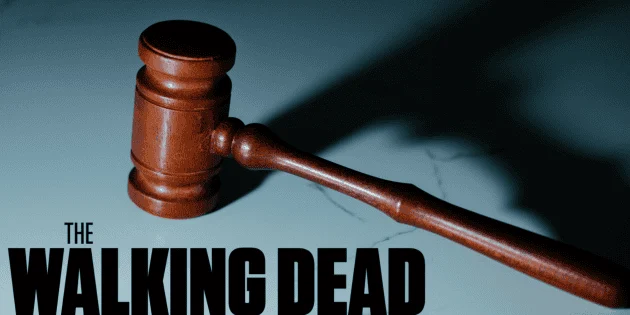
In a landmark resolution to a nearly decade-long legal battle, AMC Networks has agreed to pay $120 million to the producers of its immensely popular series "The Walking Dead," concluding a protracted dispute over profit participation. The settlement, which was reached amicably on September 4, 2024, puts an end to accusations that the television network engaged in "Hollywood accounting" practices to conceal profits and deny the creative team their rightful share of the franchise’s vast success. This agreement marks a significant moment in the ongoing struggle between studios and talent regarding fair compensation in an increasingly complex media landscape.
The core of the dispute revolved around allegations by "The Walking Dead" creator Robert Kirkman and executive producers Gale Anne Hurd and David Alpert that AMC failed to uphold its contractual obligations to the creative personnel behind one of television’s most profitable and enduring series. The plaintiffs contended that AMC, through its vertically integrated structure, intentionally licensed the show to its own network at artificially low rates, thereby suppressing the "modified adjusted gross receipts" (MAGR) upon which their profit participation was calculated. This practice, often termed "self-dealing," is a contentious issue in Hollywood, where studios acting as both producer and distributor can create internal pricing mechanisms that benefit the parent company at the expense of external profit participants.
According to a statement filed by AMC Networks with the U.S. Securities and Exchange Commission (SEC), the settlement provides for a total consideration of $120 million to the plaintiffs. This amount will be disbursed in two tranches: an initial cash payment of $85 million due by September 18, 2026, followed by an additional $35 million to be paid no later than January 31, 2027. Notably, this latter payment is structured as an advance against future profit participation from both "The Walking Dead" and its successful spin-off series, "Fear The Walking Dead." This structure suggests a forward-looking aspect to the agreement, potentially allowing the producers to continue benefiting from the franchise’s ongoing revenue streams.
The Phenomenon of ‘The Walking Dead’ and its Financial Footprint
"The Walking Dead," based on Robert Kirkman’s comic book series, premiered on AMC in October 2010 and quickly became a cultural phenomenon. It shattered viewership records for basic cable, with its peak moments drawing audiences comparable to broadcast network shows. The Season 5 premiere, for instance, garnered over 17 million viewers, cementing its status as the most-watched cable drama in history. Its success extended far beyond linear television, spawning a vast merchandising empire, video games, international distribution, and multiple spin-off series. The show’s global appeal and robust ancillary revenues made it an unparalleled asset for AMC Networks, transforming the relatively small cable channel into a major player in original programming.
The immense profitability of "The Walking Dead" is precisely what fueled the producers’ claims. They argued that given the show’s colossal success and the billions of dollars it generated for AMC across various revenue streams—including advertising, subscription fees, international sales, and streaming rights—their contracted share of profits was far too low. The plaintiffs believed that AMC was leveraging its ownership of both the production studio (AMC Studios) and the distribution platform (AMC Network) to create a financial structure that obscured the true economic value of the franchise.
A Decade of Legal Battles: A Chronology
The legal entanglements surrounding "The Walking Dead" have been nearly as long-running as the show itself. The roots of the current settlement can be traced back to a series of events and lawsuits:
- 2010: "The Walking Dead" premieres on AMC, quickly gaining critical acclaim and a massive audience.
- 2011: Frank Darabont, the show’s original developer and showrunner, is abruptly fired during the production of Season 2.
- 2013: Darabont files a lawsuit against AMC, alleging breach of contract and wrongful termination, specifically claiming that AMC deprived him of his rightful share of profits through improper accounting. This case became a high-profile example of the "Hollywood accounting" disputes.
- 2017: Robert Kirkman, Gale Anne Hurd, David Alpert, and other executive producers file their own lawsuit against AMC, mirroring many of Darabont’s claims regarding profit participation and self-dealing. They alleged that AMC’s internal licensing fee for "The Walking Dead" was significantly below fair market value, thereby reducing the pool of profits available for participants.
- Throughout 2017-2020: Legal proceedings unfold, involving extensive discovery, expert testimony on industry norms, and numerous court filings. AMC consistently denied the allegations, maintaining that its financial practices were standard and in compliance with contractual terms.
- 2021: In a separate but related development, AMC reaches a settlement with Frank Darabont and his agency, Creative Artists Agency (CAA), for an estimated $200 million. This monumental settlement, which included a mix of cash and ongoing profit participation, was seen as a significant victory for talent and a clear indicator of the potential liabilities AMC faced in its profit-sharing disputes.
- September 4, 2024: AMC and the plaintiffs in the Kirkman, Hurd, and Alpert lawsuit reach an "amicable" settlement for $120 million, bringing the nine-year dispute to a close.
The Darabont settlement in 2021 undoubtedly set a powerful precedent for the current case. The $200 million payout signaled that AMC was willing to make substantial concessions to resolve these long-standing claims rather than risk a potentially more damaging public trial. It also validated the plaintiffs’ arguments about the undervaluation of the show’s profits and the network’s internal licensing practices.
The Intricacies of Hollywood Accounting and Vertical Integration
At the heart of these lawsuits is the complex and often opaque practice of "Hollywood accounting." This term refers to the methods used by studios to calculate profits, particularly when dealing with profit participation agreements for creators, actors, and other key personnel. These agreements often promise a share of "net profits," but studios are notorious for employing accounting techniques that can dramatically reduce or eliminate reported net profits, even for hugely successful projects.
In the case of "The Walking Dead," the specific mechanism under scrutiny was AMC’s vertical integration. AMC Studios produced the show, and AMC Network aired it. The plaintiffs argued that AMC Studios licensed the show to AMC Network at an artificially low "imputed license fee"—a price that was far below what an independent third-party network would pay for a show of "The Walking Dead’s" caliber and popularity. By setting this internal price low, AMC effectively minimized the revenue generated at the production studio level, which in turn reduced the "modified adjusted gross receipts" (MAGR) from which profit participants were paid.
For example, if an independent network would pay $5 million per episode for a show, but AMC Network "paid" AMC Studios only $2 million per episode, the profit pool for the creators would be based on the lower $2 million figure, even though the show was generating far more value for AMC as a whole. The lawsuits claimed that this was a deliberate strategy to keep profits within the corporate structure and away from external participants. Such practices raise questions about fiduciary duty and fair dealing, especially when the same corporate entity controls both sides of the licensing agreement.
Implications for the Industry and Future Talent Deals
This $120 million settlement, following the $200 million Darabont payout, sends a strong message across the entertainment industry. It reinforces the growing scrutiny on studio accounting practices and the rights of creative talent to a fair share of the profits generated by their work.
- Increased Scrutiny on Vertical Integration: The case highlights the inherent conflicts of interest that can arise from vertical integration. As more media companies consolidate and acquire production arms, they will face increased pressure to demonstrate transparency and fairness in their internal licensing and accounting practices.
- Empowerment of Talent: The substantial sums involved in these settlements can empower creators and their representatives to demand more robust and transparent profit participation clauses in future contracts. It may lead to a shift from opaque "net profits" definitions to more clearly defined "gross receipts" or other metrics that are harder for studios to manipulate.
- Precedent for Future Lawsuits: Other creators of successful, long-running franchises may look to these "The Walking Dead" settlements as a blueprint for challenging their own profit participation agreements, especially if they suspect similar accounting practices are at play.
- Impact on Streaming Deals: The rise of streaming services has further complicated profit participation, as traditional metrics like syndication and DVD sales diminish. These settlements may influence how future deals are structured for streaming-exclusive content, pushing for more equitable compensation models that reflect a show’s global reach and subscriber acquisition value.
- Financial Burden on Studios: While AMC is a major player, these significant payouts represent a substantial financial burden. Such costs could influence future production strategies, risk assessment for new projects, and the overall willingness of studios to engage in protracted legal battles.
Official Responses and Market Reaction
While specific triumphant statements from the plaintiffs were not immediately issued, industry analysts universally view this settlement as a significant victory for Robert Kirkman, Gale Anne Hurd, David Alpert, and the other producers. It serves as a vindication of their claims and a powerful affirmation that creative talent has legal recourse against perceived unfair accounting practices by major studios.
AMC Networks, in its SEC filing, emphasized the "amicable" nature of the resolution. This phrasing is typical in such announcements, signaling a desire to move past the litigation and focus on future operations. For AMC, putting these lawsuits behind them allows the company to reduce legal overheads, alleviate investor uncertainty, and dedicate resources to its evolving business strategy, particularly its push into the competitive streaming market with AMC+. The financial markets will likely react positively to the certainty provided by the settlement, removing a long-standing legal cloud from the company’s outlook.
Conclusion
The $120 million settlement between AMC Networks and the producers of "The Walking Dead" is more than just a financial transaction; it is a pivotal moment in the ongoing dialogue about fairness, transparency, and compensation in the entertainment industry. It underscores the challenges posed by vertical integration and the complexities of profit participation in an era where content is king, but the distribution of its spoils remains fiercely contested. As the media landscape continues to evolve, this settlement will undoubtedly serve as a crucial reference point, shaping how future deals are negotiated and how creative talent is valued in the multi-billion-dollar world of television production. For "The Walking Dead" creators, it marks the end of a long fight and the beginning of a new chapter, finally securing a more equitable share of the immense wealth their groundbreaking series generated.

0 Comments