
 Lana Rhoades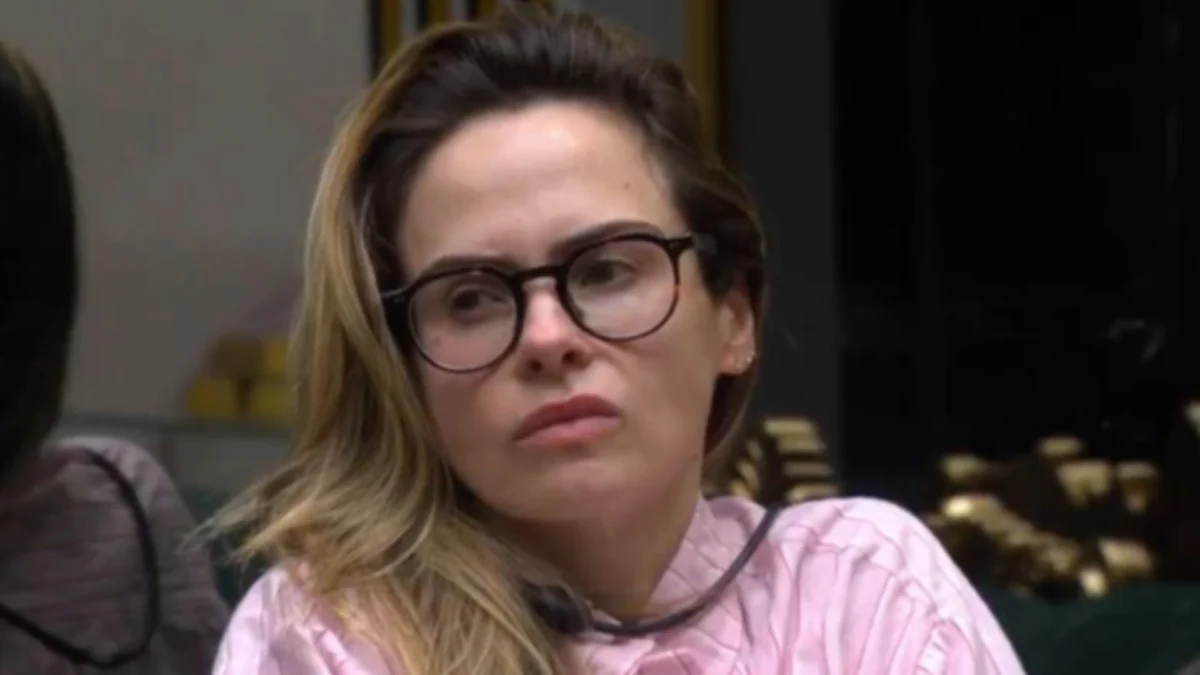
On Saturday, April 18, a moment of unscripted defiance unfolded within the confines of the Big Brother Brasil 26 house, captivating viewers and sparking considerable discussion. Ana Paula Renault, a figure known for her sharp wit and outspoken nature, initially refused to participate in a mandated reality show dynamic, citing exhaustion and a rejection of the "influencer" persona. Her subsequent, albeit reluctant, participation and candid explanation for her actions offered a rare glimpse into the psychological pressures and financial motivations often underlying reality television participation, reinforcing her image as a "Veterana" unafraid to challenge the established narrative.
The incident began when the remaining participants were instructed to record individual "selfie videos," reminiscing about memorable moments within the "most watched house in Brazil." The detailed instructions, read aloud by Juliano Floss, who had already secured his spot as the first finalist of the edition, outlined a multi-stage process: "It’s time to register some of your memories in the BBB26 house. Let’s record a selfie video? Each one, individually, will record their video in stages. Two, record with the phone horizontally, lying down. Three, choose two spots that bring you many memories and show them to us. Four, tell us about an unforgettable and memorable moment you experienced in these places. And five, there’s an order to record. And you are the first."
A Veteran’s Candid Refusal
Upon hearing the instructions, Ana Paula Renault’s patience, reportedly already thin after nearly 100 days of confinement, visibly snapped. Her immediate retort was direct and unequivocal: "No, it’s not possible, no, I am not. You will have to excuse me, I am being serious, because it’s too much. First, I am not a blogger. No. I have never done this in my life, will I have to do it after 100 days? What corner, people? I lived a hell here for 96 days!" Her outburst resonated with a segment of the audience fatigued by what they perceive as manufactured authenticity in reality television, while others viewed it as a lack of professionalism or an attempt to garner attention.
Renault’s history on Big Brother Brasil and in the broader media landscape positions her as a unique character within the show’s ecosystem. She first gained national prominence in BBB16, where her confrontational style and memorable catchphrases quickly made her a fan favorite, albeit a polarizing one. Her return to the franchise in BBB26, designated a "Veterana," brought with it an expectation of strategic gameplay and unfiltered commentary. This established persona is crucial context for understanding her reaction; she is not a newcomer easily swayed by the demands of the show, but rather an experienced media personality with a distinct brand built on honesty and a refusal to conform. Her "sem papas na língua" (without a filter) reputation precedes her, making her public defiance, even if brief, a consistent element of her character arc within the program.
The Pressure Cooker Environment of BBB
The environment within the Big Brother Brasil house is notoriously challenging, a fact often overlooked by viewers who only see edited highlights. Contestants are isolated from the outside world, constantly monitored, and subjected to intense emotional and psychological pressures. Living in close quarters with strangers, competing for a substantial monetary prize, and being under perpetual scrutiny can lead to emotional exhaustion, heightened sensitivities, and occasional breakdowns. Renault’s declaration of having "lived a hell here for 96 days" is a stark reminder of this reality. By April 18, the contestants had endured over three months of this confinement, a period long enough to wear down even the most resilient individuals. Tasks that might seem simple to an outside observer, such as recording a "selfie video" of happy memories, can become insurmountable when compounded by emotional fatigue, strategic anxieties, and a pervasive sense of inauthenticity.
Furthermore, her rejection of the "blogueira" label touches upon a broader cultural phenomenon. In contemporary media, the lines between traditional media personalities, reality TV stars, and digital influencers have blurred. Many reality show contestants transition into careers as digital influencers, leveraging their newfound fame for brand partnerships and sponsored content. For Renault, a journalist by profession, the forced adoption of an "influencer" persona, especially under duress and with instructions, likely felt antithetical to her identity and journalistic integrity. It highlighted the tension between authentic self-expression and the curated performances often demanded by modern digital content creation, a tension exacerbated by the artificiality of the reality TV setting.
A Pragmatic Reversal: The Shift in Stance
Despite her initial, forceful refusal, Ana Paula Renault reversed her decision just minutes later, agreeing to participate in the dynamic. This swift change of heart, from outright defiance to reluctant compliance, is a testament to the complex strategic calculus often at play within the BBB house. While the immediate catalyst for her change of mind was not explicitly detailed, it is plausible that a combination of factors influenced her. The subtle, yet firm, expectations from the production team regarding adherence to tasks, the potential for negative consequences (such as punishment, loss of privileges, or even a perceived negative edit), and the overarching goal of remaining in the game until the finale likely weighed heavily on her.
Her decision to participate, however, was not without further commentary. As she began recording, she articulated her motivations with characteristic bluntness, choosing the living room’s unique "gold bars" decoration as one of her significant spots. "You know I have a natural talent for recording this, I love recording. Do you know why I don’t really like recording, this life of a blogger, influencer? People turn on the camera and they change their mood, and they sell something they are not. Charisma, gone, day 97. Good humor, I don’t even know… I have it, but this one is already gone. Special corner? Guys, why did I enter? Money! I don’t do everything for it, but if I entered here, it was for it," she stated, revealing the raw, unvarnished truth behind her participation.
The "Gold Bar" Confession: Unpacking Her Justification
Renault’s choice of the "gold bars" decoration in the living room was a deliberate and symbolic act. It served as a visual metaphor for her primary motivation: financial gain. This candid admission—"Money! I don’t do everything for it, but if I entered here, it was for it"—stands in stark contrast to the often-romanticized narratives presented by many reality TV contestants, who frequently cite "the experience," "personal growth," or "fame" as their driving forces. Her honesty, while potentially controversial, resonated with a segment of the audience who appreciate a straightforward approach and acknowledge the economic realities that often compel individuals to participate in such demanding shows.
She further elaborated on this theme: "And the house’s decoration is very much like that, gold bars here, gold bars there… A special corner, not so special… Being able to wake up and remember every day why I am here, which is to change my life. I knew it would be very difficult. It has been very difficult. But I know that life outside is worse, it is difficult too. But that’s it, to honor the invitation they made me. To honor your vote, that you have voted with me since the first Paredão. And to know that in the capitalist world, this changes lives!" This monologue was a powerful declaration, intertwining personal struggle, financial ambition, and an acknowledgment of the audience’s role in her journey. It framed her experience not as a quest for fame or self-discovery, but as a grueling, yet potentially life-altering, economic endeavor. This perspective offers a critical lens through which to view the motivations of reality TV participants, moving beyond the often superficial portrayals to reveal the deeper, often economic, drivers.
Production’s Role and Audience Reception
While the original text does not detail any direct interaction between Ana Paula and the Big Brother Brasil production team during her refusal, the implied expectation of compliance is a constant undercurrent in reality television. Production teams craft dynamics not only to entertain but also to elicit specific reactions and narrative arcs from contestants. A contestant’s outright refusal, even if temporary, presents a challenge to this carefully constructed environment. Her eventual participation suggests either an internal re-evaluation of the strategic risks involved or a subtle, off-camera reminder from production about the rules of engagement.
The audience’s reaction to this incident would likely have been varied. Her core fanbase, accustomed to her unfiltered style, would have applauded her honesty and defiance, seeing it as another instance of her authenticity. Others might have criticized her for perceived negativity or for attempting to disrupt the show’s flow. However, her subsequent explanation, linking her participation to financial necessity and the harsh realities of a "capitalist world," likely resonated with a broader public, tapping into universal concerns about economic stability and the sacrifices people make to improve their lives. This dual reaction underscores the complexity of audience engagement with reality TV personalities, where authenticity is often prized but adherence to the "game" rules is also expected.
Broader Implications for Reality Television
Ana Paula Renault’s brief rebellion and subsequent explanation hold broader implications for the discourse surrounding reality television. Her candidness about financial motivations challenges the often-idealized image of reality stars pursuing fame or personal growth. It highlights the economic desperation that can drive individuals to endure the intense scrutiny and psychological toll of shows like Big Brother Brasil. This frankness can foster a more critical view among audiences, prompting questions about the ethical responsibilities of production companies and the mental health support offered to contestants.
Moreover, her resistance to the "blogueira" label reflects a growing tension between traditional media personalities and the burgeoning influencer economy. For seasoned professionals, being forced into a content creation mold can feel reductive or inauthentic. This incident underscores the evolving landscape of media and personal branding, where reality TV has become a significant pathway to digital influence, but not all participants embrace this transition willingly or uncritically.
The Legacy of Authenticity in BBB26
In the context of BBB26, this incident will likely be remembered as a defining moment for Ana Paula Renault, reinforcing her image as a contestant who prioritizes honesty, even when it means challenging the show’s own narrative. It adds another layer to her "Veterana" status, solidifying her reputation as a player who understands the game’s mechanics but refuses to be entirely consumed by its manufactured reality. Her willingness to articulate the "hell" of confinement and the purely financial motivation for her participation provides a valuable, if uncomfortable, insight into the human cost and strategic depth of Big Brother Brasil. As the season progresses towards its conclusion, moments of such raw authenticity often become the most memorable, shaping a contestant’s legacy long after the cameras cease rolling. This event, therefore, serves not just as a fleeting controversy but as a significant commentary on the nature of reality television itself, its pressures, and the complex motivations of those who choose to live their lives in front of millions.


 Eva Lovia
 Julia Chirkova
 Julia Prastini
 Nila Kartika Wati
 Jia Lissa
 admin
admin