
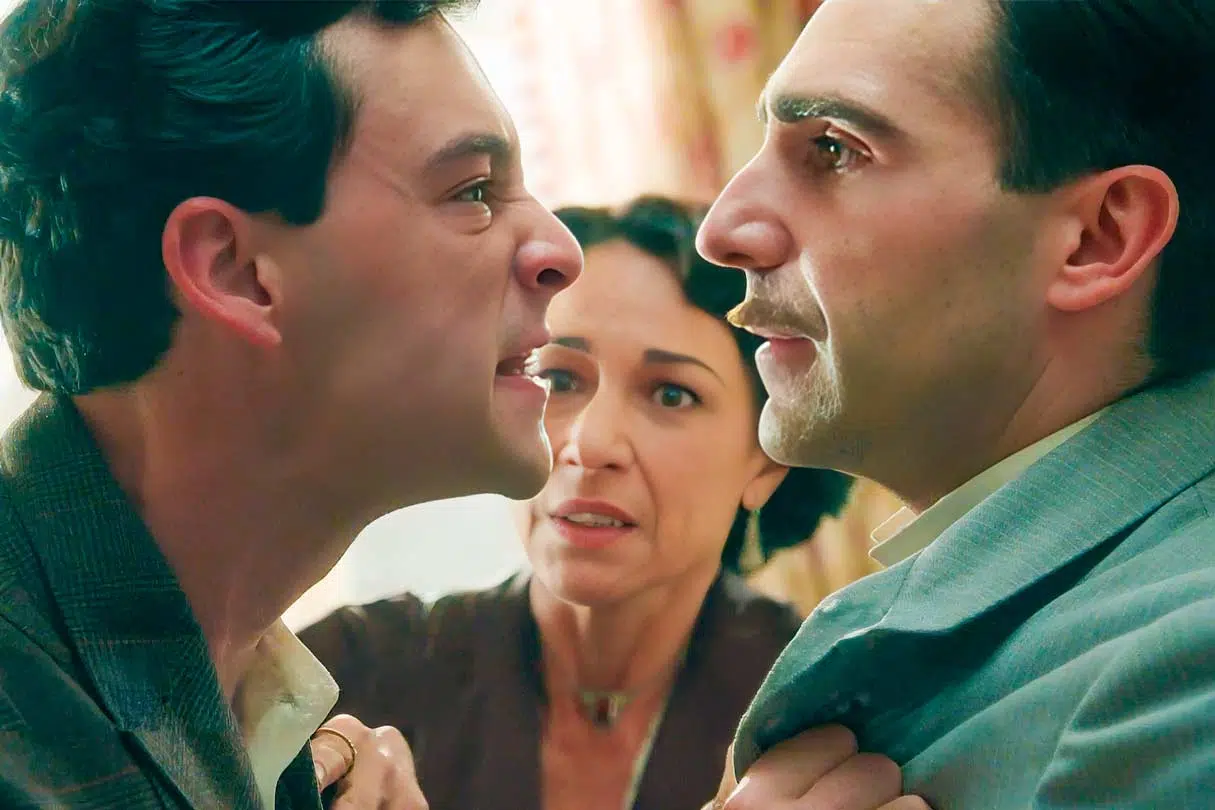
The opulent yet increasingly volatile world of "La Promesa" is grappling with a deepening crisis following the unexplained disappearance of Angela. As hours turn into an agonizing wait for any sign of the young woman, the serene facade of the palace is shattering under the weight of mounting tension and unraveling relationships. The unfolding events of chapter 877 are pushing key characters to their breaking points, revealing darker facets of their personalities and intensifying the suspicions that permeate the estate.
Curro’s Desperate Search and Accusations Against Lorenzo
At the heart of the current turmoil is Curro, who is visibly distressed by the lack of information regarding Angela’s whereabouts. His inability to accept the growing uncertainty is fueling a desperate need for answers. While attempting to retrace Angela’s final known movements, Curro recalls a significant detail: a prior argument between Angela and Máximo shortly before dinner. This recollection, though seemingly minor, has become a focal point of his investigation, but his suspicions ultimately converge on a more formidable figure within the household.
Driven by a conviction that Lorenzo is directly involved in Angela’s vanishing, Curro confronts the captain in a volatile outburst. The encounter, described as happening "fuera de sí" (out of control), sees Curro demanding to know Angela’s location and escalating to the point of threatening Lorenzo’s life if he does not reveal the truth. Lorenzo, however, maintains his innocence, repeatedly denying any complicity in the matter. Curro, however, appears to have reached a point where rational discourse has been abandoned, replaced by a desperate and potentially dangerous pursuit of justice.
The immediate aftermath of Angela’s disappearance has been characterized by a frantic search, involving key members of the household. Sources indicate that the palace staff have been engaged in systematic checks of all areas, from the servants’ quarters to the more secluded wings of the estate, in a bid to locate Angela. The urgency of these searches is amplified by the fact that Angela has been a consistent presence in the daily workings of "La Promesa," and her sudden absence has created a palpable void.
Leocadia’s Reluctant Acceptance and Máximo’s Subtle Influence
Leocadia, sharing Curro’s profound sense of desperation, finds herself in a difficult position. Initially aligned with Curro’s anxieties, she eventually accepts Lorenzo’s assertion of innocence after he reassures her of his non-involvement. This shift in Leocadia’s stance highlights the complex web of loyalties and trust that defines the palace dynamics. Meanwhile, Máximo attempts to assuage Leocadia’s lingering doubts, urging her to believe in the sincerity of her concern for Angela. His efforts, while seemingly aimed at providing comfort, may also serve to subtly guide Leocadia’s perceptions, adding another layer of intrigue to the unfolding events.
The timeline of Angela’s disappearance is crucial to understanding the escalating tensions. Reports suggest that Angela was last seen during the evening hours, prior to the main dinner service. The ensuing hours of silence and lack of communication have compounded the anxiety, transforming what might have initially been a minor misunderstanding into a full-blown crisis. The fact that Curro’s suspicions are directed towards Lorenzo, a figure known for his complex and often morally ambiguous actions, adds a significant dramatic weight to the narrative. Lorenzo’s past involvement in clandestine dealings and his often adversarial relationship with other members of the family make him a plausible, albeit unproven, suspect in such a grave situation.
Rising Tensions Between Manuel, Julieta, and Ciro
The turmoil extends beyond the search for Angela, impacting other relationships within the estate. A heated dispute erupts between Manuel, Julieta, and Ciro. Ciro renews his demand for payment for a manual he has created for the family business, a request that Manuel firmly rejects, viewing the work as part of Ciro’s existing obligations. The situation escalates dramatically when Julieta attempts to mediate. Ciro’s reaction is one of explosive anger; he silences Julieta publicly in front of Manuel and then berates her for interfering, even reaching a point where he appears to be on the verge of physical violence. This aggressive and controlling behavior reveals a significantly darker and more volatile side to Ciro’s character, raising concerns about his overall stability and his capacity for constructive engagement.
The context of Ciro’s demand for payment is rooted in his ongoing efforts to integrate into the operations of "La Promesa." His role, initially perceived as more peripheral, has evidently evolved, leading him to believe his contributions warrant additional compensation. Manuel’s refusal, framed within the established hierarchy and expectations of the household, creates a direct conflict. Julieta’s attempt to de-escalate the situation, a characteristic of her generally empathetic nature, is met with disproportionate aggression, suggesting that Ciro’s frustration has reached a critical threshold, making him susceptible to impulsive and violent reactions.
Carlo’s Opposition to Samuel’s Plans and Hidden Motives
Meanwhile, Carlo remains steadfast in his opposition to Samuel’s intention to baptize the young Jana. When María questions his stance, Carlo fabricates an excuse, claiming that a family member will officiate the ceremony. This deflection effectively conceals his true motivations, which stem from witnessing an intimate moment between the priest and María Fernández. This revelation suggests a deeper, more personal reason behind Carlo’s resistance, hinting at potential jealousy or a desire to control the narrative surrounding Jana’s upbringing. The implications of this hidden agenda could have far-reaching consequences for the relationships involved and the future of Jana.

Carlo’s apparent concern for the sanctity of the baptism ceremony is undermined by his prior observations. The tension between his stated intentions and his actual motivations creates a significant dramatic irony, suggesting that his actions are driven by personal sentiment rather than genuine concern for religious or familial tradition. This clandestine behavior adds a layer of suspicion to his character, hinting at a potential manipulation of events for his own ends.
The Ongoing "War" Against Julio and Unforeseen Discoveries
In the lower echelons of the palace, the "war" against Julio continues with renewed vigor. Simona and Candela, with the covert assistance of Cristóbal, once again resort to hiding vegetables in Julio’s food, aiming to exasperate him. However, this time, Julio discovers their ruse. Convinced that the entire service has initiated a campaign of vengeance against him and Tomasa, Julio’s reaction is one of outrage. Tomasa, however, appears to downplay the significance of the incident, suggesting a potential disconnect or a different perspective on the escalating hostilities within the domestic staff.
The strategy of subtle sabotage employed by Simona and Candela is a reflection of the long-standing tensions between certain members of the service staff and Julio. His perceived arrogance or disruptive behavior likely triggered this coordinated effort. Julio’s discovery of the ploy, however, shifts the dynamic from a covert operation to an open confrontation, albeit one that Tomasa seems unwilling to fully engage with. This incident highlights the simmering resentments and power struggles that exist beneath the surface of the palace’s organized facade.
Cristóbal’s Wedding Proposal and María’s Hesitation
Further complicating matters, Cristóbal proposes to María that they combine Jana’s baptism with their own wedding ceremony. María, however, consistently evades the conversation, signaling growing doubts about their relationship and her future. Her increasing insecurity regarding their impending union suggests that her commitment to Carlo is wavering, perhaps influenced by other developing relationships or a re-evaluation of her personal aspirations. The timing of Cristóbal’s proposal, so close to the baptism, might also be perceived as an attempt to solidify their union amidst the prevailing uncertainty.
María’s reticence to discuss the wedding is a significant indicator of her internal conflict. The pressure to conform to societal expectations and familial arrangements may be clashing with her personal desires and evolving feelings. The context of the turbulent events within the palace likely contributes to her indecision, as the stability of her own life is being called into question.
Teresa’s Protective Measures for Petra and Martina’s Growing Suspicion
In another corner of the estate, Teresa endeavors to protect Petra. Upon learning that Tomasa has been inquiring about Petra and her refuge among the staff, Teresa decides to warn Petra, urging her to exercise extreme caution. This proactive measure suggests a growing awareness of potential threats and a desire to safeguard those who are vulnerable. The implications of Tomasa’s inquiries remain unclear, but they indicate a potential threat to Petra’s safety or well-being.
Meanwhile, Petra begins to suspect the source of Martina’s apparent happiness. Despite Martina’s efforts to conceal her true feelings, Petra eventually uncovers the truth. The young maid reveals that she witnessed the kiss shared between Martina and Adriano, a secret that Martina had been attempting to keep hidden. This revelation exposes Martina’s carefully constructed facade and suggests that her apparent joy is linked to a clandestine romance. Petra’s astute observation skills and her ability to uncover hidden truths position her as a key player in unraveling the personal dramas unfolding within the household.
Broader Implications and Analysis
The series of escalating events in "La Promesa" chapter 877 paints a picture of a household teetering on the brink of chaos. Angela’s disappearance serves as a catalyst, igniting latent tensions and exposing the fragile nature of relationships. Curro’s increasingly aggressive stance towards Lorenzo, if unchecked, could lead to further violence and legal repercussions. Ciro’s volatile behavior is a stark warning sign, suggesting a potential for further outbursts and a destabilizing influence within the family. The hidden motives of Carlo and the growing doubts of María point towards future complications in their relationships.
The continued "war" against Julio, while seemingly a minor domestic dispute, reflects broader themes of class struggle and resentment within the estate. The interconnectedness of these storylines suggests that the resolution of one crisis may trigger others, creating a complex and dynamic narrative arc. The episode underscores the inherent drama within the confines of "La Promesa," where personal desires, hidden secrets, and the pursuit of power often collide, leading to unpredictable and captivating outcomes. The narrative is expertly weaving multiple threads of conflict, promising a compelling continuation of the series as these characters navigate the ever-increasing pressures and uncertainties of their lives. The overarching impact of these events is the erosion of trust and the intensification of suspicion, creating an atmosphere where no character is entirely safe from the fallout.

0 Comments