
 Nila Kartika Wati
The landscape of modern science fiction television has been significantly reshaped by the presence of Apple TV+’s flagship series, For All Mankind, which has officially entered its penultimate phase. Following the highly anticipated premiere of its fifth season on March 27, the streaming platform confirmed that the series has been renewed for a sixth and final season. This announcement marks the beginning of the end for a narrative that has spanned over half a century of an alternate history, fundamentally altering the public’s perception of the space race and the geopolitical dynamics of the late 20th and early 21st centuries. Created by Ronald D. Moore, Matt Wolpert, and Ben Nedivi, the series has evolved from a speculative drama about the moon landing into a sprawling multi-generational epic that explores the colonization of Mars and the industrialization of the solar system.
The confirmation of the sixth season as the series’ conclusion aligns with the long-term vision originally proposed by the showrunners, who had often suggested a seven-season arc but have now refined the narrative to reach its zenith in the upcoming final cycle. To maintain the momentum of the franchise, Apple TV+ also announced the development of a companion series titled Star City, which will shift the perspective to the Soviet side of the space race, offering a deeper look at the cosmonauts and engineers behind the Iron Curtain. This expansion indicates that while the central story of the Baldwin and Stevens families may be drawing to a close, the universe created by For All Mankind will continue to thrive.
A Chronological Retrospective: The Alternate History of For All Mankind
To understand the weight of the upcoming final seasons, one must examine the intricate timeline the series has established since its debut in 2019. The show operates on a unique premise: a "what if" scenario where the Soviet Union, led by cosmonaut Alexei Leonov, beats the United States to the moon in June 1969. This single event triggers a "domino effect" that prevents the winding down of the space race, instead accelerating it into a permanent state of competition and innovation.
In the first season, the narrative focused on the 1970s, where a devastated NASA is forced to play catch-up, eventually establishing the Jamestown lunar base. This era introduced the core cast, including Ed Baldwin (Joel Kinnaman), Danielle Poole (Krys Marshall), and Gordo Stevens (Michael Dorman), highlighting the social shifts of the era, such as the early integration of women into the astronaut corps.
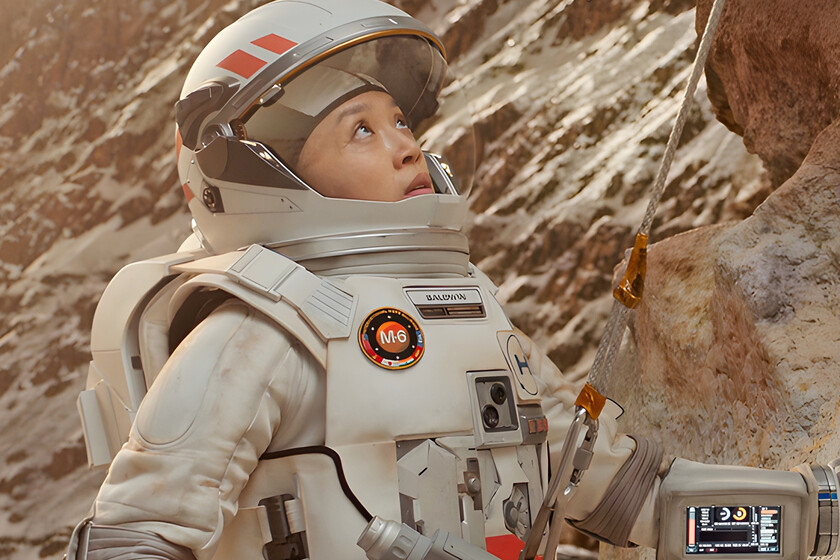
The second season jumped to the 1980s, heightening the Cold War tensions to a fever pitch. The lunar surface became a militarized zone, reflecting the Reagan-era "Star Wars" initiative but with tangible, high-stakes consequences. The season concluded with a narrow avoidance of nuclear war, facilitated by the sacrifices of key characters, setting the stage for a shift from lunar competition to Martian exploration.
Season three, set in the 1990s, depicted a three-way race to Mars between the United States, the Soviet Union, and a private aerospace firm, Helios. This season explored the commercialization of space and the discovery of water on the Red Planet, which cemented Mars as the next frontier for permanent human habitation.
The fourth season, which preceded the current fifth cycle, moved into the 2000s. It focused on the expansion of the "Happy Valley" colony on Mars and the complex socio-economic tensions between the scientific elite and the working-class laborers responsible for mining asteroids. The discovery of the "Goldilocks" asteroid—a mineral-rich body that could sustain Earth’s economy for centuries—became the central conflict, leading to a daring heist that ensured the asteroid remained in Martian orbit, effectively securing the colony’s independence and future.
Current Status and Critical Reception of Season Five
The fifth season, which debuted on March 27, has already garnered significant critical acclaim, maintaining the show’s reputation for high-quality storytelling and technical accuracy. Currently holding a 94% approval rating on Rotten Tomatoes, the new season continues the tradition of jumping forward approximately one decade. The narrative now inhabits the 2010s, an era where the focus has shifted from mere survival on Mars to the complexities of a multi-planetary civilization.
Critics have praised the fifth season for its ability to balance large-scale scientific endeavors with intimate human drama. The series remains grounded in "hard" science fiction, utilizing realistic physics and plausible technological advancements while exploring themes of aging, legacy, and the moral ambiguities of progress. As the characters who began the journey in the 1960s reach their twilight years, the show has successfully transitioned its focus to a new generation of explorers, ensuring that the stakes remain personal despite the cosmic scale.

The Final Mission: Expectations for Season Six
While specific plot details for the sixth season remain under wraps, the announcement that it will serve as the "final mission" suggests a definitive conclusion to the primary narrative arcs. Based on the show’s established pattern, Season Six is expected to take place in the 2020s or 2030s. This timeframe would likely see the realization of deep-space exploration beyond Mars, perhaps venturing toward the moons of Jupiter or Saturn.
The final season will likely address the ultimate fate of the "Mars 7," the original group of astronauts and engineers who shaped the alternate timeline. It will also need to resolve the ongoing geopolitical tensions on Earth, which have been drastically altered by the abundance of clean energy provided by Helium-3 mining on the moon—a technological breakthrough that occurred decades earlier in this timeline than in our own reality.
Industry analysts suggest that ending the series at Season Six is a strategic move by Apple TV+. By concluding the story while critical reception is at its peak, the platform avoids the narrative fatigue that often plagues long-running science fiction dramas. Furthermore, it allows for a concentrated production budget to ensure that the visual effects and set pieces of the finale are of a cinematic caliber.
Expanding the Universe: The Introduction of Star City
The announcement of the spin-off, Star City, has generated significant interest among the fanbase and television critics alike. Scheduled for release on May 29, the series is described as a "propulsive paranoid thriller" that revisits the moment the Soviet Union won the race to the moon. However, instead of following the American reaction, the show will take place within the secretive confines of the Soviet space program.
Star City aims to explore the human cost of the Soviet victory, detailing the lives of the cosmonauts, scientists, and intelligence officers who lived under the constant pressure of the KGB and the Kremlin. Ben Nedivi and Matt Wolpert, who will serve as showrunners for the spin-off, stated that they were always fascinated by the "hidden side" of the race. While For All Mankind showed the Soviet Union as a formidable rival, Star City will humanize the individuals within that system, portraying the risks they took and the sacrifices they made to secure their place in history.

This expansion mirrors the strategies of other major franchises, such as Star Trek or Star Wars, but with a unique focus on historical revisionism. By creating a shared universe, Apple TV+ is positioning For All Mankind as a cornerstone of its content library, ensuring its longevity long after the original series concludes.
Data and Implications: The Impact of For All Mankind on Streaming and Science Fiction
The success of For All Mankind has broader implications for the television industry and the science fiction genre. As one of the original launch titles for Apple TV+ in 2019, the series has played a crucial role in establishing the service’s reputation for "prestige" content.
- Award Recognition: The series has been a perennial contender during award seasons, winning a Primetime Emmy for Outstanding Interactive Program and receiving multiple nominations from the Critics’ Choice Television Awards and the Saturn Awards.
- Scientific Influence: The show has been lauded by members of the scientific community, including NASA astronauts and aerospace engineers, for its realistic portrayal of space travel. Its "technical advisors" ensure that even the most speculative elements, such as nuclear thermal rockets, are based on theoretical physics.
- Socio-Political Commentary: By reimagining the 20th century, the show has provided a platform to discuss civil rights, gender equality, and LGBTQ+ representation. In this alternate timeline, the Equal Rights Amendment (ERA) is ratified in the 1970s, and the presence of women in high-ranking NASA positions accelerates social change on Earth.
Official Responses and Creative Vision
In a joint statement following the renewal, executive producers Ronald D. Moore, Matt Wolpert, and Ben Nedivi expressed their gratitude to the audience and the platform. "When we first started this journey, we wanted to tell a story about how the quest for the stars could bring out the best and sometimes the most complex aspects of humanity," the creators noted. "To be able to bring this story to its natural conclusion with a sixth season, while also expanding into the world of Star City, is a dream come true for any storyteller."
Matt Cherniss, head of programming for Apple TV+, echoed these sentiments, highlighting the show’s role in the platform’s growth. "For All Mankind has captured the imaginations of viewers worldwide. We are thrilled to continue our partnership with this extraordinary creative team as they chart the final chapters of this epic saga and introduce us to new perspectives in the Star City spin-off."
Conclusion: The Legacy of a Multi-Planetary Narrative
As For All Mankind prepares for its final two seasons, its legacy is already secure as one of the most ambitious science fiction series ever produced. It has successfully moved beyond the tropes of alien encounters and galactic wars to focus on the more grounded, yet equally thrilling, challenges of human exploration and political evolution.

The dual announcement of the final season and the Star City spin-off ensures that fans have much to look forward to in the coming years. Whether it is witnessing the final fate of the Baldwin family or uncovering the secrets of the Soviet space program, the universe of For All Mankind remains a testament to the enduring human spirit and the infinite possibilities of the "what if." For those who have not yet embarked on this journey, the availability of the first five seasons on Apple TV+ provides the perfect opportunity to witness a masterpiece of modern television before it reaches its definitive conclusion.




 Eva Lovia
 Julia Chirkova
 Julia Prastini
 Jia Lissa
 admin
admin