
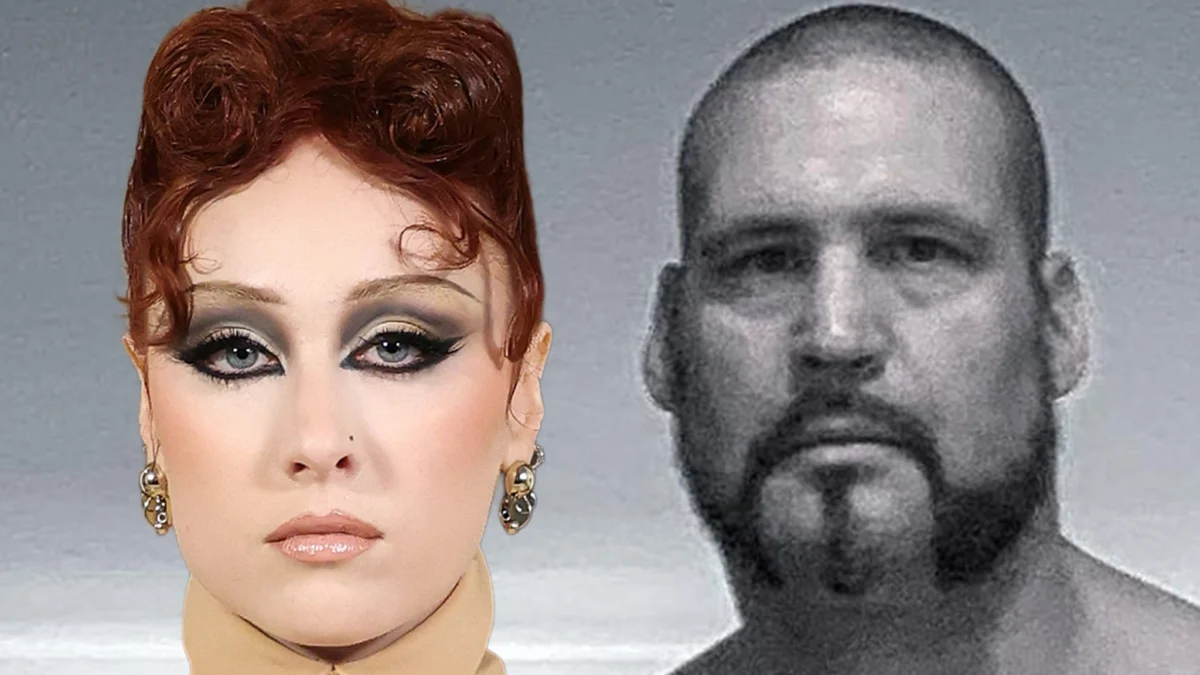
Pascal Duvier, a prominent figure in the world of celebrity personal security, has publicly admitted responsibility for an incident in a Brazilian hotel lobby that led to Jude Law’s 11-year-old daughter crying after an encounter involving pop sensation Chappell Roan. Duvier’s statement, released on March 25, 2026, sought to clarify the chain of events and disassociate Chappell Roan from any direct involvement in the security directive, substantiating the singer’s earlier claims. The incident, which quickly garnered significant media attention and sparked debate across social media platforms, underscores the delicate balance between celebrity privacy, fan interaction, and the often-complex dynamics of high-stakes personal protection.
Duvier confirmed his role as the bodyguard at the center of the controversy, asserting unequivocally that he was not employed by Chappell Roan or her management at the time of the altercation. Instead, he stated, his presence at the upscale hotel in Brazil was on behalf of an undisclosed individual, distinct from Roan’s entourage. This clarification directly supports Roan’s previous public apology and her insistence that the security personnel involved were not part of her personal detail. Duvier’s admission arrived days after Brazilian soccer star Jorginho Frello, Jude Law’s daughter’s stepfather, first brought the incident to public light, criticizing Roan for the distress caused to his stepdaughter. The unfolding narrative has cast a spotlight on the often-unseen intricacies of celebrity security operations and the rapid spread of information in the digital age.
A Chronology of Events Leading to the Admission
The incident first came to widespread public attention in mid-March 2026, following an impassioned social media post by Jorginho Frello. Frello, a renowned midfielder and husband to Law’s former partner, recounted how his 11-year-old stepdaughter, whose name has been withheld for privacy, was left in tears after a security guard allegedly reprimanded her and her mother. The family was reportedly staying at the same high-end hotel in Brazil as Chappell Roan, who was in the country for performance engagements. Frello’s account suggested that the child had merely "snuck a peek" at Roan as the singer was having breakfast, prompting what he described as an overly aggressive response from a security detail he initially presumed to be associated with Roan.
The initial accusation, amplified by Frello’s celebrity status, quickly sparked a wave of public backlash directed at Chappell Roan. Fans and critics alike questioned the appropriateness of such a reaction towards a child. Recognizing the escalating situation, Chappell Roan issued her own statement on March 22, 2026. In her apology, Roan expressed regret for the distress caused to the child and her family. Crucially, she also emphasized that the security guard involved was not part of her personal team, an assertion that was met with both understanding and skepticism in various online circles. Her swift response was seen by many as an attempt to control the narrative and mitigate potential damage to her burgeoning public image, especially given her recent rise to pop stardom.
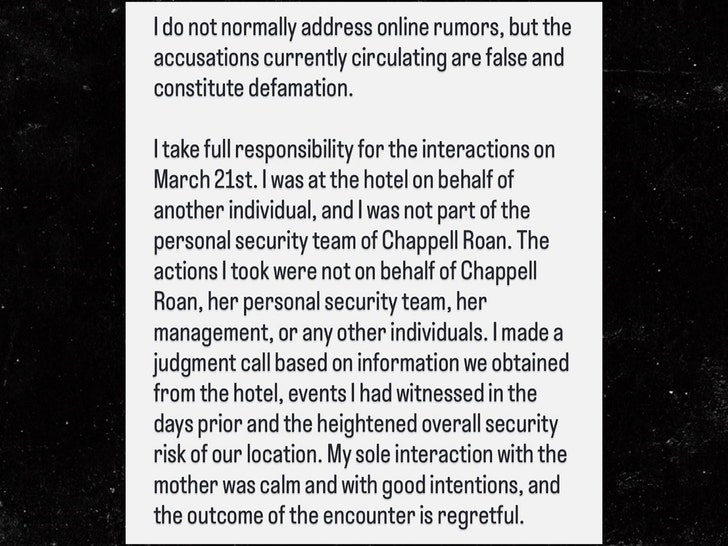
Duvier’s subsequent statement on March 25, 2026, provided the missing piece of the puzzle, corroborating Roan’s defense. He stated, "I take full responsibility for the interactions… I was at the hotel on behalf of another individual, and I was not part of the personal security team of Chappell Roan. The actions I took were not on behalf of Chappell Roan, her personal security team, her management, or any other individuals." This definitive declaration shifted the focus from Roan’s culpability to the independent actions of a security professional operating under different directives.
The Bodyguard’s Justification and Regret
In his detailed statement, Pascal Duvier offered an explanation for his actions, citing a confluence of factors that influenced his "judgment call." He elaborated, "I made a judgment call based on information we obtained from the hotel, events I had witnessed in the days prior and the heightened overall security risk of our location." This suggests that Duvier perceived a genuine threat or a significant security vulnerability at the time, leading him to implement stringent measures. While he did not specify the nature of the "information" or the "events" he had witnessed, such details are typically kept confidential in security operations to protect clients and protocols.
Duvier also addressed the direct interaction with the child’s mother, stating, "My sole interaction with the mother was calm and with good intentions, and the outcome of the encounter is regretful." This implies that while his intent might have been to prevent a perceived security breach or to maintain the privacy of his client, the execution or the interpretation of his actions led to an unintended and unfortunate emotional response from the child. The use of the word "regretful" signifies an acknowledgment of the negative impact, even if he believed his actions were professionally justified at the moment. This fine line between necessary vigilance and causing distress highlights a perpetual challenge for security professionals in high-pressure environments.
The Complexities of Celebrity Security and Protocol
The incident serves as a stark reminder of the intricate and often misunderstood world of celebrity security. Personal bodyguards like Pascal Duvier are employed to ensure the safety, privacy, and well-being of their clients, who are frequently targets of intense public scrutiny, paparazzi, and sometimes, genuine threats. Their roles extend beyond physical protection to include managing crowds, assessing risks, and enforcing boundaries in public spaces. In a hotel setting, where celebrities often seek a semblance of normalcy, security protocols can be particularly stringent due to the ease of access for the public.
Bodyguards often operate based on intelligence gathered from hotel staff, local security agencies, and their own observations. A "heightened overall security risk" could stem from various factors, including the presence of other high-profile individuals, known security threats in the area, or previous incidents involving aggressive fans or paparazzi. In such environments, even seemingly innocuous interactions, like a child "peeking" at a celebrity, might be interpreted as a precursor to a larger security issue by a highly trained professional. The speed at which security decisions must be made in dynamic situations often leaves little room for nuance, leading to outcomes that can appear overly harsh in retrospect.
Furthermore, the industry frequently employs security personnel on a contractual basis, meaning a bodyguard might be working for different clients at different times or even concurrently within the same location. This explains how Duvier could be present at the hotel, engaged in security duties, without being part of Chappell Roan’s direct team. This model, while flexible for celebrities and security firms, can lead to confusion regarding accountability and association, as evidenced by the initial public assumption that the bodyguard was Roan’s.
Broader Implications and Public Perception
The incident has opened a broader conversation about celebrity accessibility, privacy rights, and the ethical considerations of security measures, especially when children are involved. For Chappell Roan, a rising star known for her vibrant stage persona and connection with fans, the initial accusation posed a significant challenge to her public image. Her prompt apology and subsequent corroboration by Duvier were critical in navigating this PR crisis. It demonstrated her commitment to accountability and her empathy, while also clarifying her non-involvement in the security decision. This response is likely to be studied by public relations experts as an example of effective crisis management in the digital age.
For the family of Jude Law’s daughter, the incident underscores the challenges faced by celebrity children who, through no fault of their own, are often thrust into the public eye and subject to the peripheral effects of their parents’ fame. Jorginho Frello’s public statement, while perhaps emotionally charged, highlighted a parent’s natural instinct to protect their child and to seek clarification when they perceive a wrong has been committed. The incident also indirectly brought attention to the privacy concerns that families of celebrities must contend with daily, even in seemingly private settings like a hotel breakfast area.
Moving forward, this event may prompt deeper discussions within the security industry regarding training protocols for handling sensitive situations, particularly those involving minors. It emphasizes the importance of clear communication, de-escalation techniques, and the need for security personnel to understand the broader public relations implications of their actions. While ensuring client safety remains paramount, the incident highlights the ongoing challenge of balancing rigorous protection with maintaining a positive public image and fostering goodwill, especially when dealing with the general public, including children, who are often just curious fans.
The resolution, with Duvier taking full responsibility and Chappell Roan being exonerated from direct culpability, allows for a more nuanced understanding of the event. It reaffirms the importance of gathering all facts before assigning blame and illustrates how quickly narratives can evolve in the interconnected world of celebrity news and social media. The incident serves as a potent case study for celebrities, security professionals, and the public alike on the complex dynamics at play when fame, privacy, and personal security intersect.

0 Comments