
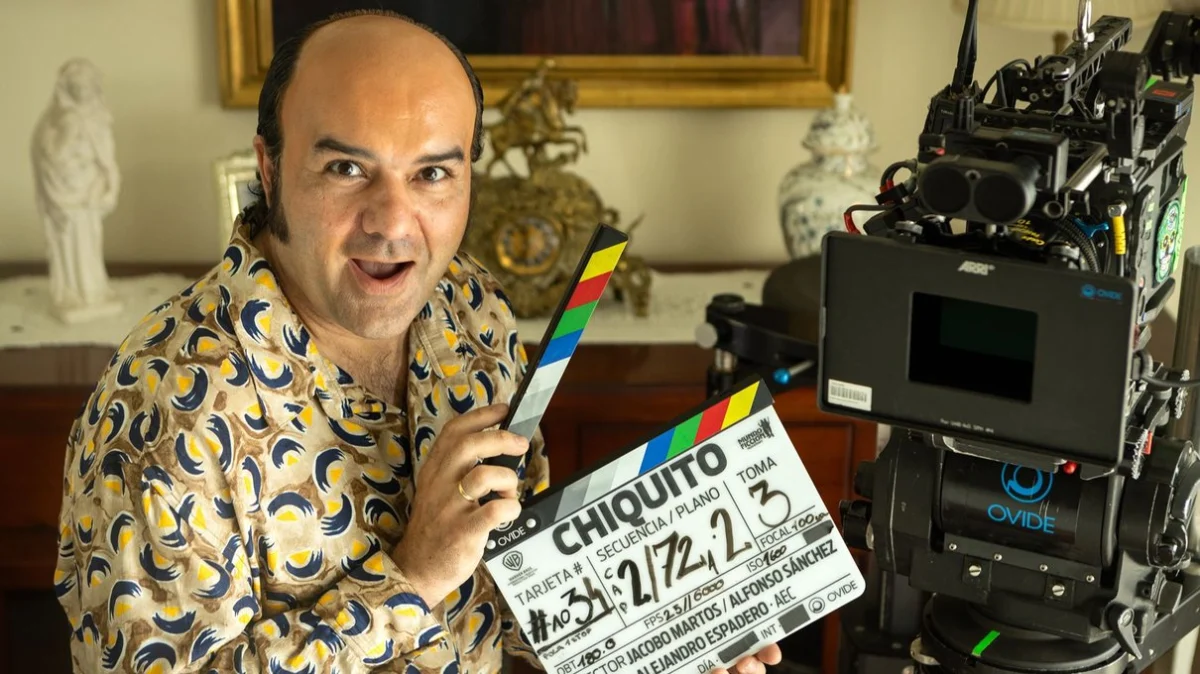
Madrid, Spain – RTVE has commenced principal photography on "Chiquito el Grande," an ambitious two-part miniseries poised to illuminate the extraordinary life of Gregorio Sánchez Fernández, universally known as Chiquito de la Calzada. The production embarks on a comprehensive journey, tracing his path from a precocious musical child in post-war Malaga to his eventual ascendance as one of the 20th century’s most beloved and influential comedians. This biographical drama, a project long in gestation, finally brings the story of this cultural phenomenon to the television screen.
The protracted development of "Chiquito el Grande" is not coincidental. Translating the life of such an iconic figure into a compelling narrative demands a delicate balancing act. The creators aim to honor the legend without succumbing to mere imitation, to evoke laughter while acknowledging the profound journey of the man behind the persona – a man who waited over six decades for his name to resonate across the nation. This comedic drama, structured into two 90-minute installments, promises to navigate this complex terrain with nuance and depth.
Alfonso Sánchez Takes the Helm: A Multifaceted Vision
Stepping into the central role, Alfonso Sánchez embodies the multifaceted nature of the project, not only portraying Chiquito de la Calzada but also co-directing alongside Jacobo Martos. His involvement extends to co-writing the screenplay and co-producing the series, a testament to his deep commitment to bringing this story to fruition. Sánchez is no stranger to the Spanish audiovisual landscape, boasting a robust television resume that includes appearances in notable RTVE productions such as "Herederos," "Paco y Veva," and "¡Ala… Dina!". His cinematic directorial work includes the acclaimed "El mundo es nuestro" trilogy: "El mundo es nuestro," "El mundo es suyo," and "El mundo es vuestro." As an actor, his recognizable face has graced the silver screen in box office hits like "Ocho apellidos vascos" and "Ocho apellidos catalanes," as well as Alberto Rodríguez’s critically lauded "Grupo 7." This extensive experience positions Sánchez as an ideal candidate to spearhead a project of this magnitude.
The Emotional Anchor: Inma Cuevas as Pepita
Central to the emotional core of "Chiquito el Grande" is the character of Pepita, portrayed by Inma Cuevas. Described as the great love of the comedian’s life, Pepita serves as the narrative’s emotional linchpin. The miniseries aims to transcend a mere recounting of a comedian’s rise to fame; it endeavors to present a portrait of a humble man, deeply devoted to his profession and his wife. Their shared life and his unique outlook ultimately captivated an entire nation. This focus on the personal dimension promises to add a layer of profound humanity to the depiction of Chiquito’s journey.
The supporting cast is robust, featuring notable Spanish actors who will bring to life the figures who shaped Chiquito de la Calzada’s trajectory. Alberto López, Carlos Bardem, Jesús Carmona, Antonio Dechent, Carmen Avilés, Joaquín Núñez, Mari Paz Sayago, and Leonor Lavado are all set to contribute to the rich tapestry of the narrative. Their collective talent ensures that the supporting characters will be as vividly realized as the central figure.
Production and Creative Team
The production of "Chiquito el Grande" is a collaborative effort between Warner Bros ITVP España and Mundoficción Producciones, in partnership with RTVE. The screenplay is penned by Vladi Ráez, Fali Álvarez, and Marta Sánchez, who have undoubtedly worked to distill a lifetime of experiences into a cohesive and engaging narrative.
A Deep Dive into Andalusian Roots: Filming Locations and Local Commitment
A significant aspect of the production is its unwavering commitment to its Andalusian roots. The entire filming process is taking place in Andalusia, with a technical and artistic crew predominantly drawn from the region. This dedication to local talent and resources is more than symbolic; it is a conscious decision to imbue the series with an authentic regional flavor. The chosen locations are meticulously selected to reconstruct three distinct periods in Chiquito de la Calzada’s life: the somber atmosphere of post-war Malaga, the vibrant energy of Torremolinos’ flamenco tablaos during the tourist boom of the 1960s and 70s, and the nascent television studios of the 1990s, which marked his national breakthrough. A portion of the filming has already been completed at the RTVE Production Center in Andalusia, located in Seville, underscoring the broadcaster’s commitment to regional production hubs.

In an era where much of Spanish fiction is concentrated in Madrid and Barcelona, this decision to film an Andalusian story in Andalusia, with an Andalusian crew and an Andalusian lead actor, signifies a powerful statement. It highlights the rich cultural tapestry of Spain beyond its major metropolitan centers and provides a valuable platform for regional talent and storytelling.
Chronicle of Perseverance: Over Six Decades of Life and Laughter
"Chiquito el Grande" spans more than sixty years of a remarkable life, condensing this extensive period into two impactful episodes. The narrative arc commences with a young boy whose prodigious musical talent shone through the hardship of post-war Spain. It culminates with a 63-year-old man who, against all odds and expectations, transformed into the nation’s most cherished comedian. This is the central theme that resonates throughout the series: the story of an individual who never abandoned his pursuit.
The fiction deliberately moves beyond a simple celebration of success, placing its emphasis on the perseverance and humanity of an artist who achieved fame at an age when many would have considered their chances long gone. The series delves into the years spent in humble tablaos, the performances delivered to sparse audiences, and the decades of unrecognized dedication. It explores the formative experiences that preceded his iconic catchphrases like "fistro" and "pecador de la pradera," offering a nuanced understanding of the man behind the comedic persona.
A Bold Format for a Singular Life
The choice of a two-part, 90-minute format for a comprehensive life story is undoubtedly ambitious, yet it offers a distinct advantage: it necessitates careful selection. The creators are compelled to identify the pivotal moments that truly defined Chiquito de la Calzada’s character and career, distinguishing them from the mere background noise of life. If "Chiquito el Grande" succeeds in this selective curation, RTVE will possess more than a mere tribute. It will have crafted a profound portrait of an artist whose journey embodies a vanishing breed: the creator who achieves triumph through sheer dedication, without recourse to connections or pre-ordained plans, driven solely by an unyielding desire to perform.
The Enduring Impact of Chiquito de la Calzada
Chiquito de la Calzada’s impact on Spanish culture is undeniable. He emerged during a period of significant societal change, offering a unique brand of humor that was both innovative and deeply relatable. His distinctive linguistic style, characterized by invented words and nonsensical phrases, became a national phenomenon. However, beneath the comedic veneer lay a profound understanding of human connection and an unwavering work ethic. His rise to fame in his sixties was a powerful testament to the idea that talent and perseverance can indeed triumph, regardless of age or circumstance.
The miniseries is expected to explore the cultural context of each era it depicts, providing viewers with a deeper appreciation for the challenges and opportunities Chiquito faced. The post-war era in Spain was marked by economic hardship and social conservatism, making the emergence of such a vibrant and unconventional comedic voice all the more remarkable. The subsequent decades saw Spain undergo significant transformations, from the economic development of the Franco regime to the democratic transition and the explosion of popular culture in the 1980s and 90s. Chiquito’s journey mirrors these societal shifts, demonstrating his ability to adapt and connect with audiences across different generations.
The series will also likely touch upon the broader landscape of Spanish comedy and entertainment during Chiquito’s career. He emerged at a time when television was rapidly becoming a dominant force in households, and his unique style carved out a distinct niche. The production’s commitment to recreating the visual aesthetics of these different periods – from the gritty realism of post-war Malaga to the colorful exuberance of the tourist era and the burgeoning television studios – will be crucial in immersing the audience in Chiquito’s world.
Furthermore, the focus on his personal life, particularly his relationship with Pepita, is a vital element. It humanizes the icon and offers a glimpse into the private world of a public figure. The narrative’s exploration of their enduring love and mutual support is likely to be a significant emotional throughline, demonstrating that even the most celebrated figures have deep personal connections that shape their lives.
The success of "Chiquito el Grande" will depend not only on the performances and the storytelling but also on its ability to capture the essence of Chiquito’s appeal. He was more than just a comedian; he was a cultural touchstone, a symbol of resilience, and a reminder that laughter can be found in the most unexpected places. By delving into his life with such dedication and detail, RTVE aims to ensure that his legacy continues to inspire and entertain for generations to come. The production’s commitment to authenticity and its comprehensive scope suggest that "Chiquito el Grande" has the potential to be a landmark television event, celebrating a truly unique figure in Spanish cultural history.

0 Comments