
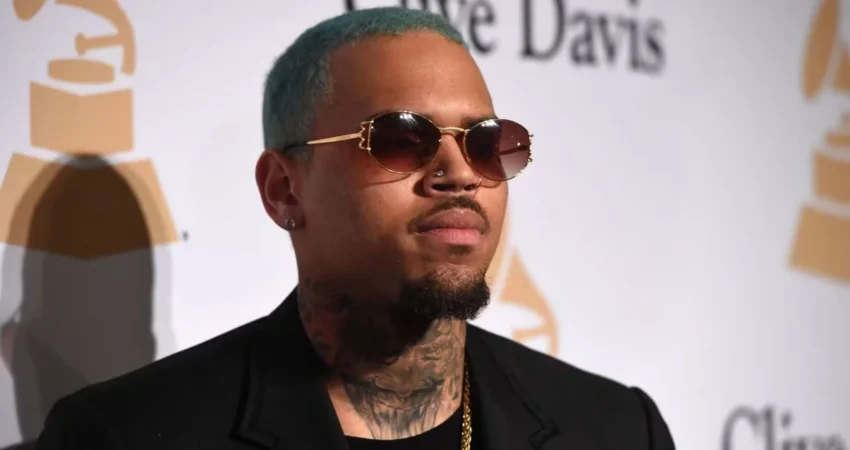
American singer Chris Brown has been handed an eight-month prison sentence for assaulting a music producer with a tequila bottle at a London nightclub in February 2023. However, the artist will not be required to serve immediate jail time, as the sentence has been suspended for one year. This means Brown will only face incarceration if he commits another offense within the next twelve months. The ruling was delivered by Judge Tony Baumgartner at the Southwark Crown Court in London on Monday, October 26th.
The incident in question occurred in the early hours of February 19, 2023, at Tape London, an upscale nightclub located in the Mayfair district of the British capital. According to prosecution statements, Brown attacked music producer Abraham Diaw, striking him on the head with a tequila bottle. Security camera footage from the venue reportedly captured Brown hitting Diaw up to four times with the bottle, with two of those blows directly impacting the victim’s head. The assault allegedly continued as Diaw attempted to flee the premises, and once he was on the ground, he was kicked repeatedly, rendering him unable to defend himself. The Crown Prosecution Service stated in a release, "The assault continued while the victim attempted to flee the premises. The victim received kicks while he remained seated on the ground, with no possibility of defending himself."
As a result of the assault, Diaw sustained injuries to his head and knees and required hospitalization. Following the incident, authorities issued an arrest warrant for Brown. However, at that time, the artist had already departed the United Kingdom.
Brown’s legal troubles in the UK resurfaced in May 2025 when he returned to the country for a concert in Manchester as part of his world tour. He was subsequently arrested. Initially, Brown pleaded not guilty to more serious charges, including assault occasioning grievous bodily harm and possession of an offensive weapon. These more severe charges were later withdrawn.
In July of the current year, Brown entered a guilty plea to a charge of affray at the Southwark Crown Court, which paved the way for the sentencing announced this week. During the sentencing hearing, Judge Baumgartner characterized the use of a glass bottle aimed at the victim’s head as "evidently dangerous" and described the violence of the attack as "intense." However, the judge clarified that the violence did not appear to be premeditated. Judge Baumgartner also noted that recent changes in UK sentencing laws necessitate the suspension of such sentences unless exceptional circumstances are present, which he did not find to be the case here.
"I take into account your employment situation and your established career in music. Your fame, commercial success, and professional standing do not grant you special treatment. The law applies equally to everyone," the judge sternly warned Brown before delivering the sentence.
The consequences of the Tape London incident extended beyond Brown. His vocal coach and rapper Omololu Akinlolu, who joined in the assault, received a four-month prison sentence, also suspended for twelve months. Furthermore, both individuals are required to pay £1,500 each in court costs.
This legal entanglement is not the first for the 37-year-old artist, originally from Tappahannock, Virginia. His career has been shadowed by past legal issues, most notably the widely publicized 2009 assault on his then-girlfriend, singer Rihanna. That incident resulted in a conviction for assault, leading to five years of probation and 180 days of community service. The 2009 case significantly impacted his career and has continued to be a point of reference in discussions about his public image.
The incident at Tape London adds another chapter to a history marked by controversy and legal battles. Brown’s career, despite these challenges, has maintained a significant commercial presence, with numerous hit songs and successful tours. However, his legal record continues to draw scrutiny from the public and media alike.
Chronology of the Incident and Legal Proceedings
February 19, 2023: The alleged assault occurs at Tape London nightclub in Mayfair, London. Chris Brown reportedly strikes music producer Abraham Diaw with a tequila bottle multiple times, including blows to the head, and kicks him while he is on the ground.
February 2023 onwards: Abraham Diaw receives medical treatment for his injuries. Authorities issue an arrest warrant for Chris Brown, who has already left the UK.
May 2025: Chris Brown returns to the UK for a concert in Manchester as part of his world tour and is arrested.
Post-arrest (May 2025 onwards): Brown initially faces more serious charges, which are later dropped.
July [Year of article publication]: Chris Brown pleads guilty to a charge of affray at the Southwark Crown Court.
October 26, [Year of article publication]: Judge Tony Baumgartner sentences Chris Brown to eight months in prison, suspended for one year, and his vocal coach Omololu Akinlolu to four months, also suspended for one year, for their roles in the assault. Both are ordered to pay court costs.
Supporting Data and Legal Context
The legal framework in the UK, particularly concerning assault cases, has undergone recent changes that influence sentencing outcomes. The introduction of guidelines that mandate the suspension of custodial sentences for certain offenses, unless exceptional circumstances dictate otherwise, played a significant role in the decision to suspend Brown’s sentence. This legal provision aims to ensure consistency and fairness in the application of justice, regardless of an individual’s public profile.
The charge of affray, to which Brown pleaded guilty, is defined under the Public Order Act 1986. It involves the use or threat of violence by one or more people, leading to or likely to lead to fear for the safety of others present. This charge is less severe than grievous bodily harm but still carries significant penalties.
The financial penalties imposed, including the £1,500 in court costs for both Brown and Akinlolu, are standard in such cases and are intended to cover the expenses incurred by the legal system in prosecuting the matter.
Broader Impact and Implications
The sentencing of Chris Brown, even with a suspended sentence, serves as a reminder that legal accountability extends to public figures. The judge’s explicit statement about fame not granting special privileges underscores the principle of equality before the law. While Brown will not serve immediate jail time, the suspended sentence acts as a potent deterrent, placing him under legal scrutiny for the next twelve months. Any further transgressions could lead to the activation of his prison term.
This case also brings renewed attention to the broader issue of celebrity behavior and its intersection with the justice system. The public’s awareness of Brown’s past legal issues, particularly the Rihanna incident, inevitably colors the perception of this new conviction. The continued success of his music career in the face of such controversies raises questions about the relationship between artistic talent, public persona, and personal conduct.
For the music industry, this situation highlights the ongoing challenge of navigating the careers of artists with problematic legal histories. While commercial success can often mitigate the immediate impact of such incidents, the long-term implications for reputation and public trust remain a significant factor.
Brown’s ability to continue with his musical agenda, including his world tour, indicates that the suspended sentence has, for now, allowed him to avoid the most severe immediate consequence of his actions. However, the conviction itself is a matter of public record and will likely continue to be a point of discussion and criticism. The artist’s future legal conduct will be closely monitored, and the suspended sentence serves as a clear warning that his freedom to avoid incarceration is contingent on his adherence to the law. The judge’s admonition about fame not affording special treatment is a crucial takeaway, emphasizing that while the immediate outcome might have been lenient due to legal technicalities, the principle of justice remains paramount.

0 Comments