
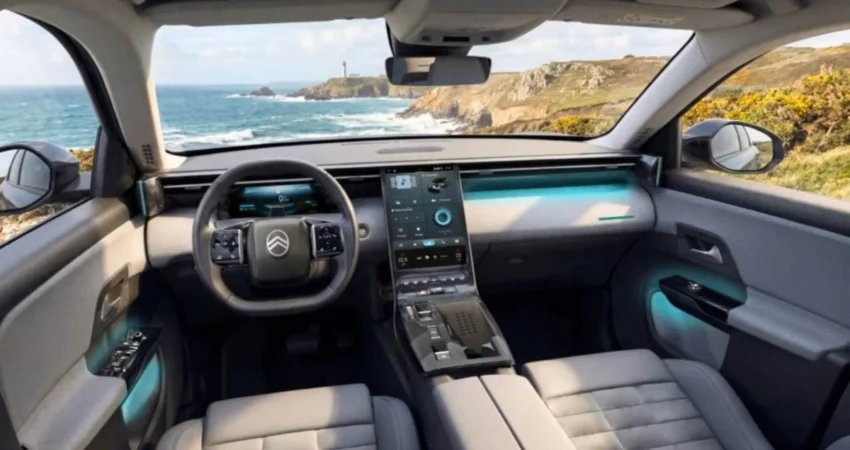
The contemporary automotive landscape has reached a critical inflection point where the integration of advanced technology frequently conflicts with the fundamental requirements of driver safety and operational simplicity. While the industry has spent the last decade engaged in a competitive race to install larger screens, more complex submenus, and comprehensive digital ecosystems, Citroën has formally pivoted toward a strategy it defines as "Useful Design." This philosophy seeks to strip away superfluous digital layers, prioritizing immediate accessibility to essential functions and physical comfort over the high-tech aesthetic that has come to dominate the modern cockpit. By focusing on the C3, C3 Aircross, and C5 Aircross models, the French manufacturer is attempting to address the growing "mental load" placed on drivers, arguing that true innovation should manifest as ease of use rather than an accumulation of features.

The Evolution of the Digital Cockpit and the Rise of Driver Distraction
To understand the necessity of Citroën’s "Useful Design" approach, one must examine the rapid transformation of vehicle interiors over the past twenty years. In the early 2000s, the primary interface between driver and machine consisted of analog gauges and physical tactile buttons. The introduction of the first infotainment systems initially offered convenience, but the subsequent "Tesla-fication" of the industry led to the consolidation of nearly all vehicle controls—including climate, mirrors, and audio—into centralized touchscreens.
Recent data from automotive safety organizations highlights the unintended consequences of this shift. Studies by the AAA Foundation for Traffic Safety have indicated that complex infotainment systems can distract drivers for as long as 40 seconds while they navigate menus to perform tasks that once took seconds with a physical dial. Furthermore, Euro NCAP, the independent European car safety body, recently announced a significant shift in its testing protocols. Starting in 2026, vehicles must have physical controls for essential functions such as turn signals, hazard lights, and windshield wipers to receive a maximum five-star safety rating. Citroën’s strategic move toward simplification aligns with this broader industry realization that over-digitization may be compromising road safety.

Chronology of Citroën’s Comfort-First Innovation
Citroën’s current emphasis on simplicity is not a departure from its heritage but a modern interpretation of a century-long commitment to user-centric engineering. The brand’s history provides the necessary context for its current design language:
- 1955: The launch of the Citroën DS introduced the hydropneumatic suspension, setting a global benchmark for ride quality and "separating" the passenger from the imperfections of the road.
- 1970s-1990s: Models like the CX and XM continued to push the boundaries of ergonomics, often featuring unconventional dashboard layouts designed to keep controls within fingertip reach of the steering wheel.
- 2016: The official launch of the "Citroën Advanced Comfort" program. This marked the transition from purely mechanical comfort to a holistic approach encompassing mental well-being, spatial utility, and acoustic insulation.
- 2023-2024: The introduction of the new C3 and C3 Aircross platforms, debuting the "C-Zen Lounge" and the "Smartphone Station," representing the current pinnacle of the "Useful Design" philosophy.
The C-Zen Lounge: Reimagining the Driver Interface
The most visible manifestation of this new philosophy is the C-Zen Lounge, featured in the latest C3 and C3 Aircross models. This design removes the traditional instrument cluster located behind the steering wheel—a staple of automotive design for over a century. Instead, Citroën utilizes a new version of a Head-Up Display (HUD) where vital information, such as speed and navigation prompts, is projected onto a thin, black-out strip located between the top of the dashboard and the base of the windshield.

This architectural shift allows for a smaller steering wheel, which improves maneuverability and ensures that the driver’s line of sight remains elevated toward the road. By placing information in this "zenithal" position, Citroën claims to reduce the time a driver’s eyes are diverted from the traffic. This is a response to data suggesting that looking down at a traditional dashboard or a center-mounted screen even for two seconds at highway speeds can result in the vehicle traveling over 50 meters "blind."
The Smartphone Station: A Logical Integration of Technology
In an era where consumers upgrade their mobile devices every two to three years but keep their vehicles for an average of eight to ten, Citroën has identified a significant gap in technological longevity. The "Smartphone Station" is a feature found in entry-level versions of the new C3, where a dedicated docking station replaces the integrated infotainment screen.

This solution leverages the processing power and familiar interface of the user’s own smartphone. Through Near Field Communication (NFC), the phone automatically connects to the car’s audio system and launches a simplified app that provides access to navigation, music, and calls via large, easy-to-tap icons. This approach serves three primary purposes:
- Ergonomic Familiarity: The user does not need to learn a new, often inferior, proprietary operating system.
- Sustainability: It avoids the inclusion of expensive, energy-intensive hardware that becomes obsolete within a few years.
- Economic Accessibility: By reducing the complexity of the onboard electronics, Citroën is able to offer the vehicle at a more competitive price point without sacrificing modern connectivity.
Spatial Engineering: Maximizing Utility in Compact Dimensions
The "Useful Design" philosophy extends beyond digital interfaces into the physical architecture of the vehicle. Citroën’s engineers have focused on the "Smart Car" platform to maximize interior volume without increasing the vehicle’s external footprint—a critical factor in European urban environments.

The C3 Aircross exemplifies this by offering a seven-seat configuration within a total length of just 4.39 meters. Achieving this required a squared-off rear design and a vertical tailgate to maximize headroom for third-row passengers. While Citroën acknowledges that the third row is intended for occasional use, the ability to transport seven people in a vehicle the size of a standard compact SUV provides a level of versatility that is rare in the segment.
Similarly, the C5 Aircross prioritizes "useful" cargo space. It offers a trunk capacity of 650 liters, a figure that remains consistent regardless of the powertrain choice. This is a notable engineering feat, as the integration of large battery packs in plug-in hybrid (PHEV) models typically forces manufacturers to reduce luggage space. By maintaining a flat floor and sliding rear seats, Citroën ensures that the vehicle’s primary function—family transport—is not compromised by its technological transition to electrification.

The Science of Physical Well-being: Advanced Comfort Seats
While many manufacturers compete on the number of adjustments or the inclusion of massage functions, Citroën has focused on the fundamental chemistry of seat foam. The Citroën Advanced Comfort seats utilize a high-density core layer for structural support, topped with a 15mm layer of textured "memory" foam.
This 15mm addition is designed to distribute body weight more evenly, preventing the "pressure points" that lead to driver fatigue on long journeys. This is complemented by the Progressive Hydraulic Cushions (PHC) suspension system. Unlike traditional suspensions that use mechanical bumps to stop movement at the end of a shock absorber’s travel, PHC uses two hydraulic stops—one for compression and one for decompression. This allows the suspension to react more fluidly to minor road irregularities, creating the "magic carpet ride" effect that has been a Citroën hallmark since the mid-20th century.

Market Implications and the Shift Toward "Frugal Innovation"
Citroën’s strategy represents a broader movement toward "frugal innovation" in the European market. As vehicle prices have risen due to inflation and the cost of electrification, there is a growing segment of consumers who are rejecting "over-equipped" cars in favor of value-driven, functional transport.
Pierre Leclercq, Head of Design at Citroën, has stated that the goal is to "create a product that is clever and makes life easier." This sentiment reflects a shift in the role of the automotive designer from an aesthetic creator to a user-experience (UX) specialist. The decision to prioritize door opening angles, seat height for easy ingress/egress, and physical climate controls is a calculated move to capture buyers who feel alienated by the complexity of modern premium vehicles.

From a manufacturing perspective, this simplification also offers significant benefits. Reducing the number of unique electronic components and interior trim pieces simplifies the assembly process and reduces the potential for long-term reliability issues. In a market where repair costs for sophisticated sensor-laden dashboards are skyrocketing, a more mechanical, simplified interior may offer lower total cost of ownership (TCO) for consumers.
Conclusion: Prioritizing the Human Element in an Automated Age
The "Useful Design" philosophy is a pragmatic response to the current state of automotive evolution. As the industry moves toward higher levels of autonomous driving, the temptation to turn the car into a mobile living room filled with screens is high. However, Citroën’s approach suggests that until full autonomy is achieved, the driver remains the most critical component of the system.

By reducing the digital noise within the cabin and focusing on the tactile, physical comfort of the occupants, Citroën is positioning itself as a brand that values the "everyday" experience over the "occasional" feature. The success of this strategy will likely be measured by how well it resonates with a public that is increasingly experiencing "screen fatigue." Ultimately, the most sophisticated technology in a modern vehicle may not be a processor or a pixel-dense display, but rather the engineering required to make a complex machine feel simple, intuitive, and fundamentally useful.

0 Comments