
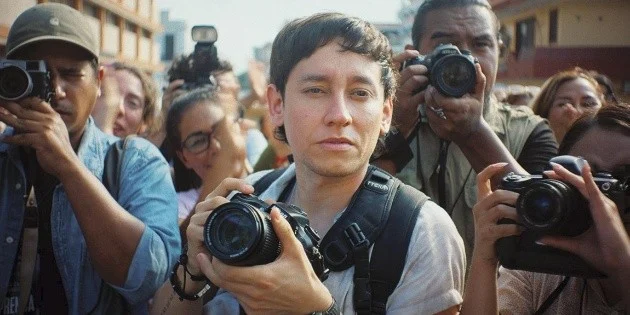
The nomination of J. Xavier Velasco’s debut feature, “Cocodrilos,” for six Ariel Awards has forcefully reignited a vital conversation surrounding the pervasive and often deadly violence faced by journalists in Mexico. The film’s recognition by the Academia Mexicana de Artes y Ciencias Cinematográficas serves not merely as an acknowledgment of its artistic merit but as a powerful spotlight on an issue that, far from receding, continues to plague the nation’s press. In an exclusive interview with EL INFORMADOR, Velasco, the film’s director and co-screenwriter, underscored the critical importance of these nominations in maintaining public discourse on a topic he wishes had long lost its relevance. "I would rather not have had to make this film. I wish the situation were different," Velasco lamented, encapsulating the somber reality that underpins his cinematic endeavor.
A Cinematic Mirror to Mexico’s Press Crisis
“Cocodrilos,” a gripping journalistic thriller set against the fraught backdrop of Veracruz, plunges audiences into the harrowing journey of Santiago, a young photojournalist. His path is irrevocably altered when he inherits the unfinished investigation of his mentor, brutally murdered for her work. The narrative, while fictional, draws its chilling inspiration from the real-life cases of two prominent Veracruz journalists, Regina Martínez and Rubén Espinosa, whose assassinations sent shockwaves through Mexico’s media landscape and beyond. Martínez, a veteran correspondent for Proceso magazine, was found murdered in her home in Xalapa in April 2012, her death widely seen as retaliation for her investigations into corruption and organized crime. Espinosa, a photojournalist who had fled Veracruz for Mexico City due to threats, was tragically killed in August 2015, alongside four women, in a case that highlighted the failure of protective mechanisms for journalists at risk. These high-profile tragedies serve as the grim foundation upon which Velasco, alongside his sister, writer Magali Velasco, constructed a meticulously researched and emotionally resonant screenplay.
Velasco’s decision to tackle such a sensitive and dangerous subject through fiction, rather than a documentary, was a deliberate strategic choice aimed at maximizing audience reach. He posited that fictional narratives possess a unique ability to engage segments of the public who might otherwise shy away from the stark realities presented in documentaries. "It seems to me that it is the first film that truly tackles the issue head-on. Fiction gives us a very important opportunity to reach audiences that would not normally approach a documentary," Velasco explained, emphasizing the power of storytelling to foster empathy and understanding.
The overarching objective behind "Cocodrilos" is profoundly humanitarian: to combat the normalization of violence against journalists. Velasco articulated this mission with conviction: "One of my motivations is that violence is not normalized. In this specific case, that attacks against the press are not normalized." This statement resonates deeply in a country where the grim statistics of murdered and disappeared journalists often become mere numbers, risking desensitization among the populace. The film, therefore, acts as an urgent cinematic intervention, urging viewers to confront the human cost of silenced voices and unchecked aggression.
Crafting a Realistic Narrative: Research and Authenticity
The creation of "Cocodrilos" was underpinned by an extensive and empathetic research process. While the characters and plot are fictional, Velasco and his team delved deep into the lived experiences of journalists operating in high-risk environments and individuals grappling with other forms of systemic violence. This included direct engagement with members of Colectivo Solecito de Veracruz, a collective of mothers tirelessly searching for their disappeared loved ones in a state synonymous with enforced disappearances. These interactions were crucial in ensuring that the film’s portrayal of its characters and their circumstances avoided simplistic or stereotypical representations.
Velasco stressed the imperative of meticulous care in crafting these portrayals: "We had to be very careful not to victimize, not to caricature or make biased portraits. So, there was a research effort, conversations with journalists in Veracruz, conversations with searching mothers from Colectivo Solecito." This commitment to authenticity extended to depicting journalists not as one-dimensional heroes, but as complex individuals navigating immense pressure, doubt, fear, and personal limitations. "I was also interested in portraying this in different characters who are reporters or journalists. There is a search for realism, a naturalism," the director elaborated, aiming for a nuanced depiction that reflects the multi-faceted realities of the profession.
This pursuit of realism also dictated the film’s aesthetic and directorial choices. The camera work, predominantly hand-held, intentionally follows the protagonist, Santiago, throughout his investigation. This immersive technique is designed to place the spectator directly within Santiago’s subjective experience, allowing them to viscerally feel the escalating tension, fear, and danger as he uncovers increasingly perilous information. "A hand-held camera that follows the character all the time and aims to be the peephole through which the spectator is led hand-in-hand in the investigation, to have an immersive sensation, of feeling the fear and danger that the protagonist faces," Velasco explained, detailing how the visual language amplifies the film’s emotional impact.
The Ariel Nominations: Amplifying a Crucial Discourse
The announcement of "Cocodrilos" receiving six Ariel nominations is a significant milestone, not only for Velasco and his team but for the broader conversation about press freedom in Mexico. The Ariel Awards, often considered the Mexican equivalent of the Academy Awards, represent the highest honor in Mexican cinema. The film garnered recognition in key categories: Ópera Prima (Best First Work), Actor for Hoze Meléndez, Coactuación Femenina (Best Supporting Actress) for Arcelia Ramírez and Teresita Sánchez, Coactuación Masculina (Best Supporting Actor) for Manuel Cruz Vivas, and Efectos Visuales (Best Visual Effects).
Velasco expressed profound gratitude for the academy’s recognition. "I feel very honored that the film has received six nominations," he stated, acknowledging the prestige associated with the awards. Beyond personal accolades, he views these nominations as a crucial platform to re-center the narrative on the perils faced by Mexican journalists. He believes the recognition from the Academia Mexicana de Artes y Ciencias Cinematográficas provides an invaluable opportunity to keep this "current, sensitive, painful" issue at the forefront of national dialogue. The nominations lend the film an amplified voice, ensuring its message resonates across cultural and political spheres, potentially galvanizing greater awareness and action.
The Broader Context: A Nation Under Siege
Mexico consistently ranks among the most dangerous countries in the world for journalists, often surpassing active war zones in the number of media workers killed. Organizations such as Article 19, Reporters Without Borders (RSF), and the Committee to Protect Journalists (CPJ) have meticulously documented this crisis for years. According to Article 19, over 160 journalists have been murdered in Mexico since 2000, with a staggering impunity rate exceeding 90% for these crimes. This near-total lack of justice perpetuates a cycle of violence, emboldening perpetrators and instilling fear among those who dare to report on corruption, organized crime, and human rights abuses.
Veracruz, the state where "Cocodrilos" is set and where Regina Martínez and Rubén Espinosa met their tragic ends, has historically been one of the deadliest regions for journalists. Its strategic location, serving as a transit point for drug trafficking and a hub for political corruption, has made it a particularly perilous environment for investigative reporting. The intertwining of state actors, criminal organizations, and powerful economic interests often creates an impenetrable web of complicity, making it nearly impossible for journalists to work safely and for justice to be served.
Despite various government initiatives, such as the Federal Mechanism for the Protection of Human Rights Defenders and Journalists, the effectiveness of these measures remains a subject of intense debate and criticism. Many journalists and human rights advocates argue that the mechanism is underfunded, understaffed, and often fails to provide adequate protection, or worse, is compromised by the very entities it is meant to guard against. The systemic failure to protect journalists and prosecute their attackers not only silences individual voices but also severely undermines the public’s fundamental right to information, eroding democratic institutions and fostering a climate of fear and self-censorship.
Impact and Implications: Cinema as a Catalyst for Change
Velasco fervently hopes that "Cocodrilos" will transcend its role as mere entertainment to become a powerful catalyst for introspection and societal change. His vision extends to sparking a collective reflection on the violence against the press and, by extension, on the inherent right of citizens to access truthful, unfettered information. "One of my objectives is to generate reflection, to put the issue on the table, so that it is not normalized, so that it is not a matter of saying: ‘Oh, that’s just how it is. That’s what it’s like to be a journalist, that’s what attacks against the press are like, well, they’re part of the job.’ That’s not correct," he asserted, challenging the dangerous narrative that dismisses such violence as an occupational hazard.
The film actively contributes to a broader discussion about the accessibility of information and the courage required to investigate uncomfortable truths. It implicitly argues that a healthy democracy relies on a robust and independent press, capable of unearthing realities, no matter how inconvenient they may be for certain powerful groups. "It is important for people to reflect on our own right to information, to know the truth, however uncomfortable that truth may be and however inconvenient it may be for certain groups," Velasco added, underscoring the reciprocal relationship between journalistic integrity and an informed citizenry.
Notably, the conclusion of "Cocodrilos" eschews conventional Hollywood resolutions. Velasco revealed that the ending underwent multiple iterations during the scriptwriting phase, ultimately settling on a denouement that powerfully reinforces the film’s core message. This unconventional closure, he explained, deliberately deviates from simplistic heroic arcs to mirror the harsh, often unresolved realities of violence in Mexico. "What differentiates this story from a Hollywood story is that reality is heartbreaking, and we have to face that, but with an attitude of change," he explained, suggesting that true impact lies not in fictional closure but in inspiring real-world action and a commitment to systemic transformation. By refusing a neat, satisfying ending, the film challenges audiences to confront the ongoing nature of the problem and consider their own role in demanding change.
Release and Distribution: Bringing the Message to the Public
"Cocodrilos" commenced its theatrical run recently, with Velasco confirming its presence across a diverse range of screening venues. This strategic distribution plan aims to maximize its exposure to varied audiences across Mexico. The film is slated for screenings in major cinema chains such as Cinépolis, alongside more culturally oriented institutions like the Cineteca Nacional de las Artes, Cineteca FICG (Guadalajara International Film Festival), and Casa del Cine, as well as independent theaters like Tonalá. This multi-pronged release strategy is crucial for a film with such significant social commentary, ensuring it reaches both mainstream moviegoers and cinephiles who are often more attuned to independent and art-house productions. The widespread availability is vital for its message to permeate public consciousness and effectively contribute to the national dialogue it seeks to provoke. The success of its theatrical run will not only be measured in box office numbers but also in the conversations it ignites and the awareness it generates.
In essence, "Cocodrilos" arrives at a critical juncture for Mexico, a nation grappling with the profound implications of a suppressed press. The film, now amplified by its Ariel nominations, stands as a testament to the courage of those who report the truth and a poignant reminder of the urgent need to protect them. J. Xavier Velasco’s powerful debut is more than just a film; it is a cinematic plea for justice, a call to reject complacency, and a profound assertion of the fundamental right to information in a society yearning for truth.

0 Comments