
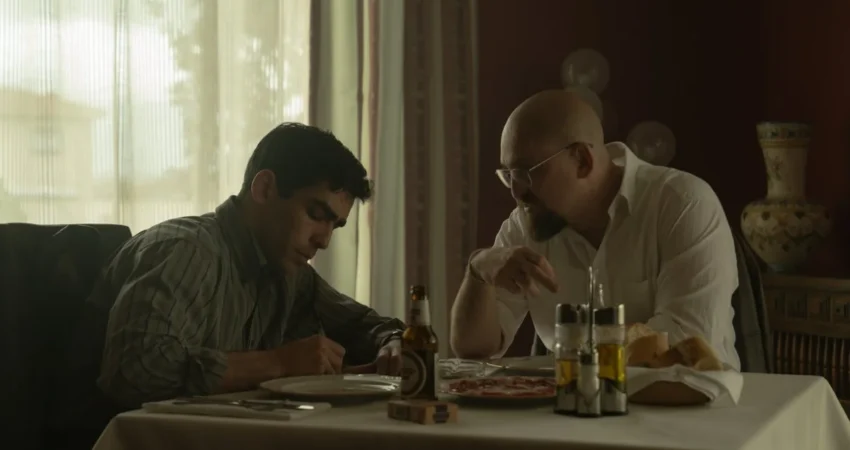
Movistar Plus+ is set to premiere "El Castillo" on October 8th, a gripping six-episode police procedural that meticulously reconstructs the real-life rise of the pimping mafia in Spain. The series, a brainchild of creators Isabel Peña and Eduardo Villanueva, will first grace the Official Section of the San Sebastián Festival, signaling its ambition to be recognized as significant cinematic work rather than mere streaming fodder. This premiere at a prestigious film festival underscores the series’ commitment to a serious, unvarnished portrayal of a deeply disturbing aspect of Spanish society.
From Non-Fiction to Gripping Drama: The Genesis of "El Castillo"
At its core, "El Castillo" is a direct adaptation of Mabel Lozano’s impactful non-fiction book, "El Proxeneta." This is not a narrative loosely inspired by true events, nor is it a thriller that merely uses prostitution as a backdrop. Instead, the series is a faithful translation of extensive journalistic investigation into the systematic construction of a sexual exploitation empire within Spain’s roadside clubs. Lozano’s work, which meticulously details the operations and impact of these criminal networks, provides the foundational research and narrative backbone for the series. The decision to adapt this specific book highlights a growing trend in television to tackle complex, real-world issues with a documentary-informed approach, aiming for authenticity and depth.
Thematic Threads: Police, Power, and Vulnerability
The series’ narrative unfolds through three intersecting storylines, each representing a crucial element of the grim reality it portrays: the police, the mafia, and the victim. We follow Gerardo Liesa, a newly appointed inspector at UCRIF (Central Unit for Illegal Immigration Networks and Document Forgery). Alongside his colleague Carmen Osés, Liesa begins to notice a disturbing shift within the brothels across Spain, hinting at a more organized and powerful criminal element at play.
Parallel to the investigation is the story of "Suizo," a pimp who, with his associates, controls numerous clubs where women trafficked from around the globe are systematically exploited. Caught between these two worlds is Claudia, an 18-year-old woman with a young son back in Colombia, whose perilous journey across the ocean is fueled by the desperate hope for a better future. This tripartite structure allows the series to explore the multifaceted nature of sexual exploitation, from the systemic corruption and criminal enterprise to the devastating personal toll on those ensnared within it. While the police procedural and crime drama archetypes are familiar, "El Castillo" carves out new territory by focusing on the specific and underrepresented phenomenon of organized prostitution and pimping in Spain, a subject that has seen surprisingly little serious fictional treatment on Spanish television.
A Creative Force: The Pedigree of the Creators
The names behind "El Castillo" carry significant weight in Spanish cinema and television, signaling a commitment to unflinching storytelling. Isabel Peña, a co-creator of the series, boasts an impressive writing resume that includes critically acclaimed works such as "Que Dios nos perdone" (God Forgive Us), "As Bestas" (Beasts), and "Antidisturbios" (Riot Police). Eduardo Villanueva, the other co-creator, has a strong background as a producer and co-writer, notably contributing to "Antidisturbios" and also serving as producer on "El ser querido" (The Beloved), a film that was shortlisted to represent Spain at the Academy Awards. This shared creative history suggests a consistent approach to tackling challenging themes with a distinctive, unvarnished perspective. Their previous collaborations are characterized by a willingness to delve into the complexities of power, social injustice, and the darker aspects of human behavior, implying that "El Castillo" will offer no easy answers or sanitized portrayals.
Directorial Vision: Rawness Without Spectacle

The principal direction of "El Castillo" is helmed by Elena Martín Gimeno, whose previous feature films, "Júlia ist" and "Creatura," have been lauded for their visceral and intimate explorations of the body, identity, and violence. Her work is marked by a physical and often uncomfortable directness, a style that aligns perfectly with the sensitive and harrowing subject matter of "El Castillo." She is joined by co-director Sandra Romero, known for her work on "Se tiene que morir mucha gente" (Many People Have to Die) and "Por donde pasa el silencio" (Where Silence Passes). Both directors share a cinematic sensibility that prioritizes authenticity and raw emotional impact over sensationalism, a crucial approach for a series that aims to expose the brutal realities of sexual exploitation without resorting to gratuitous spectacle. This directorial pairing promises a nuanced and deeply human perspective on the characters and their experiences.
A Stellar Ensemble Cast: Proven Talent and Daring Newcomer
Leading the cast is Raúl Arévalo, an actor whose performance in "Antidisturbios" already established his formidable ability to embody the grit and intensity required for a hard-hitting police drama. His presence in "El Castillo" promises a compelling portrayal of a law enforcement officer navigating a morally complex and dangerous investigation.
He is joined by Omar Ayuso, a familiar face to audiences from the popular series "Élite," who also recently starred in "Silencio" (Silence). Ayuso’s transition into more dramatic roles demonstrates a growing versatility and willingness to engage with challenging narratives. Laia Marull, a highly respected actress, brings her considerable talent to the series. Her devastating performance in "Te doy mis ojos" (Take My Eyes) remains a benchmark for raw emotional depth in recent Spanish cinema, and her participation in "La Mesías" (The Messias) further solidifies her reputation as a formidable screen presence.
A particularly noteworthy casting decision is the debut of Valentina Vidal in one of the four main roles. With no prior acting credits, Vidal’s selection by Peña, Villanueva, and Martín Gimeno signals a deliberate creative choice to prioritize authenticity and raw talent over established fame. This casting choice speaks volumes about the production’s commitment to finding actors who can embody the complex emotional landscape of the series, suggesting a search for a genuine connection to the characters and their plight, rather than a purely media-driven acquisition.
The supporting cast is equally impressive, featuring Marc Rodríguez, Claudio Villarrubia, Miguel Torrecilla, Rubén Martínez, Ángela Boix, and Ana Ruano. Several of these actors have prior connections to the creators’ previous works, including Martínez who appeared in "Antidisturbios," Ruano in "El ser querido," and Rodríguez in "La estrella azul" (The Blue Star). This recurring collaboration suggests a shared artistic vision and a trust in these actors to bring depth and nuance to their roles, further reinforcing the series’ commitment to quality storytelling.
Production and Format: Precision and Purpose
"El Castillo" is a production of Caballo Films and Mafalda Entertainment, in collaboration with Movistar Plus+. The series is structured into six episodes, each approximately fifty minutes in length. This concise format suggests a deliberate approach to storytelling, aiming for a tightly woven narrative that avoids unnecessary padding and maintains a consistent pace. The intention is to deliver a potent and impactful viewing experience, ensuring that the story’s gravity is felt without overextension.
San Sebastián Premiere: A Statement of Intent
The decision for "El Castillo" to premiere in the Official Section of the San Sebastián Festival before its platform release is a significant statement of intent. It elevates the series beyond typical streaming content, positioning it as a work of cinematic merit. The festival selection acknowledges the series’ artistic ambition and its potential to engage in meaningful dialogue about critical social issues. This strategic move underscores the creators’ desire for "El Castillo" to be viewed and discussed as serious cinema, albeit in a television format. The anticipation is palpable as the premiere date approaches, with audiences and critics alike eager to see if the small screen can effectively contain the raw power and profound implications of the material presented. The series faces the challenge of not only depicting the grim realities of sexual exploitation but also doing so in a way that is both artistically compelling and socially responsible, a task for which its creators and directors appear exceptionally well-equipped. The success of "El Castillo" could pave the way for further ambitious explorations of difficult subjects within the Spanish audiovisual landscape.

0 Comments