
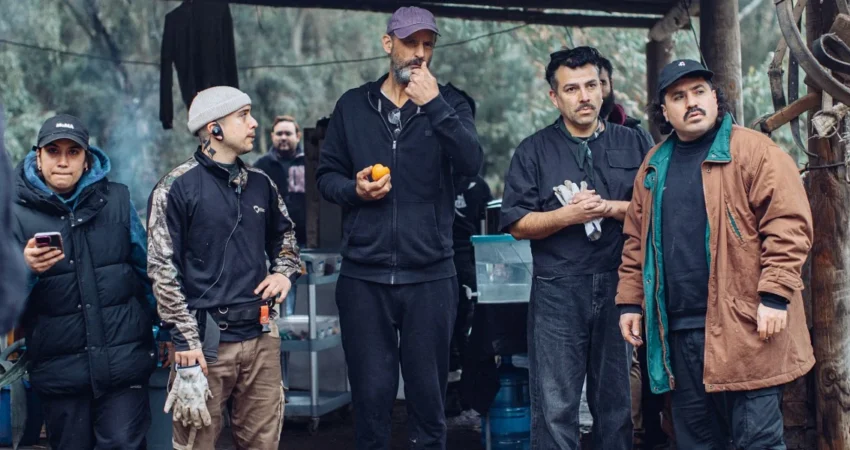
The production of "El pájaro," the third feature film by acclaimed Chilean director Tomás Alzamora, successfully concluded its principal photography phase in late July. This new cinematic endeavor follows Alzamora’s previous successes, "Mentirita blanca" and "Denominación de Origen," marking a significant milestone in the director’s career as he delves into the intersection of folklore and social realism. Filmed entirely on location within the commune of San Carlos, located in the Ñuble Region of central-southern Chile, the project is now transitioning into the critical stages of post-production, editing, and international distribution strategy.
The filming schedule was executed over a concentrated 14-day period, a timeline that required rigorous planning and coordination from the production team. Despite the brief window, the project managed to capture the atmospheric essence of the Chilean countryside, utilizing the natural landscapes and local architecture of San Carlos to ground its narrative. Currently, the production is actively seeking additional financing and strategic partners to ensure the film meets the technical standards required for its upcoming festival circuit run and eventual theatrical release.
From Mythology to Social Realism: The Origins of El pájaro
The conceptual journey of "El pájaro" began with an original idea by filmmaker Catalina Rayen. Rayen’s initial vision centered on the "Tue-Tue," a prominent and feared creature within Mapuche mythology. In traditional lore, the Tue-Tue is often described as a powerful sorcerer who transforms into a bird—specifically a "chonchón"—by detaching its head, which then flies through the night emitting a distinctive, ominous cry. This myth is deeply embedded in the collective consciousness of rural communities across southern and central Chile, often serving as a cautionary tale or an explanation for misfortune.
Following Rayen’s departure from the project, Tomás Alzamora took over the directorial reins, evolving the script to reflect his signature style of blending local identity with universal human experiences. Under Alzamora’s guidance, the project secured a pivotal grant from the Regional Government of Ñuble. This financial support was instrumental in allowing the production to remain rooted in the region, fostering a sense of authenticity and providing economic opportunities for the local community during the shoot.
Extensive Fieldwork and Community Integration
A distinguishing feature of the pre-production phase for "El pájaro" was the extensive ethnographic research conducted by the filmmaking team. In an effort to move beyond a superficial portrayal of rural life, Alzamora and his crew interviewed more than one hundred residents of the San Carlos rural sectors. These conversations served a dual purpose: they provided a rich tapestry of firsthand accounts regarding the Tue-Tue myth and offered profound insights into the contemporary challenges facing rural populations.
The research revealed that while the legend of the bird-sorcerer remains a potent cultural symbol, the true "terrors" of rural life are often more grounded in socio-economic reality. The interviews highlighted recurring themes of profound loneliness, the fragility of mental health in isolated areas, and the physical and psychological toll of geographic disconnection. By integrating these real-world anxieties into the narrative framework of a genre-leaning film, Alzamora aims to create a work that resonates on both a cultural and emotional level.
A High-Profile Technical and Creative Team
To bring this vision to life, Alzamora assembled a team of seasoned professionals known for their contributions to contemporary Latin American cinema. The production is a joint effort between Alzamora and producer Pablo Calisto through their company, Equeco. This year marks the tenth anniversary of Equeco, a milestone that coincides with the company’s increasing influence in both domestic and international markets.
The technical crew includes:
- Sergio Armstrong (Director of Photography): Known for his frequent collaborations with director Pablo Larraín on films such as "No," "Neruda," and "The Club," Armstrong brings a sophisticated visual language to "El pájaro." His expertise in capturing the nuances of light and shadow is expected to play a crucial role in establishing the film’s "rural horror" atmosphere.
- Nicolás Oyarce (Art Director): Oyarce is tasked with creating a visual world that balances the mundane reality of rural poverty with the eerie, supernatural elements of Mapuche folklore.
- Bernardo Quesney (Script Advisor): A respected director and writer in his own right ("Historia y Geografía"), Quesney provided critical feedback on the narrative structure, ensuring that the film’s thematic transitions between reality and myth remain seamless.
The Director’s Vision: Redefining Rural Terror
In his directorial notes, Tomás Alzamora reflects on the personal connection he shares with the film’s setting and subject matter. Having grown up in San Carlos, the director was immersed from a young age in the oral traditions of the region, which included tales of the devil, UFO sightings, the "Widow" (La Viuda), and the Tue-Tue.
"I started to think that there was a very interesting relationship between that mythology and certain absolutely real fears," Alzamora stated in a recent dialogue with LatAm cinema. He posits that the essence of rural terror is not necessarily found in a monster or a supernatural apparition, but in the crushing weight of isolation. "Terror can also be found in spending a winter locked away, without work, without money, without food, or without transportation. That reality can be deeply distressing."
This perspective aligns "El pájaro" with the burgeoning "folk horror" subgenre, which often uses ancient traditions and isolated settings to explore modern psychological states. However, Alzamora’s approach is distinctly Chilean, focusing on the "angustia" (anguish) inherent in the country’s neglected rural peripheries.
Equeco: A Decade of Growth and International Expansion
The production of "El pájaro" serves as a centerpiece for Equeco’s tenth-anniversary celebrations. Founded by Alzamora and Calisto, the company has established a reputation for producing films that prioritize regional identity without sacrificing international appeal. Their previous collaboration, "Denominación de Origen," was a critical success, earning the Audience Award at the Valdivia International Film Festival and the Best Direction award at the Buenos Aires International Festival of Independent Cinema (BAFICI).
In recent years, Equeco has expanded its horizons through international co-productions. A notable example is "Il Cileno," directed by Sergio Castro San Martín, which recently made its debut at the prestigious Locarno Film Festival. The company’s current slate also includes:
- "Hijas únicas": The debut feature by Alba Gaviraghi, currently in the final stages of preparation for its release.
- New Project with Bernardo Quesney: A collaborative feature currently in development, following the success of "Historia y Geografía."
This trajectory suggests that "El pájaro" is part of a broader movement within Chilean cinema to decentralize production and elevate stories from outside the capital, Santiago.
Regional Impact and the Future of Ñuble Cinema
The decision to film "El pájaro" in San Carlos is indicative of a growing trend in the Chilean film industry toward regionalism. By utilizing local talent and resources, the production has contributed to the professionalization of the audiovisual sector in the Ñuble Region. The support from the Regional Government underscores the recognition of cinema as both a cultural asset and an economic driver.
As the film enters the post-production phase, the focus shifts to securing the necessary resources for high-end sound design, color grading, and visual effects—elements that are essential for a film dealing with mythological themes. The production team is also looking toward the 2025 festival season, with the goal of securing a premiere at a major international venue to facilitate global distribution.
Implications for the Chilean Film Industry
The success of "El pájaro" will be a significant indicator of the health of independent cinema in Chile. In a landscape often dominated by large-scale commercial productions or Santiago-centric dramas, Alzamora’s work represents a vital alternative. By bridging the gap between genre cinema (horror/thriller) and social commentary, the film has the potential to attract a wide audience while maintaining its artistic integrity.
Furthermore, the film’s exploration of mental health and isolation in rural areas arrives at a time when these issues are increasingly at the forefront of national discourse. "El pájaro" promises to be more than just a ghost story; it is a cinematic reflection on the vulnerabilities of the human condition when stripped of the safety nets of modern urban life.
With a powerhouse technical team, a director deeply connected to the source material, and a production company at the height of its creative powers, "El pájaro" stands as one of the most anticipated Chilean films currently in development. As it moves through the final stages of its journey toward the screen, it carries with it the stories and fears of the San Carlos community, transformed into a universal narrative of survival and myth.

0 Comments