

As the global beauty and personal care industry transitions into the final quarters of the fiscal year, a significant shift in consumer olfactory preferences has become increasingly apparent. Moving away from the heavy, often polarizing woody compositions that have dominated the winter market for the past decade, the 2024-2025 autumn season is characterized by a "Luminous Gourmand" trend. This movement prioritizes balance, utilizing traditional base notes like cedar, oud, and cashmeran not as dominant protagonists, but as structural anchors that prevent sweeter, "edible" accords—such as vanilla, caramel, and coffee—from becoming cloying or juvenile. This evolution reflects a broader cultural shift toward "quiet luxury" and sophisticated comfort, where fragrances are expected to provide a sense of envelopment and warmth without sacrificing elegance or professional versatility.
The Evolution of the Autumn Fragrance Market: From Heavy Woods to Balanced Creams
The fragrance industry has undergone a radical transformation in its approach to seasonal scents. Historically, the transition from summer to autumn signaled a move toward high-concentration "Parfum" or "Extrait" versions of scents, often leaning heavily on resinous, smoky, and animalic notes. However, market data from the first half of 2024 suggests that modern consumers, particularly in the niche and prestige sectors, are seeking "transparency" in their scents.

The current trend, often referred to by industry experts as "Gourmand 2.0," focuses on high-quality raw materials that evoke culinary experiences—specifically the "latte" or "creamy" profile—while maintaining a sophisticated, dry wood finish. This allows the wearer to project a sense of approachability and warmth. The five fragrances highlighted in this report represent the pinnacle of this technical balance, blending the artisanal heritage of European perfumery with modern, minimalist sensibilities.
Analytical Profile: Montale Ristretto Intense Café
At the forefront of the coffee-centric movement is Montale’s Ristretto Intense Café. Founded by Pierre Montale, a perfumer known for his deep ties to Middle Eastern olfactory traditions, the brand has long been a leader in the use of oud and rose. However, Ristretto Intense Café represents a more focused, Italian-inspired iteration of their original best-seller.
The technical composition of this fragrance is designed to mimic the olfactory experience of a concentrated espresso shot. The top notes feature a sharp, roasted coffee bean accord that immediately commands attention. Unlike its predecessor, the "Ristretto" version increases the concentration of the coffee note, allowing it to remain present throughout the life of the fragrance. As the scent develops, a heart of velvety rose emerges, acting as a bridge between the bitterness of the coffee and the sweetness of the base. The dry-down is a masterclass in stability, utilizing white musk, amber, and vanilla to create a "latte" effect that lasts upwards of ten hours on the skin. Retailers such as Perfumería Júlia currently list the 100ml flacon at approximately 170 euros, positioning it as a premium entry in the niche market.

The Rise of Niche Provocation: BORNTOSTANDOUT’s Sugar Addict
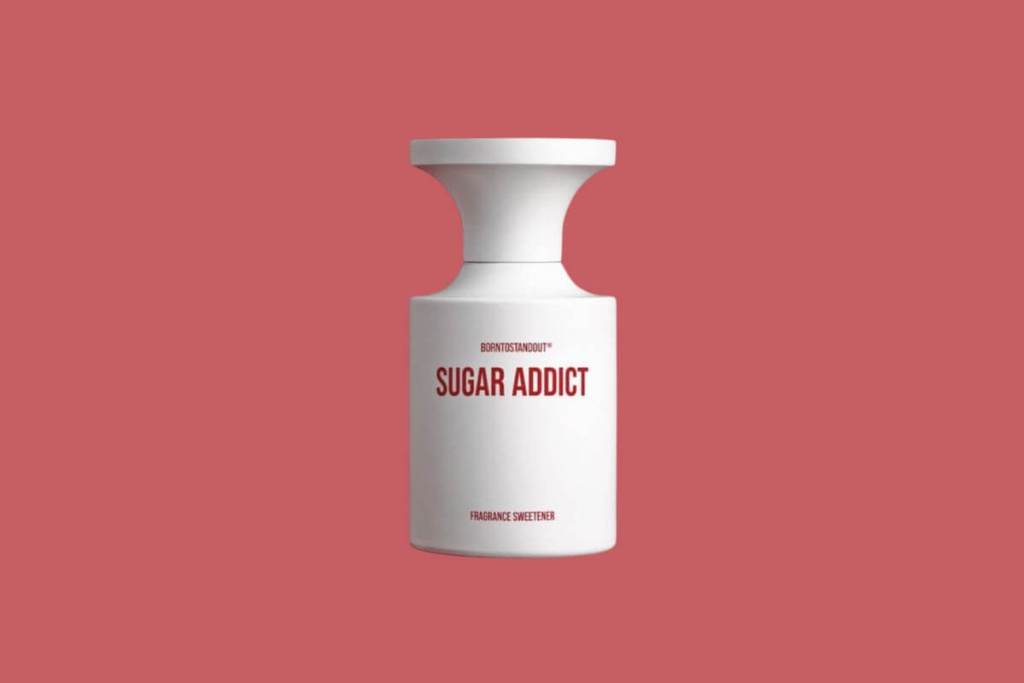
The South Korean fragrance house BORNTOSTANDOUT has rapidly gained international traction by challenging traditional perfumery norms. Their offering, Sugar Addict, serves as a case study in the "Extreme Gourmand" category, yet it avoids the pitfalls of synthetic sweetness through a complex layering of resins and woods.
The fragrance opens with a crystalline sugar accord, immediately followed by the richness of cacao absolute and tonka bean. In a standard commercial fragrance, this combination might result in an overly sweet profile. However, perfumer Frank Voelkl introduces a sophisticated "dark" layer in the base. By incorporating rum, labdanum, and cashmere wood, the fragrance gains a resinous, slightly boozy depth that grounds the sugar. This contrast is essential for the modern consumer who desires the comfort of sweet notes but requires the longevity and "edge" provided by woody fixatives. Priced at 280 euros for 100ml, it represents the high-end niche segment where ingredient purity is the primary selling point.
Cultural Integration and Floral Sophistication: Shiseido Ginza Night
In the prestige designer sector, Shiseido continues to leverage its Japanese heritage to create scents that emphasize "Ma"—the Japanese concept of negative space or balance. Ginza Night, the latest intense iteration of the Ginza line, explores the intersection of nocturnal florals and creamy woods.

The fragrance trajectory begins with fruit-forward top notes of blackcurrant and mandarin, providing a juicy, vibrant opening that mimics the neon lights of Tokyo’s Ginza district. The heart is a traditional white floral bouquet—gardenia, lily, and jasmine—which provides a "creamy" texture without relying solely on edible notes. The true innovation lies in the base, where vanilla is paired with a sharp, clean cedarwood. This prevents the vanilla from becoming "powdery" and instead maintains a sleek, professional finish. At a price point of approximately 72.94 euros for 50ml, Shiseido targets a broader demographic, offering a sophisticated "entry-to-niche" experience.
Olfactory Memory and the "Replica" Concept: Maison Margiela Coffee Break
Maison Margiela’s Replica series has revolutionized the marketing of fragrance by focusing on "scents of memories." Coffee Break is specifically engineered to recreate the atmosphere of a cozy café in Stockholm during a cold winter day.
The technical challenge of Coffee Break was to balance the warmth of a hot beverage with the "cold" air of the outdoors. To achieve this, the composition utilizes a surprising top note of lavender and spearmint. This creates a fresh, almost metallic opening that simulates the winter chill. As the fragrance warms on the skin, the "milk mousse" accord and coffee notes emerge, softened by a base of sandalwood and Virginia cedar. This fragrance is notably lighter than the Montale offering, making it an ideal choice for office environments where heavy sillage might be inappropriate. It is currently available at major retailers like Sephora for 149 euros (100ml).

The Artistic Edge: State of Mind Modern Nomad
For the connoisseur seeking a more avant-garde approach, Modern Nomad by State of Mind offers a complex narrative of travel and introspection. This fragrance is less about the "café" and more about the "ritual" of tea and smoke, balanced by a creamy undercurrent.
The composition is built around Hojicha (roasted Japanese green tea) and rose, creating a smoky, floral opening that is distinct from the typical autumn spice profile. The transition into the heart of amber and patchouli provides a classic woody foundation, but it is the base of leather, oud, and vanilla that defines its character. The vanilla here is used sparingly to "round off" the sharp edges of the leather and oud, resulting in a fragrance that is powerful yet surprisingly smooth. Available via the brand’s official channels for 255 euros, it caters to a demographic that values exclusivity and storytelling.
Market Data and Consumer Psychology: Why "Creamy Woods" Matter
The success of these five fragrances is not accidental. According to recent market reports from firms like McKinsey & Company, the "Fragrance Index"—a phenomenon where consumers invest in small luxury items like perfume during economic uncertainty—has seen a 10% year-over-year growth. Consumers are increasingly viewing fragrance as a form of "self-care" and "emotional regulation."
The preference for creamy, woody notes is deeply rooted in psychology. Vanilla and milk accords are often associated with early childhood comfort and safety, while woody notes like cedar and sandalwood are linked to nature and grounding. By combining these two elements, perfumers are creating "protective" scents that act as an olfactory shield against the stresses of modern life and the harshness of the winter climate.
Technical Analysis of Key Ingredients
To understand why these fragrances are redefining the season, one must look at the molecular level of their key ingredients:
- Ethyl Vanillin: A synthetic molecule that is significantly more potent than natural vanilla. It provides the "creamy" backbone in Ginza Night and Sugar Addict without the smoky baggage of natural vanilla beans.
- Iso E Super: A common woody aromatic chemical used to provide "velvet" textures and longevity. It is likely the silent hero in the Replica and Montale compositions, giving them their diffusive power.
- Terpenes in Coffee Oil: These provide the realistic "roasted" scent. The challenge for perfumers is preventing these from smelling "burnt," which is why they are often paired with lactones (milky notes).
Broader Impact and Future Outlook
The shift toward these "Enveloping Gourmands" suggests that the fragrance industry is moving away from the era of "beast mode" fragrances—scents designed solely for maximum projection and attention. Instead, the focus has returned to the personal experience of the wearer.

As we look toward 2025, we expect to see even more experimentation with "savory gourmands," incorporating notes like salted caramel, toasted grains, and even nut milks (almond and oat), all held together by the indispensable structural integrity of dry woods. The five fragrances analyzed here—Montale, BORNTOSTANDOUT, Shiseido, Maison Margiela, and State of Mind—are not merely seasonal products; they are the precursors to a new era of balanced, sophisticated, and emotionally resonant perfumery. For the modern woman, these scents offer a way to navigate the colder months with a sense of warmth, light, and unwavering elegance.

0 Comments