
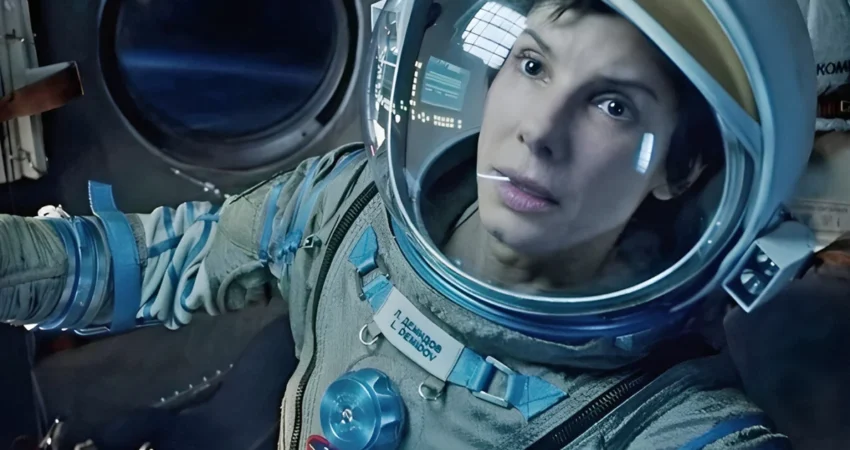
The cinematic landscape of the 21st century has been defined by a handful of films that pushed the boundaries of what is possible on screen, and Alfonso Cuarón’s 2013 masterpiece, Gravity, stands at the forefront of this evolution. As of September 30, 2026, this seminal work of science fiction will depart the HBO Max streaming catalog, marking the end of its current availability on the platform. The film, which stars Sandra Bullock and George Clooney, remains a benchmark for technical achievement, narrative minimalism, and commercial success, having grossed over $723 million worldwide against a production budget of approximately $100 million. Its departure from streaming serves as a reminder of the shifting nature of digital licensing and the enduring legacy of a film that many critics and scientists alike consider a high-water mark for the genre.
The Genesis of a Technical Marvel
The production of Gravity was an arduous multi-year journey that required the invention of entirely new filmmaking technologies. Following the success of Children of Men (2006), director Alfonso Cuarón and his son, Jonás Cuarón, co-wrote a script that focused on the visceral experience of survival in the vacuum of space. However, the technology required to depict zero-gravity movement realistically did not exist at the time. This led to a lengthy development period where Cuarón collaborated with cinematographer Emmanuel Lubezki and the visual effects team at Framestore to create what would become the "Light Box."
The Light Box was a hollow cube fitted with thousands of tiny LED lights that allowed the filmmakers to simulate the complex lighting conditions of space. Sandra Bullock, who spent much of the production isolated inside this rig, was required to perform precise movements while being manipulated by a 12-wire system or a robotic arm. This innovative approach allowed for the seamless integration of live-action performances with digital environments, a feat that earned the film universal acclaim for its visual fidelity.
Narrative Structure and the Theme of Resilience
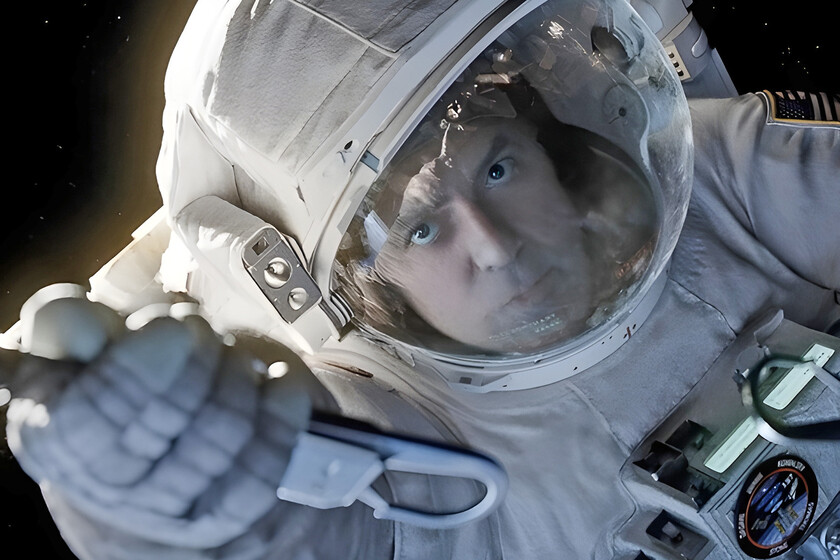
At its core, Gravity is a survival thriller characterized by its lean narrative and intense focus on character psychology. The story follows Dr. Ryan Stone (Bullock), a medical engineer on her first shuttle mission, and Matt Kowalski (Clooney), a veteran astronaut commanding his final flight. The plot is set in motion when a Russian missile strike on a defunct satellite triggers a chain reaction of debris—a real-world phenomenon known as the Kessler Syndrome. This disaster destroys their shuttle, leaving Stone and Kowalski tethered to each other and drifting into the void.
The film distinguishes itself from traditional science fiction by avoiding tropes such as extraterrestrial encounters or complex political subplots. Instead, it focuses on the internal journey of Dr. Stone. The vacuum of space serves as a metaphor for her personal grief and detachment following the loss of her daughter. As she navigates a series of increasingly perilous obstacles to reach the International Space Station (ISS) and later a Chinese Tiangong station, the film explores themes of rebirth and the human will to survive against insurmountable odds.
Technical Milestones and Sound Design
One of the most discussed aspects of Gravity is its use of long takes, a signature of Alfonso Cuarón’s directorial style. The opening shot of the film lasts approximately 17 minutes without a visible cut, transitioning from the vast silence of the orbital plane to the chaotic destruction of the mid-orbit collision. This technique immerses the audience in the real-time terror of the characters, creating a sense of claustrophobia despite the infinite setting.
Furthermore, the film’s sound design played a crucial role in its atmospheric success. Recognizing that sound does not travel in a vacuum, Cuarón and sound designer Glenn Freemantle opted for a non-traditional approach. Rather than using conventional explosions or engine roars, the film utilizes vibrations and muffled thuds as they would be heard through an astronaut’s suit. The musical score by Steven Price further complements this by using electronic textures and orchestral swells to convey the emotional weight of the vacuum, rather than relying on standard action-movie motifs.

Critical Reception and Award Success
Upon its release in late 2013, Gravity was met with near-universal praise from critics. It currently maintains a 96% approval rating on Rotten Tomatoes, with many reviewers highlighting its ability to combine blockbuster spectacle with intimate storytelling. The film’s impact was solidified during the 86th Academy Awards, where it received 10 nominations and won seven Oscars, including Best Director for Alfonso Cuarón, Best Cinematography for Emmanuel Lubezki, and Best Visual Effects.
The film’s success was not limited to critical circles; it was a massive commercial hit. Earning $274 million in North America and $449 million internationally, it proved that audiences were hungry for high-concept, original science fiction that prioritized tension and technical mastery over franchise recognition. In recent years, Gravity has been recognized by various institutions as one of the most important films of its era. A study by The New York Times included it in a list of the 100 best films of the 21st century, citing its role in redefining the "cinematic experience."
Scientific Accuracy and the Astronaut Perspective
While Gravity took certain creative liberties for the sake of drama—such as the proximity of different space stations and the specific mechanics of orbital maneuvering—it was lauded by the scientific community for its commitment to the "feel" of space. NASA astronauts, including Buzz Aldrin, praised the film for its depiction of the Earth from orbit and the challenges of moving in a zero-gravity environment.
The film’s portrayal of the Kessler Syndrome also brought public attention to the very real issue of space debris. As more satellites are launched into Low Earth Orbit (LEO), the risk of a catastrophic collision chain reaction becomes a significant concern for space agencies worldwide. By grounding its thrills in potential real-world physics, Gravity bridged the gap between Hollywood entertainment and scientific discourse.
Broader Impact on the Film Industry
The legacy of Gravity can be seen in the wave of "grounded" science fiction films that followed in its wake, such as The Martian (2015) and Arrival (2016). It demonstrated that the genre could be used to explore profound human emotions without the need for high-fantasy elements. Additionally, the film’s success paved the way for more ambitious technical projects, proving that investments in new filmmaking technologies could yield both artistic and financial dividends.
Alfonso Cuarón’s win for Best Director was also a historic moment, as he became the first Mexican filmmaker to win the award. This opened doors for a new generation of international directors to lead major Hollywood productions, further diversifying the voices behind the camera in mainstream cinema.
Final Call for Streaming
The removal of Gravity from HBO Max on September 30, 2026, represents a closing window for subscribers to revisit this modern classic in a high-definition streaming format. While the film will likely remain available through digital purchase or physical media, its departure from a major subscription service marks a transition in its digital lifecycle. For viewers who have yet to experience the tension of Dr. Ryan Stone’s journey or for those who wish to study Lubezki’s Oscar-winning cinematography once more, the coming week offers a final opportunity to do so within the HBO Max library.
As the industry moves further into the 2020s, Gravity remains a testament to the power of the theatrical experience and the possibilities of digital innovation. It is a film that demands attention, not just for its visual splendor, but for its quiet, unwavering belief in the resilience of the human spirit. Whether viewed as a technical exercise or a deeply personal drama, it continues to hold its place as a cornerstone of contemporary filmmaking.

0 Comments