
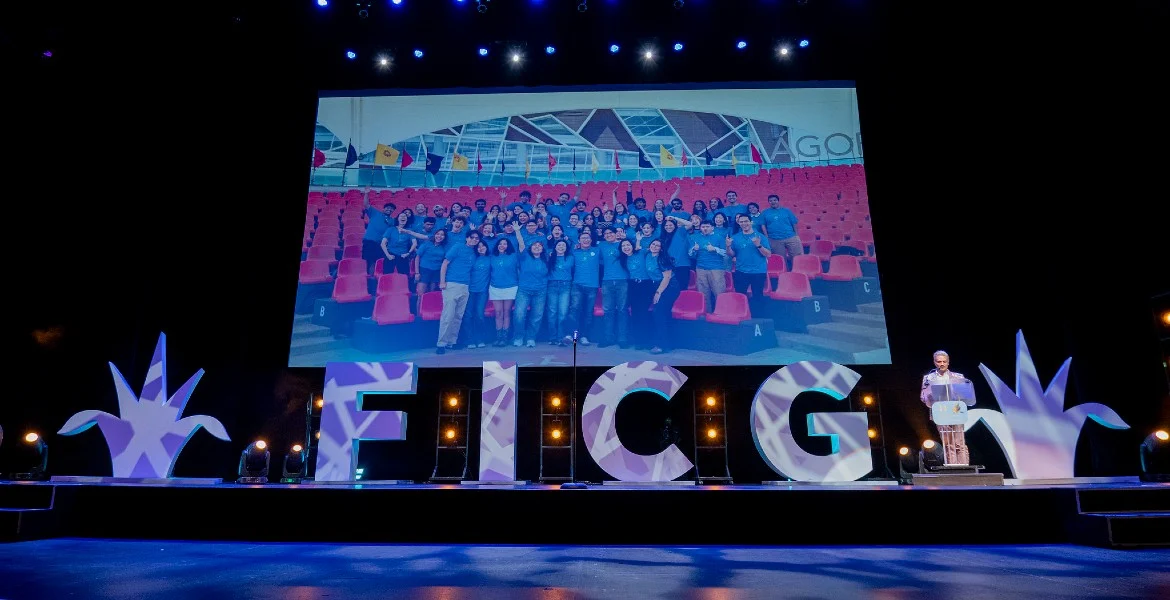
The international film circuit in Latin America has signaled the start of a new competitive cycle as two of the region’s most prestigious events, the Guadalajara International Film Festival (FICG) and the Santiago International Film Festival (SANFIC), officially opened their calls for entries. These announcements mark a critical juncture for filmmakers across Ibero-America and the globe, offering platforms for visibility, financial incentives, and a direct pipeline to the Academy of Motion Picture Arts and Sciences (AMPAS) in the United States. As the industry grapples with shifting distribution models, these festivals continue to serve as essential gatekeepers for regional talent and international prestige.
The Guadalajara International Film Festival: A Pillar of Mexican Cinema
The Guadalajara International Film Festival has officially initiated the call for its 42nd edition, scheduled to take place from March 6 to March 13. As the oldest and most significant film festival in Mexico, FICG has long been a barometer for the health of the national industry and a primary meeting point for Ibero-American creators. The upcoming edition continues its tradition of broad inclusivity, spanning multiple genres and formats.
The competitive categories for the 42nd edition are extensive. They include feature-length competitions for Mexican, Ibero-American, and International cinema, covering fiction, documentary, and animation. Beyond the standard categories, FICG maintains its commitment to social and thematic diversity through the Premio Maguey, which focuses on queer and LGBTQ+ narratives. This particular award has gained international recognition for highlighting stories that challenge traditional gender roles and advocate for human rights within the Latin American context.
Furthermore, the festival reinforces its local roots through the "Hecho en Jalisco" (Made in Jalisco) section, dedicated to the burgeoning film industry in the state of Guadalajara. The Socio-environmental Film Award also remains a staple, rewarding works that address the urgent ecological crises and sustainability challenges facing the modern world. In the short film department, the festival is seeking Ibero-American fiction and documentary works, as well as international animation projects for the prestigious Rigo Mora Award.
Technical Requirements and Strategic Deadlines for FICG
Filmmakers looking to participate in the 42nd FICG must adhere to a strict set of eligibility criteria. According to the official regulations, productions must have been completed between 2026 and 2027—a timeline that emphasizes the festival’s focus on the absolute vanguard of cinematic production. A key requirement for selection is the premiere status; works must secure either their Mexican or Latin American premiere during the festival, depending on the specific category and the origin of the production.
The festival has implemented a tiered submission process to encourage early entries. Participation is free of charge for those who submit their works by August 20. Following this early-bird period, the deadline for short films is set for October 16, while feature-length films have until October 31 to complete their applications. These deadlines are crucial for production houses and independent directors who utilize Guadalajara as a springboard for further international festival runs.
Financial Incentives and the Pathway to the Oscars
One of the most compelling aspects of the Guadalajara International Film Festival is its substantial prize pool and its relationship with the American Academy of Motion Picture Arts and Sciences. For the 42nd edition, the festival has announced incentives of up to 500,000 Mexican pesos (approximately $27,000 USD) for winning feature films. Short films are eligible for prizes of up to 200,000 Mexican pesos (approximately $11,000 USD). These figures represent significant support in a region where post-production and distribution funding can be difficult to secure.
Beyond the financial rewards, the FICG serves as a vital qualifying event for the Academy Awards. Three specific categories—the Ibero-American Documentary Feature, the Ibero-American Short Film, and the Rigo Mora International Animation Short Film Award—are recognized by AMPAS. This means that the winning films in these categories automatically become eligible for consideration for the Oscars, bypassing the standard requirement for a commercial theatrical release in the United States. This "Oscar-qualifying" status elevates the festival’s global standing and attracts high-caliber entries from across the international animation and documentary communities.
SANFIC 22: Strengthening the Southern Cone’s Cinematic Identity
While Guadalajara prepares for its March dates, the Santiago International Film Festival (SANFIC) in Chile has also opened its call for entries for its 22nd edition, which will run from November 2 to November 8, 2025. Organized by the CorpArtes Foundation and produced by Storyboard Media, SANFIC has established itself as one of the most important cultural events in Chile and a vital stop on the South American festival circuit.
The 22nd edition of SANFIC will feature three main official competitions: the International Competition, the Chilean Cinema Competition, and the National Talent Short Film Competition. The festival’s mission is to provide a space for both established directors and emerging voices, fostering a dialogue between local Chilean talent and the global film community.
The submission window for SANFIC is open until August 14, 2024. The festival accepts works that were completed after February 1, 2025. In an effort to support the local industry, registration is free for Chilean productions. International submissions, however, are subject to a fee of $30 USD. Similar to FICG, SANFIC prioritizes films that will be celebrating their national or international premieres in Santiago, ensuring that the festival remains a site of discovery for critics and audiences alike.
Legacy and Recent Successes at SANFIC
The prestige of SANFIC is reflected in the high quality of its past winners. In the most recent edition, the award for Best Film in the International Competition went to "Un poeta" by Colombian director Simón Mesa. Mesa also shared the Best Director award with Spanish filmmaker Carlos Marqués-Marcet, who was recognized for his work on "Polvo serán." These wins highlight the festival’s role in elevating Ibero-American cinema that blends personal narrative with rigorous aesthetic exploration.
In the domestic sphere, the Chilean Cinema Competition continues to be a launchpad for local creators. The last edition saw "Al sur del invierno está la nieve," directed by Sebastián Vidal Campos, take home the prize for Best Film. Meanwhile, Silvina Schnicer was honored with the Best Director award for "La Quinta." These accolades not only provide professional validation but also assist in securing distribution deals both within Chile and in foreign markets.
Comparative Chronology and Industry Impact
The synchronization of these two major festivals—one in the North and one in the South of the Spanish-speaking Americas—creates a comprehensive calendar for the industry. While FICG acts as a gateway to the North American and Mexican markets in the spring, SANFIC provides a crucial year-end platform in the Southern Cone.
Timeline of Key Dates:
- August 14: Deadline for SANFIC 22 submissions.
- August 20: Deadline for free registration at FICG 42.
- October 16: Deadline for short film submissions at FICG 42.
- October 31: Deadline for feature film submissions at FICG 42.
- November 2–8, 2025: SANFIC 22 takes place in Santiago, Chile.
- March 6–13, 2026/2027: FICG 42 takes place in Guadalajara, Mexico.
The implications of these festivals extend beyond the screening rooms. For the host cities, these events generate significant economic activity in the tourism and hospitality sectors. For the filmmakers, the "Industry" sections of these festivals—such as Guadalajara’s "FICG Industria"—offer co-production meetings, works-in-progress screenings, and networking opportunities with sales agents and distributors. In an era where streaming platforms dominate the viewing experience, the curated environment of a festival remains the primary venue for artistic prestige and the cultivation of "cinephile" culture.
Analysis of the Evolving Festival Landscape
The continued growth of FICG and SANFIC suggests a resilient regional industry despite economic fluctuations in Latin America. The inclusion of specialized awards like the Premio Maguey and the Socio-environmental award at FICG indicates a shift toward cinema as a tool for social advocacy. Furthermore, the emphasis on animation, particularly through the Rigo Mora Award, reflects Mexico’s rising status as a global hub for the medium, bolstered by the success of figures like Guillermo del Toro, who was instrumental in the festival’s founding.
For SANFIC, the focus on "National Talent" ensures that the Chilean "New Wave," which gained international fame with directors like Pablo Larraín and Sebastián Lelio, continues to have a pipeline of fresh voices. By maintaining an affordable and accessible entry process, SANFIC ensures that financial barriers do not prevent the next generation of Chilean filmmakers from reaching the world stage.
As the deadlines approach, the international film community turns its attention to these two hubs. The selection process will determine the narrative trends and aesthetic directions of Ibero-American cinema for the coming years. With the added incentive of Oscar eligibility and substantial cash prizes, the competition for a spot in the official selections of FICG and SANFIC is expected to be more rigorous than ever, reinforcing their status as the twin pillars of the region’s cinematic ecosystem.

0 Comments