
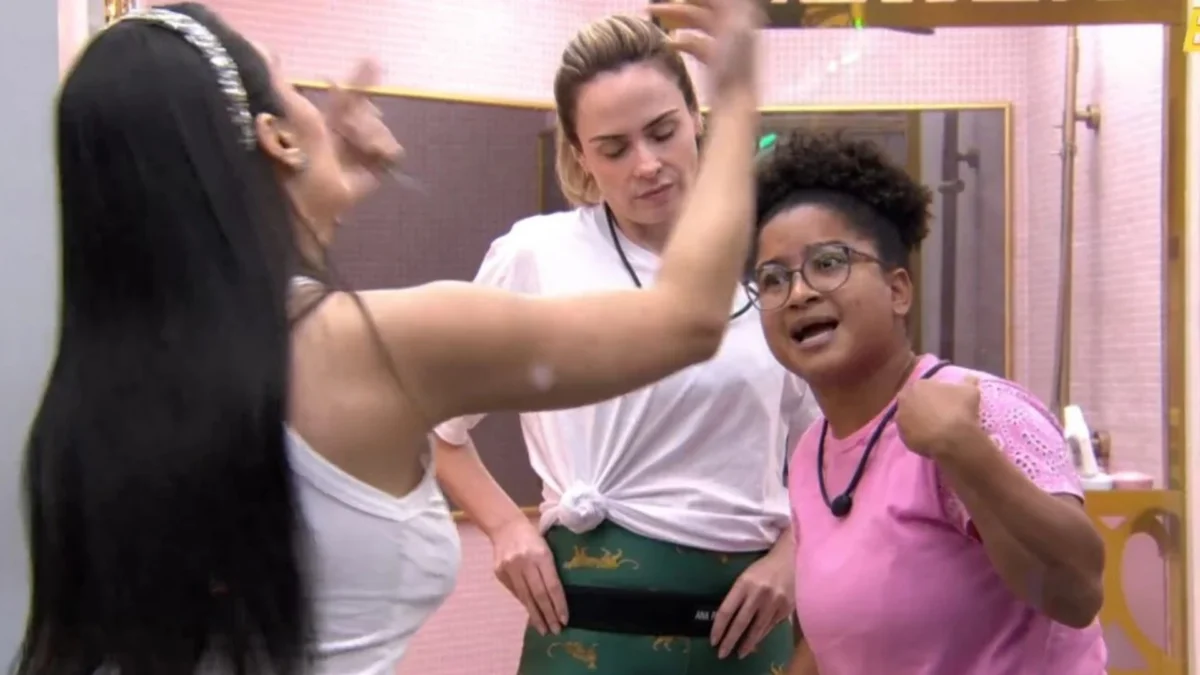
On Saturday (11), a pivotal conversation unfolded among housemates Ana Paula Renault, Juliano Floss, and Milena, centering on the evolving and increasingly contentious behavior of Jordana during her "Castigo do Monstro" (Monster Punishment). The discussion revealed a growing frustration with Jordana’s perceived tactical shifts, culminating in Ana Paula’s declaration of an intention to occupy Jordana’s bed should the lawyer re-enter her room uninvited. This exchange brought to light deeper tensions within the house, exposing strategic maneuvering and the psychological toll of the competition.
The Genesis of Discontent: Jordana’s Evolving Posture
The initial phase of Jordana’s Monster Punishment was characterized by what housemates described as an overtly "goody-two-shoes" demeanor, a stark contrast to her current conduct. Milena, a keen observer of house dynamics, was among the first to articulate this shift. "She realized that the ‘nice’ Monster didn’t suit her," Milena commented during the discussion, adding, "because she started off very sweet." This observation points to an initial attempt by Jordana to navigate the punishment with a softer approach, perhaps aiming to mitigate negative perceptions or avoid further conflict.
Juliano Floss, a dancer known for his astute observations of social dynamics within the confines of the reality show, readily agreed with Milena’s assessment. "She said, ‘Hmm, let’s change the strategy,’" Floss remarked, suggesting a conscious decision by Jordana to alter her approach. This sentiment underscores the perception among her peers that Jordana’s actions are not merely spontaneous reactions but calculated moves designed to serve her strategic interests in the game. The "Monster Punishment," a recurring feature in the program, typically involves a designated housemate undertaking specific, often inconvenient or uncomfortable tasks, frequently impacting their sleep or social interactions. While intended as a penalty, its execution often becomes a crucible for strategic gameplay, testing patience and revealing character.
Ana Paula Renault, a seasoned participant in reality television known for her directness, offered her own interpretation of Jordana’s change of heart. "She lay down and said, ‘Guys, I’m not in the Paredão [nomination round],’" Ana Paula conjectured, implying that Jordana’s initial "niceness" was predicated on a fear of immediate elimination. "The persecuted one here doesn’t… she went and already came back," Ana Paula concluded, suggesting a swift return to a more confrontational or assertive persona once Jordana felt secure from the immediate threat of nomination. This analysis posits that Jordana’s behavior is directly linked to her perceived vulnerability or safety within the game, highlighting a highly strategic mindset.
Chronology of Provocations and Housemate Reactions
The conversation delved into specific instances that solidified the housemates’ perception of Jordana’s strategic shift. Milena recounted the early days of the punishment: "She started all nice, the ‘Boneco’ [another housemate, possibly referring to a specific role or nickname] was sleeping, and she entered the room without knocking." Ana Paula corroborated this, recalling that Jordana even offered a "good night" to the brothers upon entering, a gesture that, in hindsight, appeared performative.
However, this facade of politeness soon crumbled. Milena detailed a specific act of perceived defiance by Jordana: "‘I’m not in the Paredão because I’m pretending to be nice’? Well, I came here around 4 AM. I got up, went there, turned on the light, and bang on the door." This direct confrontation by Milena illustrates the escalating tensions and the housemates’ growing intolerance for what they view as disingenuous behavior. Juliano Floss expressed his own desire to replicate Milena’s tactic but noted that Jordana had awoken prematurely, thwarting his plan. "She got up and came to the kitchen; otherwise, I would have kept opening and closing [the door]," he stated, indicating a shared intent among the trio to disrupt Jordana’s peace as a form of reciprocal action.
The "Monster Punishment" and its Psychological Impact
The "Castigo do Monstro" is a cornerstone of the reality show’s format, designed to test housemates’ resilience, patience, and social acumen. Typically, a housemate (or pair of housemates) is chosen by the "Anjo" (Angel) of the week to fulfill a themed role, often involving elaborate costumes, repetitive tasks, or restrictions on personal freedom. While the primary objective is punitive, it also serves as a potent catalyst for drama and strategic maneuvering. The psychological impact can be significant, ranging from sleep deprivation and social isolation to heightened stress and irritability, often leading to clashes.
Historically, contestants have adopted various strategies during the Monster Punishment. Some embrace the role with humor, attempting to win over the audience and their peers. Others use it as an opportunity for introspection or to highlight their commitment to the game. Jordana’s approach, as perceived by Ana Paula, Juliano, and Milena, represents a more calculated manipulation of the punishment’s inherent discomfort. Her initial "goody-two-shoes" phase could be interpreted as an attempt to garner sympathy or avoid negative votes, while her subsequent shift to more disruptive behavior, if indeed triggered by a perceived safety from the Paredão, indicates a willingness to exploit the rules for strategic advantage, regardless of its impact on house harmony. This type of behavior often polarizes viewers, creating distinct fan bases for and against the contestant.
Strategic Implications and the "Bed Plan"
The discussion among Ana Paula, Juliano, and Milena was not merely a recounting of grievances but a strategic brainstorming session. Ana Paula’s declaration about sleeping in Jordana’s bed is a significant escalation, signaling a direct challenge to Jordana’s personal space and an overt act of retaliation. Juliano Floss immediately highlighted Jordana’s known attachment to her personal space, particularly her bed. "She has an attachment to her bed," Juliano observed, recalling a previous incident. "The day I did that on purpose, was the day she said nasty things to me in the Anjo [Angel] challenge; I went there and lay down on her bed. She didn’t say anything, but that’s because she didn’t want to fight anymore."
This anecdote provides crucial context. It reveals that targeting Jordana’s bed is not a novel tactic but a proven method of provocation that touches a nerve. Ana Paula concurred with Juliano, adding, "If not, she would have gone for it. She only didn’t fight anymore because she had had that bad fight with Aunt Milena." This statement suggests that Jordana’s restraint in the past was tactical, aimed at avoiding further public conflict after a previous high-profile dispute, rather than a genuine lack of indignation. The implication is clear: Jordana prioritizes her game image and will pick her battles.
The "bed plan" represents a multi-faceted strategic move. Firstly, it is a direct tit-for-tat response to Jordana’s perceived provocations during her Monster Punishment. By invading her personal space, Ana Paula aims to mirror the disruption Jordana has caused. Secondly, it is a psychological tactic designed to unsettle Jordana, potentially pushing her to react in a way that could further damage her standing with housemates or the viewing public. Thirdly, it solidifies the alliance and shared purpose among Ana Paula, Juliano, and Milena, demonstrating their willingness to act collectively against perceived adversaries. Such overt acts of defiance often signal the formation of stronger factions within the house, leading to more defined battle lines in future nominations and challenges.
Broader Impact on House Dynamics and Public Perception
The escalating conflict with Jordana, as evidenced by this candid conversation, is likely to have significant ramifications for the house dynamics. The perception of Jordana as "espertinha" (clever, shrewd) by Juliano Floss suggests a growing wariness among her peers. This label, while acknowledging her strategic intelligence, also carries a connotation of slyness or cunning, which can be detrimental to a contestant’s image both within the house and among the audience.
The housemates’ discussion highlights a common theme in reality television: the fine line between strategic gameplay and perceived manipulation. While contestants are expected to play the game, overtly calculated shifts in behavior, especially when tied to punishment, can be viewed negatively. Viewers often appreciate authenticity and consistency, and a perceived lack of either can erode support. Jordana’s oscillating demeanor—from "nice" to disruptive—risks alienating both her housemates and a segment of the audience who might interpret her actions as disingenuous.
Furthermore, the explicit intention to retaliate, as expressed by Ana Paula and Juliano, foreshadows a period of heightened tension and potential conflict. In a confined environment like the reality show house, such declarations can quickly translate into action, leading to more confrontations, arguments, and strategic maneuvers. This could manifest in various ways, from direct verbal clashes to subtle acts of sabotage, impacting alliance formations, voting patterns, and the overall atmosphere of the house. The "Monster Punishment," intended as a temporary penalty, has instead become a catalyst for a deeper, more personal conflict, demonstrating how even seemingly minor events can spiral into significant strategic battles within the complex ecosystem of a reality competition. The coming days are poised to reveal whether Jordana will adjust her strategy in response to her housemates’ growing discontent, or if the "bed plan" and other retaliatory measures will indeed be put into action, further intensifying the game.

0 Comments