
The organizing committee of the Quirino Ibero-American Animation Awards has officially unveiled the finalists for its upcoming edition, narrowing a competitive field of 265 submissions down to a prestigious selection of 27 works. Representing seven different nations, these nominees highlight the growing sophistication and diversity of the animation industry across Spain, Portugal, and Latin America. The finalists will compete across ten distinct categories, including seven main prizes—Feature Film, Series, Short Film, School Short Film, Commissioned Work, Video Game Animation, and Music Video—and three technical categories focused on Visual Development, Animation Design, and Sound Design and Original Music.
This year’s selection underscores a significant geopolitical and creative balance within the Ibero-American circuit. While the production is distributed across both sides of the Atlantic, the influence of the Iberian Peninsula remains particularly strong. Spain leads the nominations with nine individual works, followed by Argentina with six and Brazil with four. Portugal maintains a robust presence with three titles, while Colombia and Mexico contribute two works each. Chile rounds out the selection with one nominated title. When analyzed by the total number of nominations across all categories, Spain and Portugal together account for 55% of the total slots, with Spain securing 11 nominations and Portugal earning seven.
Technical Trends and Artistic Direction
A defining characteristic of this year’s competition is the resurgence of traditional and tactile animation techniques. In the flagship Best Feature Film category, there is a notable absence of Computer Generated Imagery (CGI), a departure from the global trend dominated by 3D digital rendering. Instead, 2D animation and stop-motion have emerged as the preferred mediums for the region’s most ambitious storytellers.
Industry analysts suggest that this shift reflects a conscious effort by Ibero-American studios to differentiate their work from the hyper-realistic aesthetic of major North American studios. By leaning into the artisanal quality of stop-motion and the expressive potential of 2D, regional creators are finding success in both the festival circuit and at the box office. This trend is particularly evident in the feature film nominees, where hand-crafted aesthetics are used to explore complex existential and social themes.
The Battle for Best Feature Film
The Best Feature Film category features four diverse titles that exemplify the range of modern Ibero-American animation. Among the top contenders is the Spanish production "Decorado," directed by Alberto Vázquez. The film is an existential satire based on Vázquez’s own short film, which previously won a Quirino Award in 2018. Produced by a consortium including María y Arnold AIE, Abano Producións, Glow Animation, and the Portuguese studio Sardinha Em Lata, "Decorado" is a testament to the power of cross-border collaboration in European animation.
Competing against Vázquez is Irene Iborra’s "Olivia y el terremoto invisible" (Olivia and the Invisible Earthquake). This stop-motion drama explores the emotional upheaval of a young girl dealing with the fragmentation of her family life. The film is a complex international co-production led by Valencia-based Citoplasmas Stop Motion, involving partners from France, Belgium, Switzerland, and Chile.
From Brazil, Rogério Nunes makes his directorial debut with "Coração das Trevas" (Heart of Darkness). Produced by Karmatique in collaboration with French partners, the film is a bold adaptation of Joseph Conrad’s classic novella, reimagined within a dystopian Brazilian setting. The final nominee in this category is "Soy Frankelda" by Arturo and Roy Ambriz. Produced by Cinema Fantasma, this work represents a milestone as Mexico’s first stop-motion animated feature film. It arrives at the Quirino Awards with significant momentum, having already surpassed 800,000 viewers in its home country.
Innovation in Animated Series and Short Films
The category for Best Series showcases a mix of established franchises and experimental new content. Brazil’s "Tainá e os Guardiões da Amazônia" (Tainá and the Guardians of the Amazon), directed by Natália Freitas and produced by Sincrocine, returns to the awards seeking to replicate its 2020 victory. The series, aimed at a preschool audience, utilizes 3D CGI to promote environmental awareness. Similarly, the Spanish global phenomenon "Pocoyó" is back in the spotlight. Directed by Guillermo García Carsí and produced by Pajaroto and La Luna AIE, the series is a finalist for its sixth season, maintaining its status as a cornerstone of Spanish animation exports.
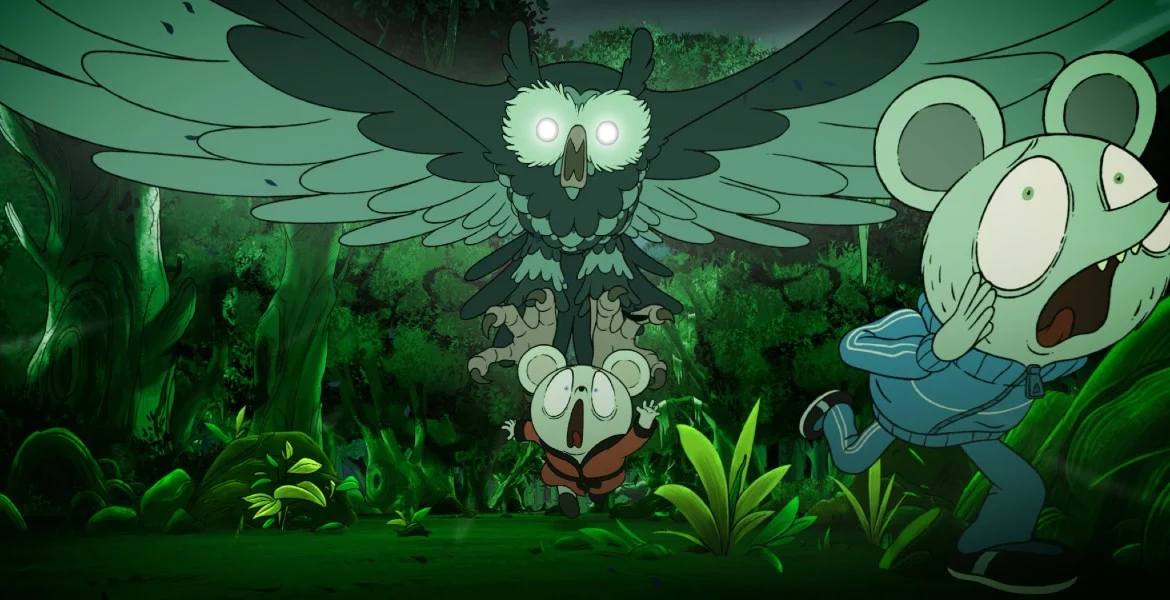
In contrast to these preschool hits, the series category also includes darker and more adult-oriented fare. Colombia’s "Hay algo detrás de ti" (There is Something Behind You), directed by Julián Gómez Reyes and produced by Careloko Producciones, offers a unique take on children’s horror. Meanwhile, Mexico’s "Mujeres con hombreras" (Women with Shoulder Pads), directed by Gonzalo Córdova, serves as a stop-motion comedy for adults. Set in Quito during the 1980s, the series was produced by Cinema Fantasma in collaboration with the American network Adult Swim, highlighting the increasing interest of international broadcasters in Ibero-American creative talent.
The Short Film category is dominated by Portuguese artistry, which has long been recognized for its poetic and auteur-driven approach. Alice Eça Guimarães’ "Porque Hoje é Sábado" and Marta Reis Andrade’s "Cão Sozinho" (produced by BAP – Animation Studio in co-production with France) represent the strength of the Portuguese school. They are joined by the Spanish entry "El fantasma de la quinta" by James A. Castillo and the Argentine-Canadian co-production "Luz Diabla," co-directed by Gervasio Canda, Paula Boffo, and Patricio Plaza.
Historical Context and Economic Impact
Established to honor the legacy of Quirino Cristiani—the Italian-Argentine director who created the world’s first animated feature films, "El Apóstol" (1917) and "Peludópolis" (1931)—the Quirino Awards have quickly become the most important gathering for the Ibero-American animation industry. Based in San Cristóbal de La Laguna, Tenerife, the awards serve as more than just a trophy ceremony; they are a vital hub for the "Ibero-American Animation Co-production and Business Forum."
The forum, which runs parallel to the awards, facilitates hundreds of B2B meetings between producers, distributors, and streaming platforms. By fostering these connections, the Quirino Awards have played a central role in the surge of co-productions seen in this year’s nominations. The integration of Spanish and Portuguese talent with Latin American studios has created a formidable "Ibero-American space" that allows regional creators to pool resources and access European funding while maintaining their cultural identity.
According to industry data, the animation sector in Ibero-America has seen a steady growth in export value over the last decade. Events like the Quirino Awards provide the visibility necessary to attract private investment and government subsidies, which are crucial for the long development cycles inherent in animation.
Broader Implications for the Global Market
The diversity of the nominees—ranging from pre-school educational content to adult horror and existential satire—indicates an industry that is no longer content with being a service provider for Hollywood. Instead, Ibero-American studios are asserting themselves as creators of original Intellectual Property (IP).
The dominance of stop-motion in this year’s selection is particularly telling. While expensive and time-consuming, stop-motion has become a "prestige" medium that attracts critical acclaim and festival recognition. The success of films like "Soy Frankelda" suggests that there is a significant domestic audience for these stories, challenging the notion that high-quality animation is only viable if it mimics the CGI style of major global studios.
Furthermore, the involvement of major international players like Adult Swim and various European co-production funds shows that Ibero-American animation is increasingly viewed as a high-value asset in the global streaming wars. As platforms look for unique, culturally specific content to attract diverse subscribers, the quirky, artistic, and often socially conscious output of the Ibero-American region is well-positioned for growth.
The winners of the various categories will be announced at a gala ceremony in Tenerife, where the industry will gather not only to celebrate individual achievements but to discuss the future of a sector that has become a cornerstone of the regional creative economy. As the Quirino Awards continue to grow in stature, they remain a vital barometer for the health and direction of animation across the Spanish and Portuguese-speaking world.

0 Comments