
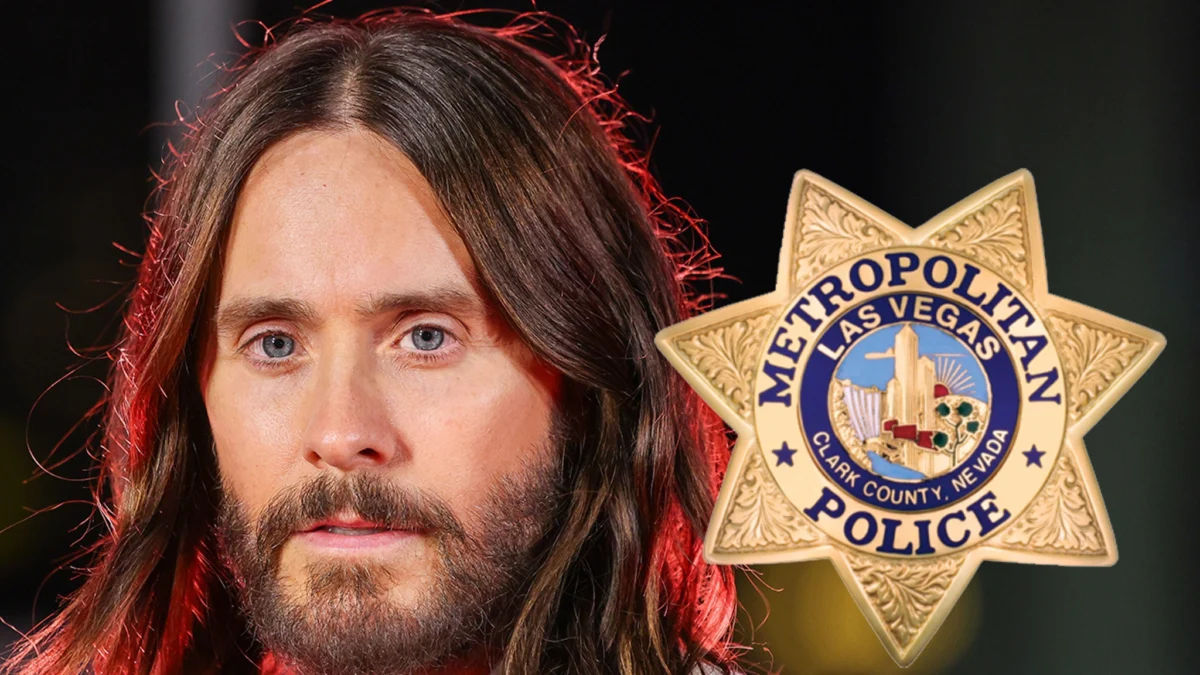
The Las Vegas Metropolitan Police Department (LVMPD) has confirmed it possesses no official sexual assault reports involving actor and musician Jared Leto, following the broadcast of a new BBC documentary that featured a woman alleging sexual assault by Leto in the city when she was 17 years old. This revelation comes amidst a series of broader allegations against Leto detailed in the investigative documentary, spanning multiple jurisdictions and a significant timeline.
Unreported Allegation in Las Vegas
A spokesperson for the Las Vegas Metropolitan Police Department explicitly stated, "There have been no sexual assault reports filed against this individual in LVMPD’s jurisdiction." This statement directly addresses one of the key claims made in the BBC’s recent exposé, which brought to light an alleged incident dating back to 2002. The accuser, whose identity has been protected in media reports, claims she was sexually assaulted by Leto inside a motel bathroom in Las Vegas after they had initially met at a local store. At the time of the alleged incident, she was 17 years old. The absence of a formal police report in Las Vegas does not negate the individual’s claim but highlights the procedural hurdle for law enforcement to initiate an investigation without such documentation. It underscores a common challenge in cases of alleged historical sexual assault, where victims may not report incidents to authorities for a variety of complex and often deeply personal reasons, sometimes for many years after the alleged event.
The BBC Documentary’s Revelations and Broader Claims
The BBC documentary serves as the primary catalyst for these recent headlines, presenting a comprehensive investigation into multiple allegations against Jared Leto. While the Las Vegas claim is a central focus, the documentary reportedly features accounts from a total of four women who accuse Leto of sexual assault or threatening sexual assault when they were teenagers. These allegations are not confined to a single location but span across different geographical areas, including California and London, and cover a period between 2002 and 2016.
The documentary’s methodology typically involves extensive research, interviews with alleged victims and witnesses, and attempts to corroborate accounts where possible. The decision by a reputable news organization like the BBC to air such a documentary indicates a level of journalistic scrutiny applied to these claims, bringing them into the public discourse. The impact of such a broadcast can be profound, often leading to public discussion, increased pressure on individuals and institutions, and sometimes, a re-evaluation of past events by law enforcement or other relevant bodies, even in the absence of initial formal reports. The act of sharing these stories publicly, through platforms like a documentary, often serves as a form of delayed reporting, albeit not through official police channels.
A Detailed Chronology of Claims
The allegations against Jared Leto, as presented in the BBC investigation, paint a picture of alleged misconduct stretching over a decade and a half. A chronological breakdown of these claims is crucial for understanding the scope of the accusations:
- Las Vegas (2002): This is the most recent allegation to be specifically addressed by law enforcement. A woman claims she was 17 when Leto allegedly sexually assaulted her in a motel bathroom after meeting him in a store. This incident forms a significant part of the BBC’s reporting due to its specific details and the direct response (or lack of official report) from the LVMPD.
- California (Unspecified Date, Post-2002): The documentary includes an alleged encounter with a 17-year-old in California. While specific details regarding the nature of the alleged assault or the exact year are not publicly detailed in the provided information, its inclusion alongside other claims suggests a pattern or recurring theme. The legal landscape in California regarding sexual assault allegations and statutes of limitations can be complex, especially for incidents dating back several years.
- London (Unspecified Date, Post-2002): Another claim details an alleged threat against a 19-year-old in London. The nature of a "threat of sexual assault" can vary, and its legal ramifications would be subject to British law. Like other jurisdictions, the UK has specific laws regarding sexual offenses, and the absence of a contemporary report could pose challenges for any future investigation.
- Grooming Allegations (Beginning when she was 16, Post-2002): Perhaps one of the most concerning allegations involves accusations that Leto groomed a girl through sexually explicit phone calls, beginning when she was 16. Grooming, particularly involving minors, is a serious offense across many jurisdictions and typically involves building a relationship with a child with the intention of sexual abuse. The nature of phone calls as evidence, especially from years past, could present unique challenges in terms of corroboration and retrieval.
These allegations, ranging from alleged physical assault to threats and grooming, collectively form the basis of the BBC’s investigative piece, bringing a historical perspective to the current scrutiny surrounding Leto. The wide timeframe and geographical spread indicate a thorough investigation by the documentary makers, aiming to present a comprehensive narrative.
Law Enforcement Responses and Challenges
Beyond the Las Vegas Metropolitan Police Department’s clear statement regarding the absence of a report, the broader law enforcement response to these allegations is still developing. The original article indicates that inquiries have been made to the Los Angeles Police Department (LAPD), the Los Angeles County Sheriff’s Department (LASD), and London’s Metropolitan Police, but as of the publication date, "no word back" had been received.
This silence or lack of immediate confirmation from other police forces is not uncommon in such situations. Law enforcement agencies typically do not comment on ongoing investigations, or, more pertinent in these cases, they cannot confirm the existence of investigations or reports if none have been formally filed or if the information is not publicly releasable. The challenges faced by law enforcement in addressing historical sexual assault allegations are manifold:
- Lack of Formal Reports: The fundamental prerequisite for a police investigation is often a formal report from the alleged victim or a third party. Without this, police departments cannot actively open a case or pursue leads, regardless of media reports.
- Statutes of Limitations: Many jurisdictions have statutes of limitations for criminal offenses, including sexual assault. While some states have extended or eliminated these for certain sex crimes, especially those involving minors, the passage of time can still legally bar prosecution.
- Evidence Deterioration: Over time, physical evidence can disappear, memories can fade, and witnesses may become unavailable. This makes corroborating accounts and building a strong legal case significantly more difficult.
- Victim Reluctance: Victims of sexual assault often face immense emotional and psychological barriers to reporting, including fear of not being believed, shame, trauma, and fear of retaliation. These factors can lead to significant delays in coming forward, sometimes decades later.
- Jurisdictional Complexity: With allegations spanning multiple cities and even countries, coordinating investigations and navigating different legal systems can add layers of complexity.
The role of documentaries and investigative journalism, while crucial for public awareness and providing a platform for alleged victims, often presents a unique challenge for police. They are compelled to respond to public inquiries but cannot act on allegations presented in media without a formal complaint that meets legal requirements for investigation.
Jared Leto’s Categorical Denial
In response to the surfacing allegations, Jared Leto has issued a definitive and strong denial. He previously communicated to TMZ, stating, "I have never sexually assaulted anyone in my entire life. These claims are absolutely and categorically false." This unequivocal statement underscores his position that the accusations are baseless and untrue.
A denial of this nature is standard for individuals facing such grave allegations. It sets a clear stance, asserting innocence in the face of public scrutiny. For public figures, such denials are not just personal statements but also carry implications for their public image, career, and potential legal defenses. The contrast between the detailed allegations presented in the documentary and Leto’s firm denial creates a deeply contested narrative, typical of high-profile cases involving historical claims.
Broader Context: The #MeToo Movement and Investigative Journalism
These allegations against Jared Leto emerge within a contemporary landscape significantly shaped by the #MeToo movement. Initiated in 2006 by Tarana Burke and gaining widespread prominence in 2017, #MeToo empowered countless individuals to share their experiences of sexual harassment and assault, particularly within professional environments like the entertainment industry. The movement not only shone a light on pervasive issues but also fostered an environment where delayed disclosures became more understood and accepted. Victims who had remained silent for years, or even decades, found renewed courage and platforms to voice their claims.
Investigative journalism plays a critical role in this ecosystem. Documentaries, in particular, offer a potent medium for exploring complex and sensitive topics, providing a narrative framework that often allows for a deeper dive into personal accounts and systemic issues. The BBC, with its long-standing reputation for rigorous journalism, lends significant weight to the allegations it chooses to feature. Such documentaries often serve as the first public disclosure for many alleged victims, bypassing traditional reporting channels due to the reasons mentioned previously. They highlight the societal shift towards believing and amplifying survivor voices, even when official reports may be absent. This creates a parallel pathway for accountability, where public opinion and media scrutiny can exert significant pressure, even without immediate legal action.
Legal and Public Implications
The allegations and their subsequent reporting carry substantial legal and public implications for Jared Leto and the broader entertainment industry. Legally, the absence of formal police reports for the Las Vegas incident, and potentially others, means that immediate criminal investigations may not be underway. However, the public nature of these claims could lead to renewed calls for investigations, should any of the alleged victims choose to formally report their experiences to law enforcement. Furthermore, civil litigation remains a possibility, as the burden of proof in civil cases is lower than in criminal cases.
For Leto, the implications for his career as a prominent actor and musician are significant. Allegations of this nature can severely damage an individual’s reputation, leading to professional repercussions such as loss of endorsement deals, casting opportunities, and public appearances. While Leto has emphatically denied the claims, the court of public opinion often renders its own judgments, which can be difficult to reverse, regardless of legal outcomes. The entertainment industry, still reeling from numerous #MeToo revelations, has shown a heightened sensitivity to such issues, often adopting a cautious approach with talent facing serious accusations.
The Role of Media in Uncovering Historical Allegations
The case of Jared Leto and the BBC documentary underscores the evolving role of media in uncovering and disseminating historical allegations of misconduct. While traditional journalism often relies on official sources and documented reports, contemporary investigative journalism increasingly prioritizes giving voice to alleged victims, even if their stories have not yet entered the formal legal system. This approach raises important ethical considerations regarding due process, the potential for trial by media, and the balance between protecting alleged victims and respecting the rights of the accused.
However, it also serves a vital function in holding powerful individuals accountable, providing a platform for stories that might otherwise remain untold, and fostering public discourse on issues of consent, power dynamics, and accountability. The fact that these allegations are coming to light through a documentary years after the alleged incidents occurred highlights the enduring impact of trauma and the complex journey of survivors. It also emphasizes that the absence of a police report does not equate to the absence of an alleged event, but rather reflects the multifaceted reasons why individuals may or may not engage with formal legal systems. As society continues to grapple with these issues, the interplay between media, law enforcement, and public perception remains a critical area of discussion and development.

0 Comments