
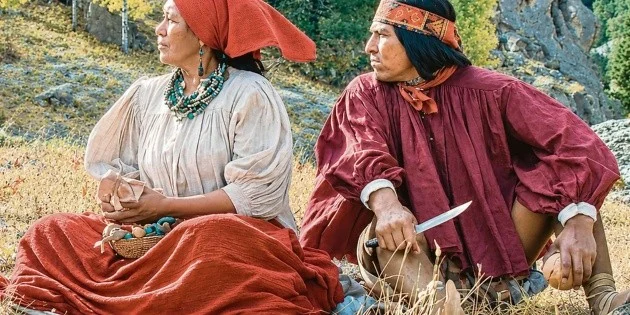
The eagerly anticipated film "Jíkuri: Viaje al país de los Tarahumaras," directed by Federico Cecchetti, is set for its special screening at the Cineforo of the Universidad de Guadalajara, marking its official premiere in Mexico. This cinematic endeavor, the culmination of five years of profound research and cultural immersion, delves into the complex and mystical journey of French avant-garde artist Antonin Artaud to the Sierra Tarahumara in 1936, offering a unique narrative that transcends historical recreation to explore the deep spiritual connections between disparate worlds.
Antonin Artaud’s Fateful Pilgrimage to the Sierra Tarahumara
Antonin Artaud, a towering figure of 20th-century avant-garde art, known for his radical theories on the "Theatre of Cruelty" and his association with Surrealism, embarked on a transformative journey to Mexico in 1936. Disillusioned with Western civilization and seeking spiritual renewal, Artaud traveled to the remote Sierra Tarahumara (also known as the Copper Canyon region), home to the indigenous Rarámuri people. His quest was driven by an intense desire to connect with ancient cultures and their spiritual practices, particularly the use of peyote, which he believed could unlock deeper realities and offer an antidote to the perceived spiritual decay of Europe.
Artaud’s time among the Rarámuri, documented in his influential work "De un viaje al país de los Tarahumaras" (From a Trip to the Land of the Tarahumaras), was a period of intense personal revelation and profound philosophical inquiry. He immersed himself in their rituals, observed their way of life, and sought to understand their unique cosmovision, particularly their relationship with the sacred and the natural world. This experience, though brief, left an indelible mark on Artaud, profoundly shaping his later artistic and philosophical output. It was, as director Federico Cecchetti describes, a "journey of epic proportions, psychological in its deepest sense, a voyage into the depths of the human soul and, simultaneously, into the vastness of the Sierra Tarahumara." Upon his return to France, Artaud’s mental health deteriorated, leading to his institutionalization. Yet, even from the confines of the asylum, he frequently revisited his memories of the Sierra, reinterpreting them through the lens of his altered state, a dichotomy that proved pivotal for Cecchetti’s cinematic interpretation.
Federico Cecchetti’s Immersive Research and Vision
Federico Cecchetti’s decision to tackle Artaud’s Mexican odyssey was not born of a desire for a literal historical retelling. Instead, as he revealed in an interview with EL INFORMADOR, his five-year investigation into Artaud’s texts and his interaction with Rarámuri culture uncovered a richer narrative – an exploration of the fundamental encounter between two vastly different ways of understanding existence. Cecchetti, known for his commitment to exploring indigenous Mexican cultures through film, approached this project with a deep sense of respect and a methodology rooted in prolonged engagement.
His journey began with an acknowledgment of his own position as a "chavochi," the Rarámuri term for a foreigner. Much like Artaud, Cecchetti recognized the necessity of a "journey of knowledge, of recognition." This meant spending approximately five years traveling frequently to the Sierra Tarahumara, not merely as an observer, but as someone seeking to build genuine relationships and understand the communities he intended to portray. This period of pre-production immersion was crucial, transforming initial barriers of resistance into what Cecchetti describes as "almost an embrace," fostered by an honest intention to connect from the heart and to learn. This extensive groundwork informed not only the narrative but also the very structure and thematic core of "Jíkuri."
Cecchetti’s filmography demonstrates a consistent dedication to representing indigenous perspectives. "Jíkuri" is the second installment in a planned trilogy exploring diverse native cultures of Mexico. His previous work, "El sueño del Mara’akame" (The Shaman’s Dream), released in 2016, centered on the Wixárika (Huichol) culture and garnered critical acclaim for its sensitive portrayal and artistic merit. This thematic continuity underscores Cecchetti’s broader artistic mission: to use cinema as a "pretext for adventures," a means of self-discovery through engaging with the new, the unknown, and the unfamiliar. His filmmaking ethos is inherently adventurous, rejecting conventional storytelling in favor of an immersive, exploratory approach that seeks to bridge cultural divides and illuminate spiritual depths.
"Jíkuri": A Metaphysical Thriller Weaving Dreams and Realities
"Jíkuri: Viaje al país de los Tarahumaras" is not a documentary or a straightforward biopic. Instead, Cecchetti has crafted what he defines as a "metaphysical thriller," a genre that allows for suspense, enigmas, and profound character transformation within a rich, symbolic landscape. The film stars François Negret as Antonin Artaud and José Cruz Apachoachi as Rayenari, a Rarámuri runner. While inspired by Artaud’s actual journey and his writings, the film diverges from literal reconstruction, instead drawing elements from the French artist’s texts to forge an entirely original narrative.
At the heart of "Jíkuri" lies the potent motif of dreams, serving as the primary conduit connecting Artaud and Rayenari. In the film’s narrative, the oneiric world is not merely a psychological space but a tangible realm of encounter and interaction, a concept deeply rooted in the Rarámuri cosmovision. Cecchetti elucidates this distinction: "For them [the Rarámuri], dreams are a space where there is real interaction. Not merely psychological. They even speak of dreaming as ‘strolling.’ They go for a stroll in the sierra and meet there." This understanding elevates dreams beyond subjective experience, positioning them as a valid form of displacement and intersubjective reality, a concept that profoundly shaped the film’s structure and its exploration of the Rarámuri worldview.
The film intricately mirrors Artaud’s own bifurcated experience of the Sierra: initially a liberating and joyous encounter, later reinterpreted and imbued with different meaning during his institutionalization. Cecchetti masterfully translates this duality into the film’s narrative, presenting Artaud’s initial discovery as one dimension, followed by a distinct perspective shaped by memory and reinterpretation. This structural choice underscores the subjective nature of experience and the lasting impact of cultural encounters on individual perception. By establishing a dream-based link between Artaud and Rayenari, "Jíkuri" explores the convergence of Rarámuri spirituality with Artaud’s profound interest in mysticism and experiences beyond mundane reality, creating a dialogue between two distinct yet spiritually resonant worldviews.
The Rarámuri People: Guardians of the Sierra’s Spirit
The Rarámuri, meaning "foot-runners" or "those who run," are an indigenous people of northwestern Mexico, residing primarily in the Sierra Madre Occidental in the state of Chihuahua. Renowned for their incredible long-distance running abilities, which are integral to their culture, spirituality, and survival, the Rarámuri maintain a deep and sacred connection to their ancestral lands. Their traditional way of life emphasizes self-sufficiency, community, and a profound reverence for nature, particularly the mountains, which they view as living entities imbued with spiritual power.
The Sierra Tarahumara itself is a vast and challenging landscape of deep canyons, towering peaks, and isolated valleys. This formidable environment has allowed the Rarámuri to largely preserve their unique culture, language (Rarámuri, a Uto-Aztecan language), and spiritual practices against external pressures. Their cosmovision is rich with animism, where elements of the natural world – mountains, rivers, trees, and animals – are seen as possessing spirits and agency. Dreams, as highlighted in "Jíkuri," play a crucial role in their spiritual life, serving as channels for communication, prophecy, and inter-dimensional travel.
Cecchetti’s extended immersion in the community was not just for research; it was an act of cultural sensitivity, seeking to understand how the Rarámuri relate to their territory and to what they hold sacred. His film endeavors to honor this connection, portraying the Rarámuri not as exotic subjects, but as a people whose profound understanding of the world offers invaluable insights. The film subtly highlights the physical and spiritual endurance of the Rarámuri, exemplified by the character of Rayenari, and their symbiotic relationship with a landscape that "expands" not just in its immeasurable dimensions, but in the depth of their connection to its mountains.
From Sierra’s Depths to Festival Screens: The Production Journey
The production of "Jíkuri" in the remote and rugged Sierra Tarahumara presented formidable challenges, both logistical and artistic. Filming in such isolated locations often requires extensive planning, specialized equipment, and a deep understanding of the local terrain and climate. Cecchetti’s commitment to authenticity meant embracing the demanding reality of the Sierra, including the long hours of walking that are a routine part of life for many Rarámuri communities. This experience, far removed from urban centers, reinforced his own connection to nature and deepened his appreciation for the Rarámuri’s way of life.
Before its theatrical release, "Jíkuri" embarked on a successful journey through the international film festival circuit, gaining recognition and critical acclaim. Notably, it participated in the prestigious Mezcal Competition at the International Film Festival in Guadalajara (FICG), a significant platform for showcasing Mexican cinema. Its presence at such festivals not only provided exposure but also served as a testament to its artistic merit and cultural significance. The festival run allowed the film to connect with diverse audiences and critics, generating buzz and paving the way for its wider distribution.
Implications and Broader Impact
"Jíkuri: Viaje al país de los Tarahumaras" makes a significant contribution to Mexican cinema, particularly within the realm of independent and culturally focused filmmaking. It stands as an exemplar of cinema that transcends mere entertainment, aspiring to foster cross-cultural understanding and dialogue. By exploring the profound spiritual connections between a radical European artist and an ancient indigenous culture, the film invites audiences to reflect on universal themes of identity, spirituality, and the search for meaning.
However, Cecchetti acknowledges the inherent challenges faced by films that deviate from mainstream formats and conventional narratives. In an industry increasingly dominated by formulaic productions and rigid categorization, placing a film like "Jíkuri" can be difficult. He notes, "I think we compete with an industry that already has many formats, it’s very formatted and very labeled, just like our society. And so, suddenly, when someone steps outside the labels or conventions, it’s difficult to place them anywhere." This struggle highlights the broader predicament of independent and art-house cinema in securing distribution and reaching wider audiences, despite their often profound artistic and cultural value.
Despite these challenges, "Jíkuri" carries the potential for a lasting legacy. It could serve as a catalyst for renewed interest in Antonin Artaud’s complex life and work, particularly his lesser-known Mexican period. More importantly, it offers a powerful and respectful cinematic portrayal of the Rarámuri people, contributing to a more nuanced understanding of their rich culture and spiritual heritage. By presenting a "metaphysical thriller" that combines historical inspiration with a deeply imaginative and culturally sensitive narrative, Federico Cecchetti’s "Jíkuri" stands as a testament to the power of cinema to explore the unknown, challenge perceptions, and build bridges between worlds. As it begins its run in Mexican cinemas, it promises audiences an adventure not just into the vastness of the Sierra, but into the expansive depths of the human and spiritual experience.

0 Comments