
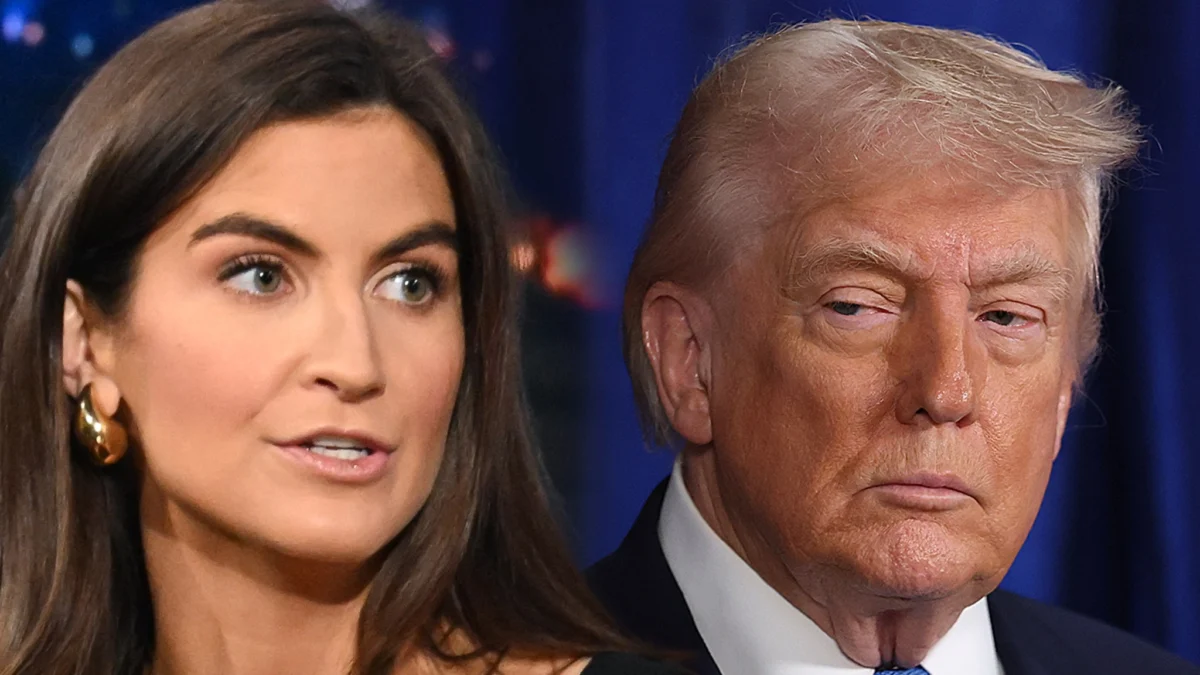
The contentious relationship between the White House and the press was once again thrust into the spotlight following President Donald Trump’s remarks targeting CNN anchor Kaitlan Collins at the annual White House Correspondents’ Dinner (WHCD) last Friday. Collins, the formidable host of "The Source With Kaitlan Collins," publicly addressed the president’s pointed insults during a Monday appearance on "The Daily Show" with Jon Stewart, asserting that she was "not surprised one bit" by his behavior, given his regular private criticisms. The incident, which saw President Trump liken Collins to controversial trans influencer Dylan Mulvaney, has ignited a fresh debate over decorum, press freedom, and the increasingly polarized landscape of political journalism.
The White House Correspondents’ Dinner: A Tradition Under Scrutiny
The White House Correspondents’ Dinner, often dubbed "Nerd Prom," is an annual event that traditionally brings together the President of the United States, journalists, and celebrities for an evening of humor, celebration of the First Amendment, and recognition of journalistic excellence. While the dinner is intended to foster camaraderie and support scholarships for aspiring journalists, it has frequently served as a stage for political jabs and, at times, escalating tensions between administrations and the press corps.
This year’s dinner, held on Friday, July 25, 2026, was no exception. President Trump, whose history with the WHCD has been marked by both attendance and boycotts in previous terms, chose to use his platform not only for customary remarks but also for a direct attack on Collins. According to reports from attendees and Collins’s subsequent account, Trump’s speech included dismissive comments about her professional demeanor and appearance, stating she "never smiles despite being young and attractive," before accusing her of working for "CNN fake news." The most striking and controversial remark, however, was his comparison of Collins to Dylan Mulvaney, a transgender influencer who gained significant public attention and became a lightning rod for cultural debates following various brand partnerships. This particular comparison immediately drew condemnation from many observers, highlighting a perceived attempt to weaponize identity politics and dismiss Collins’s journalistic integrity through an unrelated, highly charged cultural reference.
Collins’s Immediate and Measured Response
In the immediate aftermath of President Trump’s speech, the media landscape buzzed with reactions. While many expected a direct and perhaps fiery response from Collins, her initial reaction, conveyed through an Instagram post shortly after the dinner, was notably composed yet firm. She utilized the social media platform to fire back at the president, attributing his attack to the "uncomfortable questions she often asks" and implying that his comments were a direct result of her impactful and relentless reporting. This swift, digital rebuttal set the stage for a more in-depth discussion that would unfold days later.
Her Instagram statement resonated with many journalists and press freedom advocates, who saw it as a powerful defense of objective reporting in the face of political pressure. By linking the president’s insults directly to her investigative work, Collins underscored the ongoing challenges faced by journalists striving to hold power accountable, especially when confronted with attempts to discredit their professionalism through personal attacks.
"The Daily Show" Interview: Unpacking the Insults
Collins elaborated on her perspective during her Monday, July 28, 2026, appearance on "The Daily Show" with host Jon Stewart, a platform renowned for its incisive political commentary and analysis of media narratives. Her conversation with Stewart provided a more detailed look into the dynamic between her and the president, revealing a pattern of interaction that extends beyond public spectacles.
During the interview, Collins revealed that President Trump "pretty regularly" insults her inside the Oval Office. This candid admission provided crucial context for her lack of surprise at the WHCD remarks. She explained that the only significant difference at the dinner was the "larger venue," implying that the substance of the criticism was familiar territory. This insight painted a picture of a persistent, behind-the-scenes tension that occasionally spills into the public eye, underscoring the daily pressures faced by White House correspondents.
Collins further asserted that President Trump’s anger stemmed directly from her recent professional achievement: winning a prestigious award for her "tough-as-nails reporting about him." She articulated that the president was "clearly bothered" by her success and the nature of the questions she poses, along with the "non-answers that we get." This interpretation suggests that Trump’s seemingly personal attacks were, in fact, a reaction to effective journalism that challenges his administration and seeks transparency. The interview served as a powerful testament to the resilience of journalists who continue to pursue accountability despite regular attempts to undermine their credibility.
The Award-Winning Journalism: A Catalyst for Conflict
The award Collins referenced is the White House Correspondents’ Award for Excellence in Presidential News Coverage Under Deadline Pressure in broadcast journalism. This distinguished accolade recognizes exceptional reporting that demonstrates courage, skill, and an unwavering commitment to truth, particularly in high-stakes environments. Collins earned this honor for her extensive and incisive reports on President Trump’s 2025 Oval Office meetings with Ukrainian President Volodymyr Zelenskyy.

The context of these meetings is crucial to understanding the intensity of the presidential ire. While specific details of the 2025 discussions remain subject to ongoing analysis, reporting on high-level diplomatic exchanges, especially with a nation like Ukraine that is central to geopolitical stability and has historically been a sensitive topic in U.S. politics, demands rigorous investigation and a willingness to ask probing questions. Collins’s ability to navigate the complexities of these discussions, extract pertinent information, and deliver it under deadline pressure is precisely what the award celebrates. Such reporting often involves scrutinizing official narratives, challenging administration talking points, and holding leaders accountable for their decisions and actions on the international stage. It is this very act of persistent inquiry that can be perceived as an irritant by those in power, leading to defensive or retaliatory responses, as witnessed at the WHCD.
Analyzing Trump’s Rhetoric: Strategy and Implications
President Trump’s choice of language and targets at the WHCD was not arbitrary; it aligns with a long-established pattern of his communication strategy, particularly concerning media criticism.
The Dylan Mulvaney Comparison: This was arguably the most controversial element of Trump’s attack. Dylan Mulvaney, a transgender woman, gained widespread attention for her "Days of Girlhood" TikTok series and subsequent partnerships with major brands, including Bud Light. These partnerships sparked significant backlash from conservative segments of the population, leading to boycotts and a highly publicized cultural debate surrounding transgender rights and corporate engagement with LGBTQ+ issues. By likening Kaitlan Collins to Mulvaney, Trump effectively sought to:
- Dismiss and Degrade: Associate Collins with a figure his base views negatively, thereby attempting to diminish her professional standing and credibility.
- Weaponize Cultural Wedge Issues: Tap into existing cultural anxieties and divisions to rally support among his political base while simultaneously discrediting a critical journalist.
- Distract from Substance: Shift the focus from Collins’s award-winning journalism and the substance of her questions to an irrelevant, emotionally charged comparison.
"Fake News" and Personal Attacks: Trump’s accusation of "CNN fake news" is a hallmark of his rhetoric against outlets perceived as critical of his administration. This label is designed to undermine the legitimacy of news organizations and sow distrust among the public regarding factual reporting. The personal remarks about Collins’s appearance ("never smiles," "young and attractive") serve a similar purpose: to infantilize, trivialize, or objectify a female journalist, diverting attention from her professional accomplishments and framing her critical reporting as a personal failing rather than a journalistic imperative. This tactic often aims to delegitimize the messenger when the message itself is inconvenient or challenging.
The implications of such rhetoric are far-reaching. It contributes to an environment where journalists are not only criticized for their reporting but are also subjected to personal attacks and associations with unrelated cultural controversies. This can embolden those who wish to silence or intimidate the press, and it further polarizes public discourse, making it harder for citizens to distinguish between objective reporting and politically motivated attacks.
Broader Impact on Press Freedom and Media Relations
The incident at the WHCD serves as a stark reminder of the fragile state of press-presidency relations and the ongoing challenges to press freedom in a highly partisan era. The White House Correspondents’ Association (WHCA), which organizes the dinner, typically champions the First Amendment and the vital role of a free press in a democracy. While the WHCA did not immediately issue a direct rebuke of President Trump’s specific comments about Collins, its historical mission implicitly stands in contrast to rhetoric that undermines journalistic integrity.
For CNN, Collins’s network, the incident underscores the importance of standing by its journalists in the face of political pressure. Networks often issue statements supporting their reporters, emphasizing their commitment to unbiased reporting despite external criticism. This public support is crucial for maintaining morale within newsrooms and signaling to the public that journalistic independence is a core value.
Beyond individual journalists and news organizations, these exchanges contribute to a broader erosion of trust in institutions. When a president routinely labels critical reporting as "fake news" and personally attacks journalists, it can lead to a public that is less informed, more susceptible to misinformation, and increasingly cynical about the democratic process. The incident also highlights the evolving nature of political communication, where traditional venues like the WHCD are increasingly used for direct, often aggressive, messaging rather than merely ceremonial pleasantries.
The ability of journalists like Kaitlan Collins to continue asking "uncomfortable questions" and delivering "tough-as-nails reporting" is fundamental to a functioning democracy. Her calm, professional response, both on Instagram and "The Daily Show," demonstrates a resilience that many in the media strive to uphold. The ongoing tension between the executive branch and the Fourth Estate is a perennial feature of American politics, but the specific tactics employed, such as the Mulvaney comparison, signify a new and more insidious front in the battle over truth, narrative, and accountability.
As the political landscape continues to evolve, the spotlight will remain firmly on the interactions between those in power and those tasked with reporting on it. The events surrounding the 2026 White House Correspondents’ Dinner and Kaitlan Collins’s principled stand serve as a critical case study in the enduring struggle to uphold journalistic integrity amidst unprecedented challenges.

0 Comments