
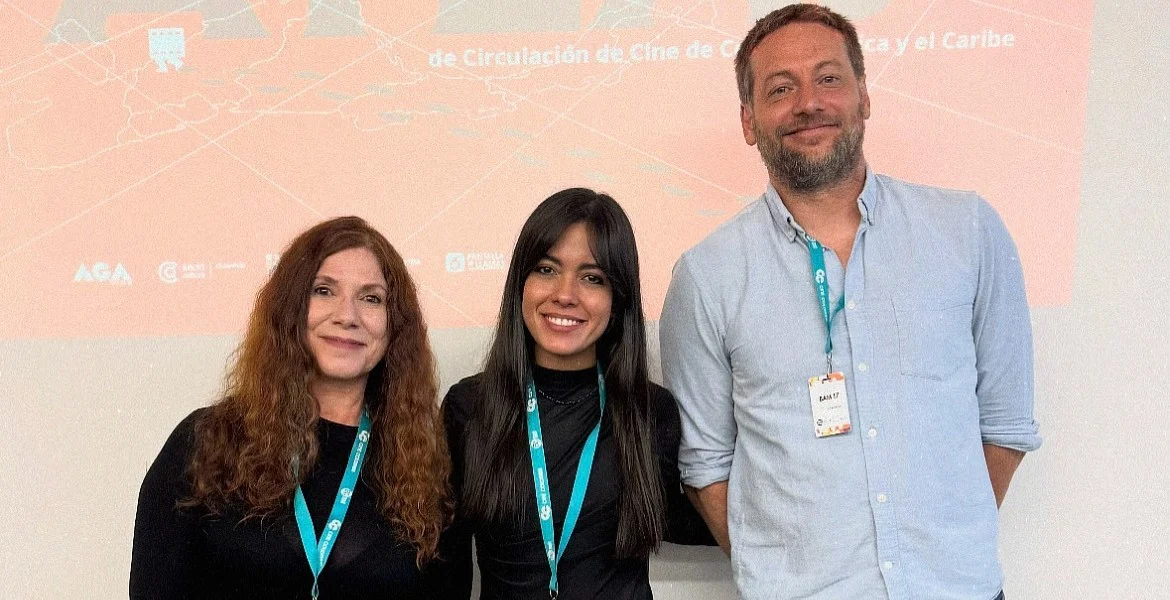
The recent edition of the Bogotá Audiovisual Market (BAM) served as the primary stage for the official unveiling of the Atlas of Film Circulation in Central America and the Caribbean, a pioneering research project designed to map, visualize, and connect the diverse array of agents involved in the distribution and exhibition of cinema across these territories. This digital initiative, which is now accessible to the public through the Círculo de Industria platform, represents a significant milestone in the effort to formalize and integrate the fragmented film landscapes of the region. By providing a centralized repository of information, the Atlas aims to bridge the gap between creators and audiences while offering stakeholders a data-driven tool to advocate for better infrastructure and investment.
The project is the result of a collaborative effort led by a multidisciplinary team of Caribbean and Central American professionals, including Guatemalan filmmaker Joaquín Ruano, his compatriot Andrea Galicia, Dominican researcher Wendy Espinal, and Puerto Rican producer Arleen Cruz-Alicea. The founders describe the Atlas not merely as a directory, but as a strategic infrastructure project. According to Ruano, the vision for the Atlas is to create a space where shared information and hard data—elements that have historically been scarce in the region—can be utilized to attract investment, foster trust among stakeholders, and convince private investors, politicians, and legislators of the untapped economic and cultural potential of the regional film industry.
The Strategic Importance of the Bogotá Audiovisual Market
The choice of the Bogotá Audiovisual Market as the launchpad for this project was no coincidence. As one of Latin America’s most influential industry gatherings, organized by the Chamber of Commerce of Bogotá and Proimágenes Colombia, BAM attracts a global cohort of distributors, sales agents, and festival programmers. For a project focused on circulation, presenting at BAM allowed the Atlas team to engage directly with the very professionals who can benefit most from its data. The event provided a high-profile forum to discuss the systemic challenges facing the Caribbean and Central American film sectors, which often produce high-quality content but struggle with internal and external distribution due to a lack of centralized information and regional cooperation.
The presentation at BAM highlighted the "data desert" that has long plagued the northern reaches of the Latin American film industry. While Southern Cone countries like Argentina, Brazil, and Chile have established robust cinematic databases and observatory systems, Central America and the Caribbean have frequently operated in silos. The Atlas of Film Circulation seeks to rectify this by providing a digital map that illustrates the density and diversity of exhibition points, thereby allowing producers to plan more effective release strategies and helping festivals coordinate their programming cycles.
Origins and Development: From Pantalla en Llamas to Global Launch
The intellectual and practical foundations of the Atlas were laid during the "Pantalla en Llamas" (Screen on Fire) workshop. This intensive training and development session was held as part of the 51st Círculo de Industria (Industry Circle), an event organized by the Guatemalan Association of Audiovisual and Cinematography (AGAC). The workshop focused on the critical bottlenecks of the regional industry, identifying "circulation"—the movement of a film from completion to its various audiences—as the most significant hurdle for independent filmmakers in the region.
During this developmental phase, the team recognized that the regional industry was suffering from a visibility crisis. While filmmakers were successfully producing narratives that resonated at international festivals, there was no comprehensive record of where these films could be shown within their own geographic neighbors. The "Pantalla en Llamas" workshop provided the necessary environment for Ruano, Galicia, Espinal, and Cruz-Alicea to conceptualize a tool that could map the existing "informal" and "formal" networks of cinema, leading to the creation of the first iteration of the Atlas.
Phase One: Mapping 150 Initiatives Across 11 Territories
In its initial phase, the Atlas has successfully mapped four primary categories of entities dedicated to the circulation of film: film festivals, permanent exhibition spaces, temporary or nomadic exhibition projects, and cultural centers with dedicated film programming. This first stage includes more than 150 distinct initiatives spanning a wide geographical range, including Guatemala, Belize, El Salvador, Honduras, Costa Rica, Panama, Cuba, Jamaica, the Dominican Republic, Haiti, and Puerto Rico.
By categorizing these entities, the Atlas reveals a complex ecosystem that extends far beyond traditional commercial multiplexes. The data includes community-led screening series in rural areas, prestigious international film festivals in urban centers, and government-funded cultural centers that serve as the backbone of local film appreciation. The inclusion of countries like Haiti and Belize is particularly noteworthy, as these territories are often excluded from broader Latin American cinematic discussions due to language barriers and different historical trajectories. The Atlas aims to treat the region as a cohesive, albeit diverse, cinematic block.
The research team is currently presenting this first stage at various international industry events. This "roadshow" is designed to gather feedback from users, ensuring the platform meets the specific needs of those working on the ground. By understanding the demands of festival directors and exhibitors, the team can refine the data points collected, moving beyond simple contact information to include technical specifications, audience demographics, and programming preferences.
Phase Two: Expansion and the Inclusion of the Diaspora
The roadmap for the Atlas of Film Circulation is ambitious, with a second phase already in development. This expansion will broaden the project’s geographical scope to include the Caribbean coasts of Colombia and Venezuela, acknowledging the cultural and historical ties that bind these South American territories to the island nations. Furthermore, the team plans to incorporate non-Spanish-speaking territories in the region more comprehensively, addressing the linguistic fragmentation that has historically hindered regional integration.
One of the most innovative aspects of the second phase is the inclusion of the diaspora. Significant populations from Central America and the Caribbean live in cities such as New York, Miami, Toronto, and Madrid. These communities represent a vital market for regional cinema, yet they are often underserved by traditional distribution models. By mapping "diaspora spaces"—cultural centers or film clubs in foreign cities that focus on regional content—the Atlas will help filmmakers reach their citizens abroad.
Additionally, the second phase will introduce new categories of circulation, such as cineclubs, professional associations, specialized film media outlets, government institutions, and educational spaces. This holistic approach recognizes that film circulation is not just about the moment of screening, but also about the discourse, education, and institutional support that surrounds a film’s life cycle.
Data-Driven Advocacy and Economic Implications
The primary utility of the Atlas lies in its ability to transform qualitative cultural value into quantitative data. In many parts of Central America and the Caribbean, film is still viewed by policymakers as a peripheral "hobby" rather than a viable economic sector. The Atlas challenges this perception by visualizing the sheer scale of activity within the region.
When a filmmaker can present a map showing 150 exhibition points to a potential investor, the conversation shifts from artistic merit to market reach. For legislators, the data provides a clear picture of where infrastructure is lacking, allowing for more targeted public policy and the creation of "Film Laws" similar to those that have spurred growth in the Dominican Republic and Colombia. The Dominican Republic, in particular, has seen a massive influx of foreign investment and a surge in local production since the implementation of its 2010 Film Law; the Atlas provides the evidence needed for neighboring countries to argue for similar legislative frameworks.
Furthermore, the project addresses the "identity of the regional market." By identifying what unites these territories—and, crucially, the barriers that separate them, such as high customs duties for physical media or a lack of digital rights management infrastructure—the Atlas serves as a diagnostic tool for the industry’s health.
Industry Reactions and the Path Forward
The reception of the Atlas at BAM has been overwhelmingly positive, with many industry veterans noting that such a tool is long overdue. For many years, regional collaboration was dependent on personal networks and word-of-mouth. The Atlas formalizes these connections, making the industry more meritocratic and accessible to newcomers who may not have established ties in the festival circuit.
The phrase "finding and being found" has become a mantra for the project. In an era of global streaming giants, small-scale regional cinema often gets lost in the noise. The Atlas provides a specialized ecosystem where regional players can find one another, fostering South-South cooperation that bypasses the traditional gatekeepers of the Northern Hemisphere.
As the team continues to collect data and expand the platform, the focus remains on sustainability. The Atlas is designed to be a living document, updated regularly to reflect the opening of new cinemas or the founding of new festivals. Its success will ultimately depend on the continued participation of the regional agents it seeks to map. By encouraging a culture of transparency and data sharing, the Atlas of Film Circulation is not just mapping the current state of Caribbean and Central American cinema—it is actively shaping its future, one data point at a time. Through this initiative, the region moves closer to a reality where its cinema is as mobile and interconnected as the people and cultures that inspire it.

0 Comments