
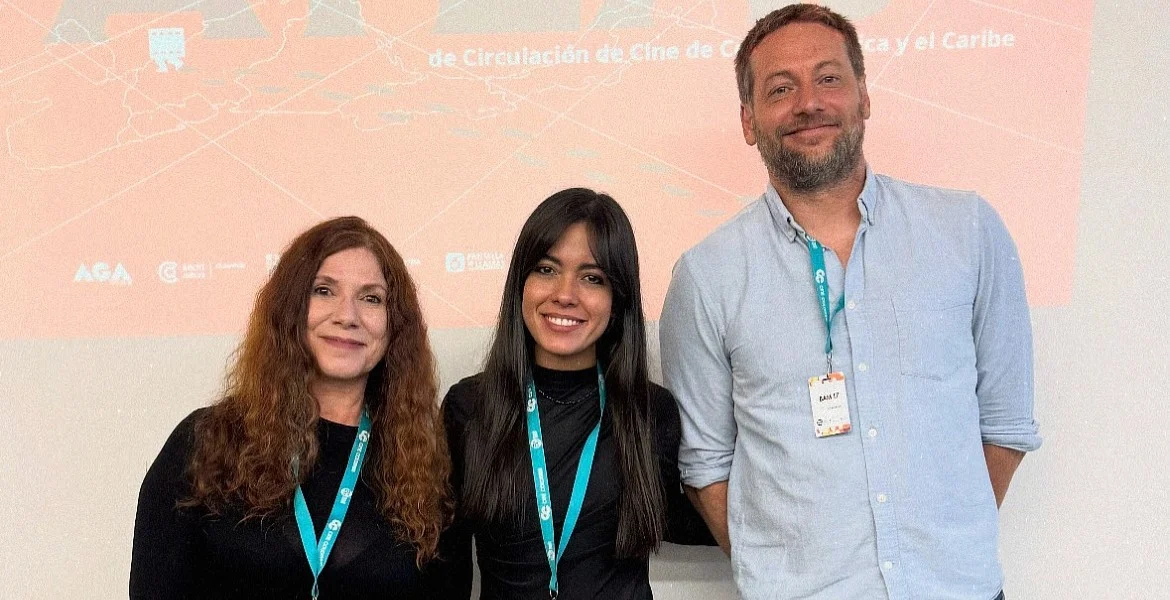
The Bogotá Audiovisual Market (BAM), one of Latin America’s most influential industry gatherings, recently served as the prestigious backdrop for the unveiling of the Atlas de Circulación de Cine de Centroamérica y el Caribe (Atlas of Film Circulation of Central America and the Caribbean). This ambitious research project is designed to meticulously map, provide visibility to, and foster connections among the various agents operating within the film circulation ecosystem of the region. Now accessible through an online platform hosted by the Círculo de Industria, the Atlas represents a significant leap forward in the professionalization and integration of the audiovisual sectors across the Caribbean basin and the Central American isthmus.
The initiative is the brainchild of a diverse group of regional experts, including Guatemalan filmmaker Joaquín Ruano, his compatriot Andrea Galicia, Dominican film professional Wendy Espinal, and Puerto Rican producer Arleen Cruz-Alicea. In a series of statements regarding the project’s objectives, Ruano emphasized the critical role that centralized, transparent information plays in the growth of any nascent industry. According to Ruano, the Atlas is envisioned as a shared repository of data—a resource that has historically been scarce in the region. By providing "hard numbers" and verifiable data, the project aims to equip the sector with the tools necessary to attract foreign investment, build institutional trust, and persuade entrepreneurs, politicians, and legislators of the untapped economic and cultural potential inherent in the local film industry.
The Genesis and Chronology of the Atlas Project
The conceptual foundation for the Atlas was laid during the "Pantalla en Llamas" (Screen on Fire) workshop. This intensive professional development session was held as part of the 51st Círculo de Industria, an event organized by the Guatemalan Association of Audiovisual and Cinematography (AGAC). It was within this collaborative environment that the founders identified a systemic lack of communication and data sharing between neighboring countries, despite their shared cultural affinities and common logistical challenges.
Following the initial workshop, the team embarked on a rigorous period of data collection and networking, seeking to identify the "invisible" actors who keep cinema alive in territories often overlooked by global distribution giants. The presentation at the Bogotá Audiovisual Market marks the culmination of this first phase of research and the beginning of a public-facing campaign to integrate more participants into the network. The decision to launch at BAM was strategic; as Colombia’s premier audiovisual market, organized by the Bogotá Chamber of Commerce and Proimágenes Colombia, it provides the necessary international visibility to reach global stakeholders and regional distributors.
Phase One: Mapping a Fragmented Landscape
In its current inaugural phase, the Atlas provides a comprehensive mapping of four primary categories of entities dedicated to the circulation of cinematic works: film festivals, physical exhibition spaces (such as independent theaters), exhibition projects (including mobile cinema and pop-up screenings), and cultural centers. To date, the project has successfully cataloged over 150 distinct initiatives.
The geographical scope of this first phase is impressively broad, covering a diverse array of territories including Guatemala, Belize, El Salvador, Honduras, Costa Rica, Panama, Cuba, Jamaica, the Dominican Republic, Haiti, and Puerto Rico. By documenting these entities, the Atlas reveals a vibrant but often fragmented network of film promotion. The team plans to continue presenting this stage of the Atlas at various international industry forums. The goal of these presentations is not only to showcase the existing data but also to engage in a "listening tour" to better understand the specific demands and structural needs of those working on the front lines of film circulation.
Bridging the Data Gap: Economic and Political Implications
The lack of centralized data has long been a hurdle for the Central American and Caribbean film industries. Without reliable metrics regarding audience reach, the number of active screens, or the frequency of regional festivals, it is difficult for filmmakers to secure subsidies or for private investors to calculate risk. The Atlas aims to rectify this by transforming anecdotal evidence of a "thriving scene" into a quantifiable asset.
In the context of the "Orange Economy"—a term frequently used in Latin American policy to describe the economic potential of cultural and creative industries—data is the primary currency. For legislators, the Atlas provides a roadmap for where to allocate cultural funding and where infrastructure is most lacking. For the private sector, it highlights potential markets that are currently underserved by mainstream commercial cinema. By proving that there is a structured, albeit decentralized, network for film exhibition, the Atlas helps de-risk the prospect of regional co-productions and distribution deals.
Expanding Horizons: The Roadmap for Phase Two
The founders of the Atlas have made it clear that the current database is only the beginning. The second phase of the project is set to expand both geographically and categorically. Future iterations will include the Colombian Caribbean and the Venezuelan Caribbean, acknowledging the deep cultural and historical ties that bind these South American coastal regions to the island nations and the Central American coast.
Crucially, the next phase will also prioritize non-Spanish-speaking territories, including the English, French, and Dutch-speaking Caribbean. This linguistic inclusivity is vital for creating a truly pan-Caribbean cinematic identity. Furthermore, the Atlas will begin to document the "diaspora" of these regions, tracking how Central American and Caribbean cinema circulates in major hubs like New York, Miami, London, and Madrid.
New categories of circulation and knowledge exchange will also be added to the platform. These include:
- Cine-clubs: Small, community-based viewing groups that are often the only source of alternative cinema in rural or marginalized areas.
- Professional Associations: Organizations that advocate for the rights and interests of filmmakers and technicians.
- Specialized Media: Outlets and journalists dedicated to covering regional cinema, which play a crucial role in building "star power" and public interest.
- Educational Institutions: Film schools and training spaces that ensure the future sustainability of the industry.
Identity and the Breaking of Barriers
One of the most profound impacts of the Atlas, as noted by Joaquín Ruano, is its role in the ongoing discussion regarding regional identity. For too long, the film industries of Central America and the Caribbean have operated in silos, looking toward Europe or the United States for validation and distribution rather than toward their neighbors.
"Since the launch of the Atlas at BAM, we have also noticed the importance of generating discussions around our regional identity and understanding what unites us and what the barriers are that we must overcome," Ruano stated. He described the Atlas as a "space to find and be found." This sentiment reflects a broader movement in global cinema toward "South-South" cooperation, where developing nations bypass traditional northern gatekeepers to build their own sustainable networks of exchange.
The barriers mentioned by the team are significant: varying tax laws, complex customs regulations for moving physical film equipment or DCPs (Digital Cinema Packages) across borders, and a lack of regional "day-and-date" release strategies. By identifying all the players in the field, the Atlas provides the first step toward a coordinated effort to lobby for better regional trade agreements specifically for cultural goods.
Industry Reaction and Broader Implications
The reception of the Atlas at the Bogotá Audiovisual Market has been overwhelmingly positive among industry professionals who have long struggled with the opacity of the regional market. Sales agents and distributors have noted that having a verified list of exhibition spaces and festivals in countries like Belize or Haiti is invaluable for planning the "long tail" of a film’s release.
Furthermore, the project serves as a model for other regions in the Global South. The methodology used by Ruano, Galicia, Espinal, and Cruz-Alicea—relying on grassroots networking and collaborative mapping—could easily be adapted for film sectors in Southeast Asia or West Africa.
As the Atlas continues to grow, it is expected to become an essential tool for cultural diplomacy. By showcasing the breadth of cinematic activity in the region, these nations can project a more nuanced and sophisticated image on the world stage, moving beyond stereotypes and highlighting their roles as modern hubs of creative innovation.
The Atlas of Film Circulation is more than just a directory; it is a foundational document for the future of Central American and Caribbean cinema. It represents a shift from a period of "survival" to one of "strategic growth." As the project moves into its second phase, the hope is that the increased visibility will lead to more screens, larger audiences, and a robust, self-sustaining industry that reflects the rich diversity of the Caribbean and Central American experience. For the filmmakers and exhibitors of these regions, the message is clear: they are no longer working in isolation. Through the Atlas, they are now part of a mapped, connected, and increasingly powerful regional force.

0 Comments