
The Venice Production Bridge has officially announced the selection for the 13th edition of the Venice Gap-Financing Market, a cornerstone event of the Venice International Film Festival dedicated to securing the final stages of funding for international film projects. Scheduled to take place from September 4 to 6, 2024, this year’s market features a robust selection of 38 feature-length projects, eight of which hail from Latin America. These projects, which must have at least 70% of their financing already secured, represent the vanguard of regional cinema, spanning genres from historical thrillers and queer post-apocalyptic melodramas to stop-motion animation and indigenous documentaries. The inclusion of these projects underscores the continued prominence of Latin American storytellers in the global festival circuit and highlights the importance of international co-production models in the current economic climate of the film industry.
The Venice Gap-Financing Market (VGFM) is designed to facilitate one-on-one meetings between project producers and directors and a wide array of industry professionals, including distributors, sales agents, broadcasters, and private investors. By focusing on projects that are nearly fully funded, the market serves as a high-stakes environment where the final 30% of a budget is negotiated, often determining whether a film can move into physical production or complete its post-production phase. For the Latin American contingent, this platform is vital, offering a gateway to European and North American markets that might otherwise be difficult to penetrate.
A New Chapter for Established Latin American Auteurs
Among the most anticipated selections is Cábula, the third feature film from acclaimed Mexican director Lila Avilés. Following the international success of her previous works, The Chambermaid (La camarista) and Tótem, Avilés returns with a project co-produced by Mexico’s Pimienta Films and Spain’s Elástica Films. Cábula is described as a profound exploration of friendship, memory, and guilt. The narrative centers on a group of friends whose long-standing relationships are tested when a secret pact from their past resurfaces. Avilés has established herself as a master of intimate, observational cinema, and Cábula appears to continue her trajectory of examining the intricate emotional architectures of human connection. The involvement of Elástica Films further points to the strengthening of ties between the Mexican and Spanish film industries, a trend that has seen significant growth over the last decade.
Chilean cinema also maintains a strong presence through Fernando Guzzoni’s La tierra de los salvajes (The Land of the Savages). This project, a co-production between Colombia, the United States, and Chile, was previously presented at the European Film Market’s Co-Production Market in 2021. Guzzoni, known for his visceral and politically charged works such as Carne de perro, Jesús, and the Venice-awarded Blanquita, shifts gears into the historical thriller genre. Set in 1830s Chile, the film follows a slave owner plagued by dark dreams and a violent past as he faces the rising tide of the abolitionist movement. By blending elements of the Western with historical drama, Guzzoni aims to deconstruct the foundations of Chilean social hierarchy and power.
Brazilian director Carolina Markowicz brings O Funeral to the market, following the critical acclaim of her films Charcoal (Carvão) and Toll (Pedágio). O Funeral is a tripartite co-production involving Brazil’s Bionica Filmes, Portugal’s O Som e a Fúria, and Romania’s microFILM. Having recently concluded principal photography, the project arrives in Venice with a prestigious pedigree, including development stints at the TorinoFilmLab’s ScriptLab and the Berlinale Co-Production Market. Markowicz’s work often explores the intersections of morality and survival, and O Funeral is expected to further cement her reputation as one of the most distinctive voices in contemporary South American cinema.
Innovation in Genre and Narrative Structure
The selection also highlights a shift toward genre-bending narratives and innovative storytelling techniques. Clarisa Navas, the Argentine filmmaker behind One in a Thousand, returns to fiction with Se queman de la misma forma (They Burn the Same Way). Produced by Gentil Cine (Argentina) and Desvia Produções (Brazil), the film is set against the backdrop of the devastating wildfires in the Corrientes province. It follows a young man navigating the death of his partner within a community organized around grief, desire, and dissident identities. Navas describes the project as a "queer post-apocalyptic melodrama," a term that reflects the growing intersection of environmental anxiety and LGBTQ+ narratives in regional cinema. Supported by the National Institute of Cinema and Audiovisual Arts (INCAA) and Brazil’s ANCINE, the film is slated to begin filming later this year.
In a different tonal direction, Los inexpertos (The Inexperienced) marks the directorial debut of Felipe Solari Yrigoyen. A co-production between Chile’s Quijote Films and Argentina’s Gentil Cine, the film is a choral black comedy set in a remote Patagonian town. The plot revolves around an international convention of film collectors and the mysterious disappearance of the legendary Maltese Falcon prop from the 1941 classic. By combining police procedural tropes with absurdist humor, Yrigoyen explores the concept of failure and incompetence. The project signifies the ongoing vitality of the Chile-Argentina co-production axis, which has historically been one of the most productive in the region.
Mexico’s prowess in the animation sector is represented by La balada del fénix (The Ballad of the Phoenix), a stop-motion feature directed by brothers Rodolfo and Arturo Ambriz Rendón. Produced by Woo Films and Cinema Fantasma, the film utilizes animated objects and puppets to tell a high-fantasy story aimed at family audiences. The narrative follows a goblin princess who must choose between saving her tyrannical father or liberating her kingdom with the help of a phoenix alchemist. This selection reflects the global "Mexican moment" in animation, spearheaded by figures like Guillermo del Toro, which has paved the way for local studios like Cinema Fantasma to reach international platforms.
Documenting Crisis and Ancestral Wisdom
The documentary selections from Latin America address some of the most pressing socio-political and environmental issues of the 21st century. URIHI – The Forest-Land is the first feature documentary by Yanomami filmmaker Morzaniel Iramari. Produced by Aruac Filmes in collaboration with the Hutukara Yanomami Association, the film provides an internal perspective on the ancestral knowledge of the Yanomami people and the existential threat posed by illegal mining in the Amazon. The project is part of a growing movement of indigenous-led cinema in Brazil that seeks to reclaim narratives and advocate for territorial rights.
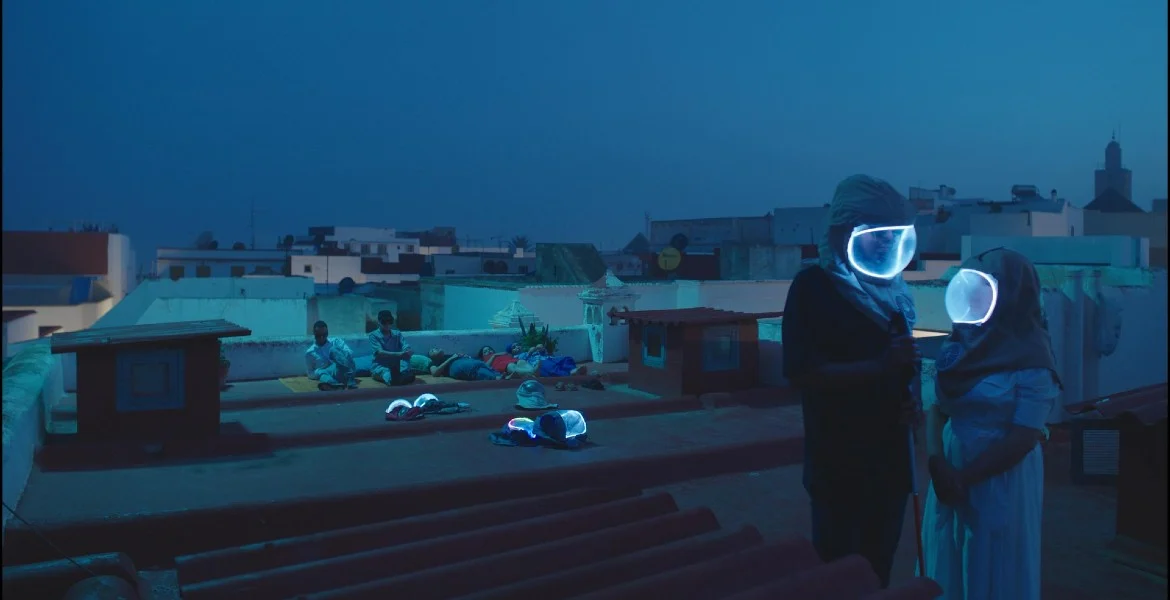
Additionally, Chilean documentarian Carola Fuentes, known for Chicago Boys and The Brick Effect, presents an untitled project co-produced by La Ventana Cine and Canada’s Intuitive Pictures. The documentary follows a team of journalists investigating the global impact of corporate control over water resources. Supported by major institutions such as the Ford Foundation and Chicken & Egg Pictures, the project highlights the role of investigative cinema in addressing the global climate crisis. Furthermore, Chile’s Quijote Films is involved as a minority co-producer in the Moroccan hybrid documentary Don’t Let the Sun Go Up on Me, directed by Asmae El Moudir, demonstrating the expanding reach of Latin American producers into transcontinental collaborations.
Immersive Media and the Future of Storytelling
The Venice Gap-Financing Market also includes a specialized section for immersive projects, where Latin America has secured three spots. The Argentine project OPI y los quietos, directed by Federico Carlini, Jorge Tereso, and Fernando Maldonado, and the Brazilian project Race Against the Machine, by Amir Admoni and Fabito Rychter, are featured in the Immersive 14 category. Additionally, the Colombian project Walking with Ghosts by Alejandro Angel-Torres was selected for the Biennale College Cinema – Immersive.
Venice was one of the first major film festivals to establish a competitive section for Virtual Reality (now Venice Immersive), and the inclusion of these projects suggests that Latin American creators are at the forefront of technological experimentation. These works often blend traditional narrative techniques with interactive and spatial computing, offering new ways to engage with themes of history, technology, and social change.
Historical Context and Market Implications
The Venice Gap-Financing Market was established to address a specific bottleneck in the independent film industry: the difficulty of closing the final financing gap for mid-to-high budget auteur films. Since its inception, the market has helped launch numerous films that have gone on to win major awards at festivals like Cannes, Berlin, and Venice itself. For Latin American filmmakers, the 70% financing requirement usually implies that they have already secured support from national film funds or regional co-production grants like Ibermedia.
The 2024 selection comes at a time of transition for the Latin American film industry. While countries like Chile and Mexico continue to see strong institutional support and international interest, the Argentine film industry is currently navigating significant budgetary uncertainties and structural changes within INCAA. The presence of multiple Argentine projects in Venice serves as a testament to the resilience of the country’s filmmaking community and the continued international demand for its stories.
Industry analysts suggest that the high number of co-productions in this year’s selection is a strategic response to the rising costs of production and the fragmentation of traditional distribution models. By pooling resources across borders—such as the Brazil-Portugal-Romania collaboration for O Funeral—producers are able to mitigate risks and ensure a wider theatrical and streaming footprint.
Broader Impact on the Global Stage
The selection of these eleven projects is more than just a professional milestone for the directors involved; it is a barometer for the health and direction of Latin American cinema. The diversity of the 2024 cohort—ranging from the intimate dramas of Lila Avilés to the indigenous advocacy of Morzaniel Iramari—illustrates a region that is moving beyond stereotypical "export" narratives to embrace a complex, multifaceted identity.
As the Venice Production Bridge prepares to open its doors in September, the eyes of the global film industry will be on these projects. Successful outcomes at the Gap-Financing Market often lead to world premieres at major festivals in the following year, setting the stage for the next wave of Latin American cinematic success. The event remains a vital engine for the "seventh art," ensuring that ambitious, high-quality projects from the Global South find the resources necessary to transition from the script to the screen.

0 Comments